

Tree Removal in Atascadero, CA
Atascadero — this is the coast these pages are about.
Quick answer: Tree Removal in Atascadero, CA — Removing a tree is planning before it is cutting: where the wood lands, what is under it, whether a rope or a crane takes the weight, and what is left when the crew drives away. A removal is finished when the drop zone is clear and the stump is dealt with, not when the trunk hits the ground.
- Typical timing: When the tree is a hazard, the schedule is immediate — storm damage, split leaders and leaners do not wait for good weather.
- What it involves: A written plan for the drop zone, rigging or crane work over structures, protecting driveways and roofs, and deciding the stump’s fate in advance.
- The standard: The ANSI Z133 safety standard for arboricultural operations, and ISA best practice for removals near structures.
- Where we work: Small town lots, coastal acreage and the narrow properties of the Cambria pine belt.
- Our own record: 503 pages and 291 stories published on this site. Counted from our own archive, not a stock table.
Field note. What we see here is that access decides the price more than height does: a pine over a fence on a slope with no driveway costs more to take down safely than a taller tree with a clear drop, and the plan is where that shows up.
On the other hand, removal is not the only safe answer — a tree with one failing limb, or a lean that can be corrected by reduction, is often better kept and managed than gone.
The tree that gets removed in Atascadero is usually grey. A pine that survived the drought with a thinning crown, went into the beetle years with a low resin defence, and is now standing over a driveway with its needles gone and its bark loose — that is the local signature, and it is a different problem from a coastal tree that is structurally unsound but alive.
A dead pine on clay soil in a hot climate dries from the inside out, holds its shape while it does, and then fails at the base in a way that gives nobody a second chance.
Dead pines, and the timeline nobody respects
A standing dead pine loses strength from the roots and the butt upward, and the rate depends on how wet the ground has been, how exposed the tree is, and how long it has been dead. What looks solid in year two can be a hollow shell by year four with a still-intact crown of dead branches that catches the wind like a sail.
That is why the useful conversation with a dead pine is not "is it dangerous yet" but "when does it have to come down", and the answer on a rural lot with a house, a barn or a power drop is usually sooner than the owner hoped.
The removal itself is a technical job — dead wood does not hinge predictably, and a climber has to be able to trust what they are tied into, which sometimes means working the tree in sections from a lift rather than on spikes.
The other removal: a big oak beside a house
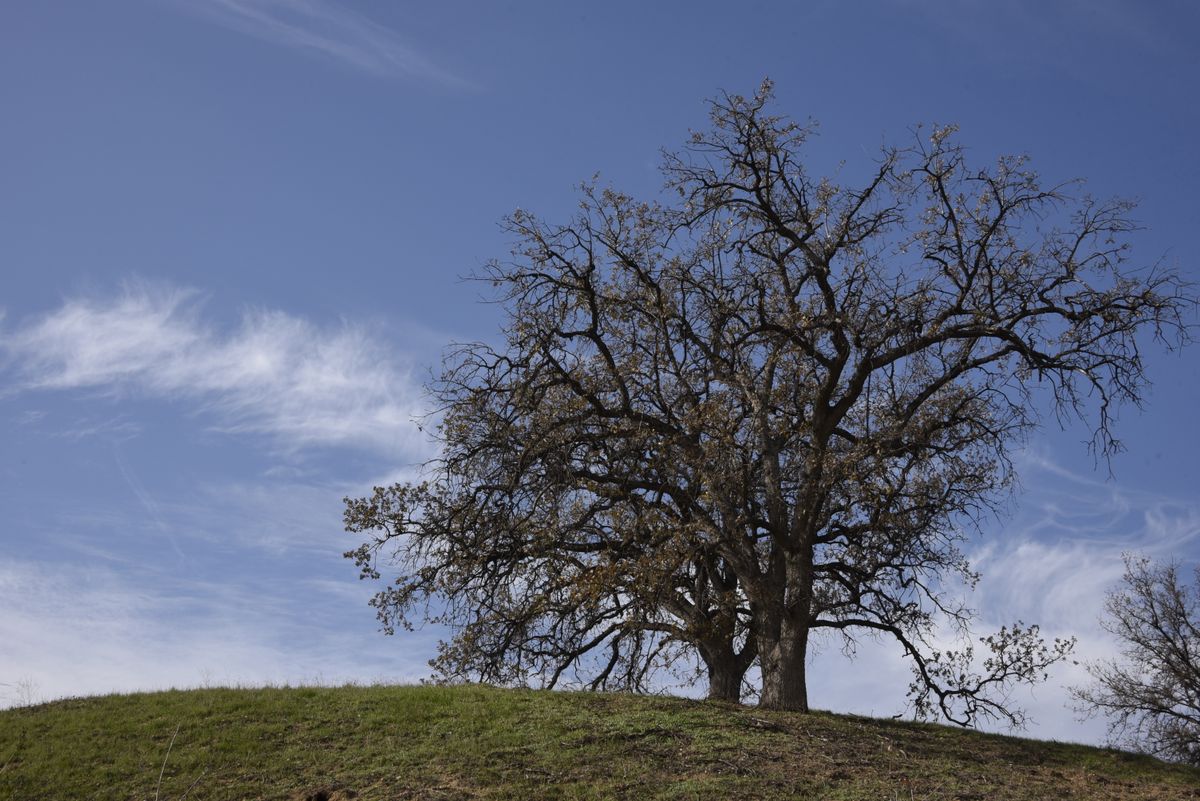
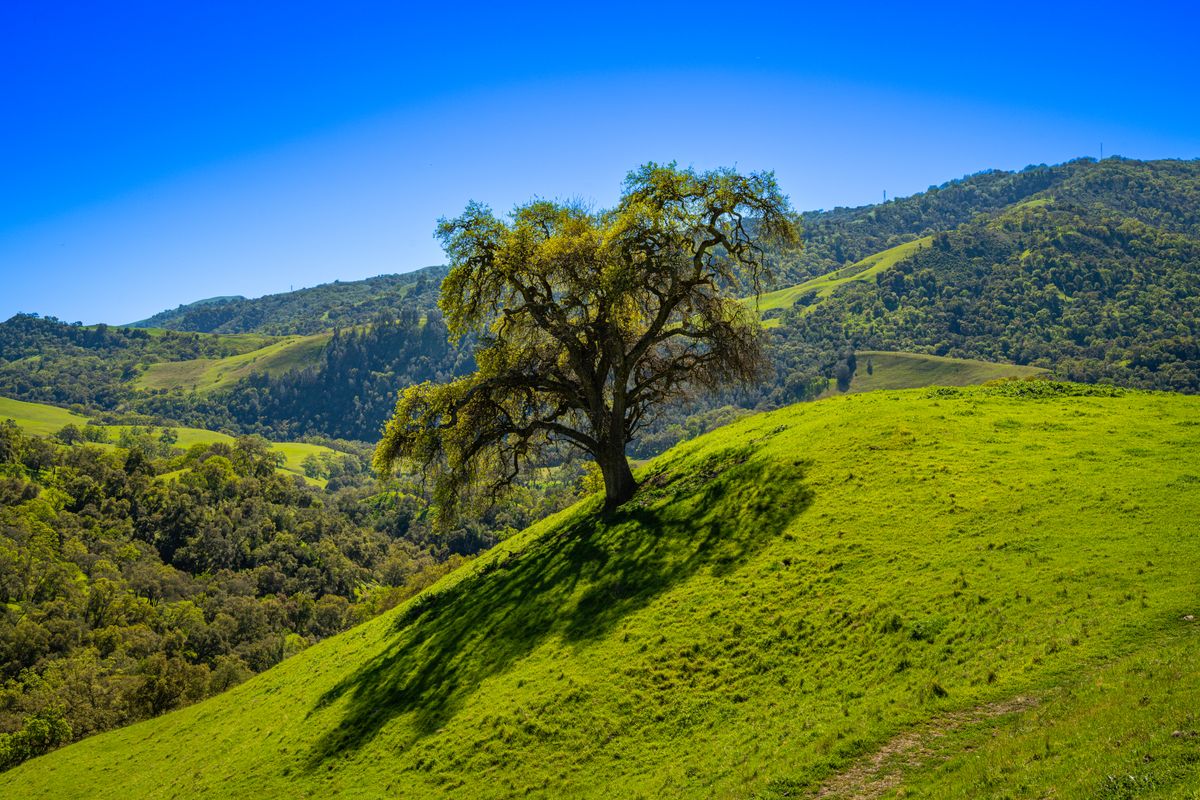
The second kind of removal here is a coast live oak or a valley oak that was standing when the subdivision was drawn and is now within arm's length of a wall. Removing one of those is rarely the first choice and often is the only one — after a root cut for a foundation, a grade change over the flare, or a limb that has failed on one side and left the crown unbalanced.
The work is heavy: an oak of that size has limbs that weigh as much as a car, and every one of them has to be controlled. On a lot where a crane can set up, a few picks do it; where it cannot, it is a rigging job with the pieces lowered and the ground crew deciding the pace.
In neither case does the tree get felled whole — not next to a house, and not with the soil this city sits on.
Who has to be asked first
Atascadero has its own rules for street trees and for protected trees, and the county's standards apply outside the city limits; the practical course is to identify what is standing in front of us and whose permission is involved before anyone commits to a date.
Where a tree sits under a utility line, some of the work around it is the utility's to schedule and ours to coordinate — we do not put a climber into a position where a limb under load could reach a conductor, and we will tell you when the honest answer is a call to PG&E rather than a quote.
And on a rural parcel, check the fence lines and the access first: a removal that cannot get a truck in is a hand-carry job, and the price difference is real.
Afterwards
Oak makes good firewood and most properties here have somewhere to stack it; pine is worth less and often goes for the chipper. The stump is its own decision, and it is a bigger one here than on the coast: oak stumps re-sprout enthusiastically, so a stump that is left is a shrub you have to manage for the next decade, and one cut flush to the ground is not a finished job.
Where the slope or the creek bank depends on the root mass, that is the other consideration — and it belongs in the same conversation as the removal rather than after it.
Field note — Noah Lockhart plans a removal load by load: what each piece weighs, what the rope is holding, and the one cut that decides whether the rest is routine.
Questions, quotes, or just exploring — we’re here to help.