


Stump Grinding in Atascadero, CA
Atascadero — this is the coast these pages are about.
Quick answer: Stump Grinding in Atascadero, CA — A stump is the part of the problem that is still in the ground: it holds the roots that lift pavement, keeps a species alive if it re-sprouts, and occupies the spot where the next planting goes. Grinding removes it below the surface so the ground can be worked again, and the roots that matter are the ones under the driveway rather than the ones beside the trunk.
- Typical timing: Any month the ground is workable; rain-softened soil grinds fastest and leaves the cleanest spoil.
- What it involves: Assessing re-sprout risk by species, grinding below grade, raking the spoil back, and handling surface roots separately from the stump.
- The standard: ISA guidance on root cutting and the ANSI A300 pruning standard where roots and crown are worked together.
- Where we work: Cambria, San Simeon, Harmony, Cayucos, Morro Bay, Los Osos and the Cambria pine belt.
- Our own record: 503 pages and 291 stories published on this site. Counted from our own archive, not a stock table.
Field note. On this coast the stump is rarely the end of the job: Monterey pine and eucalyptus both keep enough energy in the roots to push new growth, so we are looking at the species before we quote the grind rather than after.
On the other hand, a stump left in a garden bed is sometimes the better answer — it decays, feeds the soil and costs nothing — so grinding is a choice, not a rule.
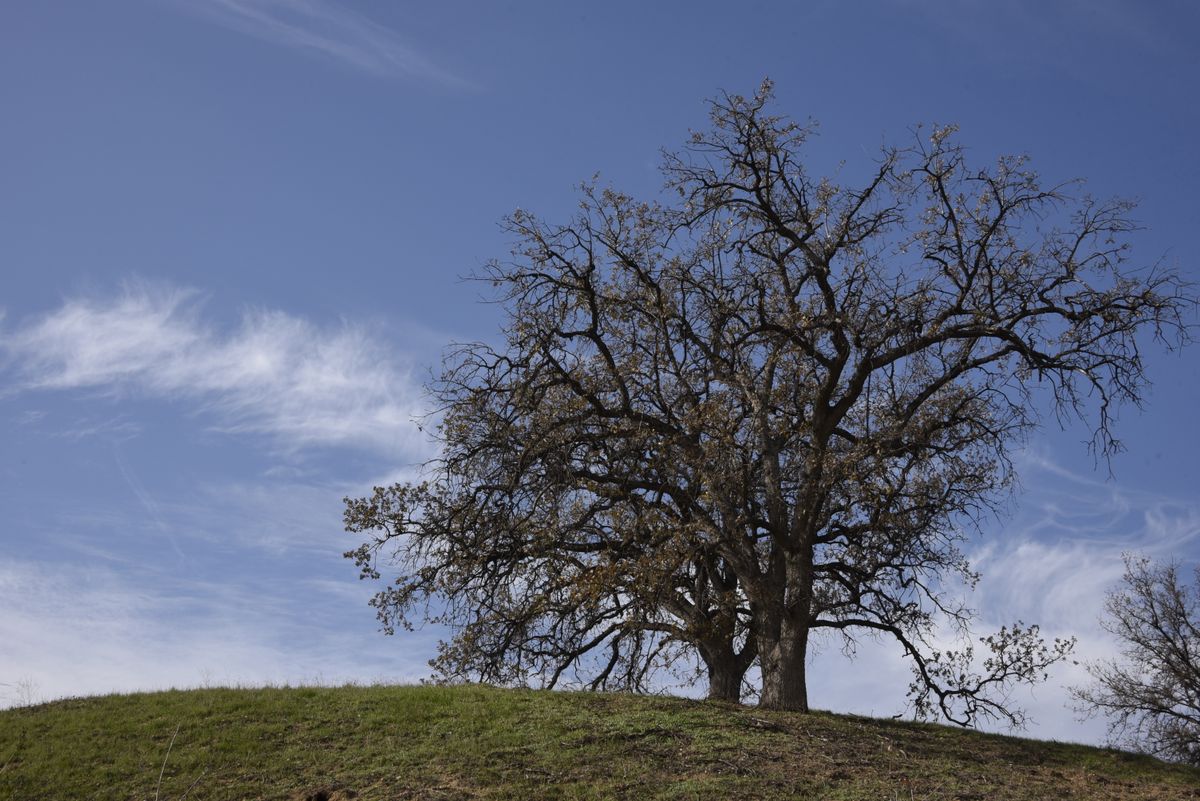
Atascadero has one stump problem the coast does not have: oaks come back. A coast live oak or a valley oak cut and left will re-sprout from the stump and the roots with real vigour, and a stump that is "done" in March is a thicket two metres tall by the following spring.
On top of that, the adobe clay under most of this town swells and shrinks with the seasons, so a hole that is filled carelessly becomes a settling depression, and the roots that remain after a shallow grind rot, sink, and leave a soft spot in the middle of a lawn. There is a correct depth and a correct closure, and this is a job where they decide everything.
The grind, and the oak question
For most species the rule is a grind well below grade with the flare removed. For oak, add a consideration: the stump and the larger roots hold live tissue, and a shallow grind does not kill them.
Where the stump is in a lawn, a drive or a bed, the honest answer is to grind deep and wide enough to remove the flare and the crown of the root system near the surface, and then to expect a few suckers in the following seasons, which are cut off at ground level while they are still soft.
Where the stump sits somewhere the resprouting matters less — a paddock, a bank, a corner that nobody mows — leaving it is a legitimate option that also protects the soil, and we will say so rather than sell a grind for its own sake.
Working the clay
The grinding itself is quick in this soil; the closing is not. Grindings come out and go to the garden or the green waste; backfill goes in as soil in shallow lifts, each one lightly compacted, and the surface is left slightly crowned so water runs off rather than standing in a saucer over a void.
On clay, an uncrowned fill will hold water, and a waterlogged patch over a rotting root mass is exactly how a depression appears the following winter. Where the same spot is being replanted, say so early: a fresh stump hole is disturbed ground, and the planting wants a wider, better-prepared hole than the stump left behind.
Before the machine arrives
Where the septic and the leach field are; where the water main and the irrigation runs go; whether there is a buried conduit to a gate or an outbuilding. On rural parcels around this city those are frequently unmarked. We probe and hand dig where the machine would be guessing, and the fifteen minutes that takes is cheaper than a repair.
If the stump is close to a fence post, a path or a retaining wall, the grind is shaped around it rather than taken to a depth that undermines the structure.
Two things we do not do
We do not burn a stump out. In a fire-hazard district where the ground is dry for most of the year, an underground burn can travel along a root system and surface days later, and that is a fire with nobody watching it.
And we do not leave a pile of grindings in the hole because it is faster: it is the one shortcut that guarantees the ground is uneven in a year, and it is the reason people remember a stump job for the wrong reason.
Field note — Ethan Reed writes for the owner who does the small jobs themselves: on clay, the depth is the job and the closing is what everyone judges later.
Questions, quotes, or just exploring — we’re here to help.