

Putting Cover Back on Ground That Has Been Bare Too Long
Revegetation & Native Planting
Atascadero — this is the coast these pages are about.
Quick answer: Revegetation & Native Planting — The tree that thrives here is the one chosen for this coast: fog, salt, wind and shallow soil are the local constraints, and mature size is the constraint most often ignored. Planting is a matter of putting the right species in a site that can hold it, then keeping the root flare visible and the first summers watered.
- Typical timing: Autumn planting, so winter rain does the establishment work; the first two summers decide the tree.
- What it involves: Matching mature canopy and root spread to the space, planting at the depth the tree grew in, and staking only when it is needed.
- The standard: Cal Poly’s SelecTree species data and university extension planting guidance.
- Where we work: Gardens and acreage from Cambria through Cayucos and Morro Bay.
- Our own record: 503 pages and 291 stories published on this site. Counted from our own archive, not a stock table.
Field note. What we see is that the coast is forgiving to the right species and unforgiving to the wrong one: the same tree that looks comfortable four streets in will burn on the windward side of a Cambria lot.
On the other hand, natives are not automatically the answer at every address — a species that belongs in the watershed can still be the wrong size for the garden it is standing in.
Revegetation in Atascadero usually follows a disturbance: a graded pad, a cleared fence line, a burn scar, a bank left bare after a drainage repair. Bare clay in this climate does not heal on its own. It crusts, sheds the first rain it gets, and starts gullies before anything has a chance to root, and the longer it stays bare the harder it is to bring back.
Choose for This Climate, Not the Coast's
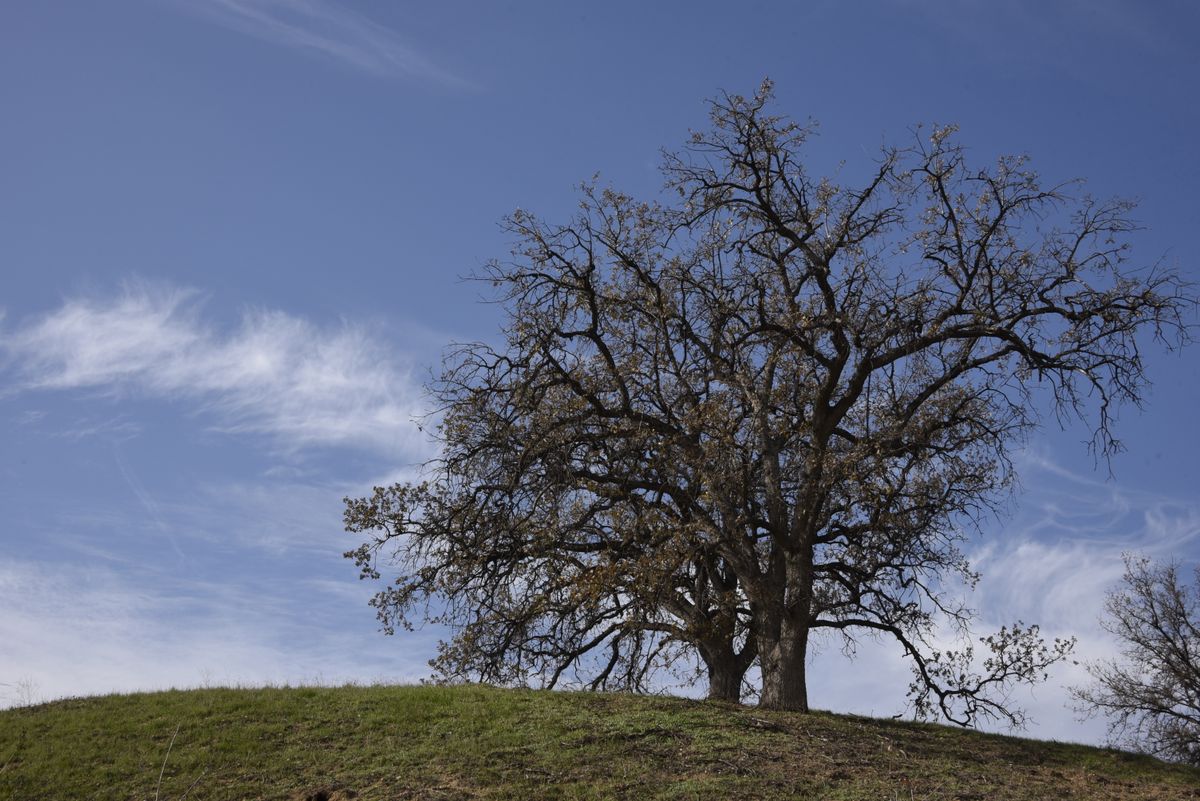
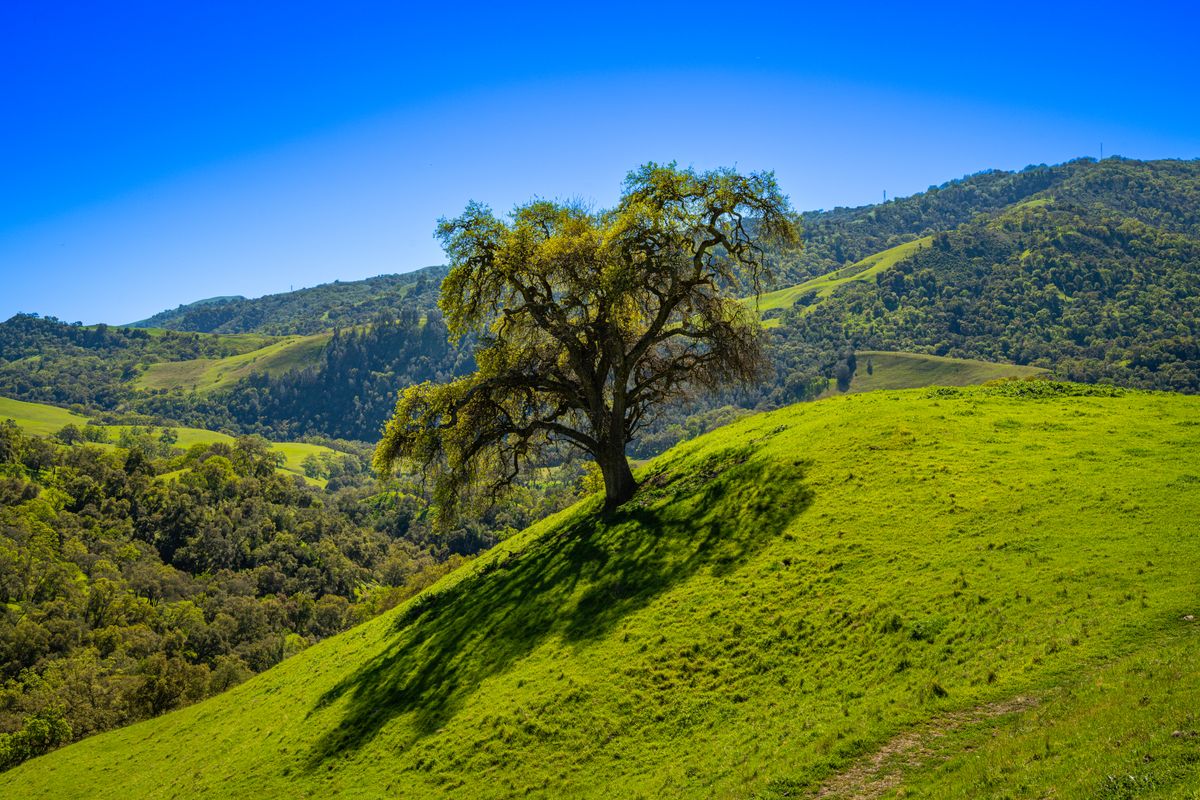
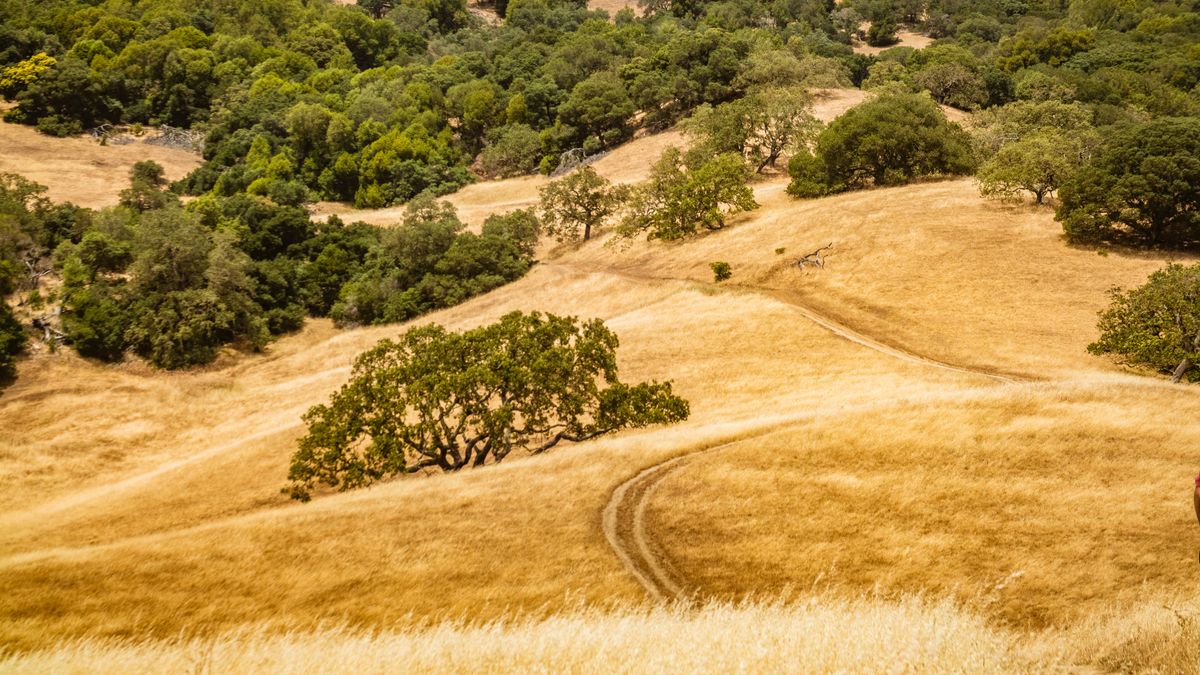
The native palette that works ten miles west is the wrong one here. Atascadero is hotter in summer, colder in winter, and drier in the shoulder seasons, and the species that thrive are the inland ones: blue oak and valley oak on the deeper soils, toyon, coffeeberry, ceanothus, redberry, deer grass and the bunchgrasses that hold a slope while they establish.
Those plants are adapted to a dry summer, which is why they need care for the first two years and almost none afterwards.
That is the opposite of a lawn, and it is the point. A native cover built for this climate survives a drought that would take an ornamental planting with it.
The Establishment Problem
Everything depends on getting the plants through their first two summers, and that means watering — carefully, and in the right place. Watering a restoration planting is not the same as watering an oak; the whole point of choosing natives is that they will not need it later, but they will absolutely need it now.
Container stock planted in autumn, in a hole with the flare at grade, mulched wide and watered deep through the first dry season, has a good chance. Broadcast seed on dry clay has a poor one unless it is timed to the rains and the seedbed is prepared.
On a site with existing mature oaks, the new plants have to stay out of the root zone, or the cover that was meant to help becomes the thing that kills the tree.
Cover That Also Holds the Ground
Where the object is stopping surface loss rather than establishing a plant community, the planting and the erosion work are the same job: dense fibrous-rooted grasses and low shrubs across the slope, laid out so the water cannot concentrate, with the ground left rough rather than smoothed. On a steep bank the sequence matters — the erosion control goes first, and the planting follows it.
What Success Looks Like in Three Years
A successful restoration here does not look manicured. It looks like a mixed stand that has closed over the bare ground, resprouting after a dry year, and it will need one light visit in year three to remove the weeds that always arrive first. If a site still has bare clay in year two, something is wrong with the water, the timing, or the species, and that is worth a look rather than another bag of seed.
Plan the Cover Before the Rains
Send a photograph of the bare ground and tell us what happened to it. Call (805) 927-4414 or use the contact page, and start at our services for the wider soil and slope programme.
Questions, quotes, or just exploring — we’re here to help.