


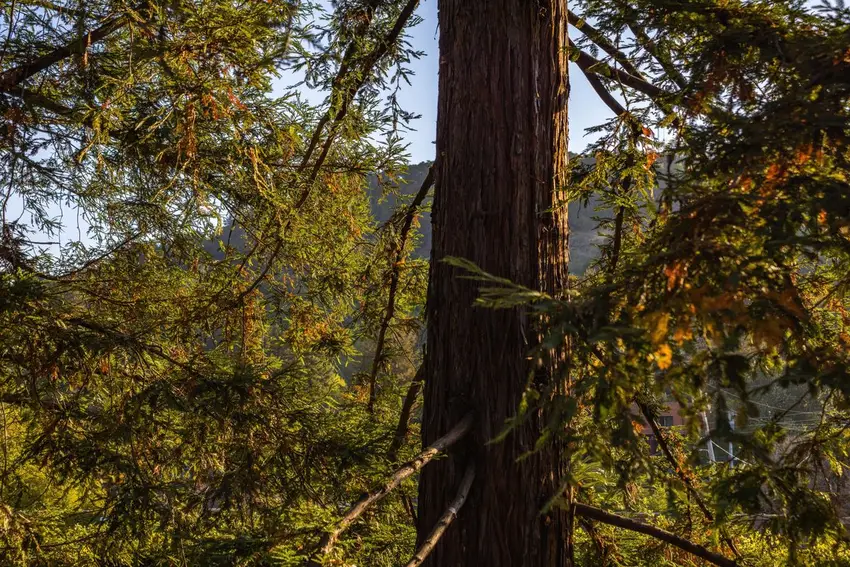

Quick answer: Root Zone Care in Cambria, CA — A stump is the part of the problem that is still in the ground: it holds the roots that lift pavement, keeps a species alive if it re-sprouts, and occupies the spot where the next planting goes. Grinding removes it below the surface so the ground can be worked again, and the roots that matter are the ones under the driveway rather than the ones beside the trunk.
- Typical timing: Any month the ground is workable; rain-softened soil grinds fastest and leaves the cleanest spoil.
- What it involves: Assessing re-sprout risk by species, grinding below grade, raking the spoil back, and handling surface roots separately from the stump.
- The standard: ISA guidance on root cutting and the ANSI A300 pruning standard where roots and crown are worked together.
- Where we work: Cambria, San Simeon, Harmony, Cayucos, Morro Bay, Los Osos and the Cambria pine belt.
- Our own record: 503 pages and 291 stories published on this site. Counted from our own archive, not a stock table.
Field note. On this coast the stump is rarely the end of the job: Monterey pine and eucalyptus both keep enough energy in the roots to push new growth, so we are looking at the species before we quote the grind rather than after.
On the other hand, a stump left in a garden bed is sometimes the better answer — it decays, feeds the soil and costs nothing — so grinding is a choice, not a rule.
Feeding a Tree That Is Actually Starving for Air
Root zone aeration is the half of tree feeding nobody sells you in a bag, and it is usually the half that matters.
Most trees on the central coast that look hungry are not short of nutrients at all; they are standing in soil that has lost its pore space, where oxygen cannot reach the roots and the soil life that turns organic matter into usable nutrients has shut down. Adding fertilizer to that ground is like delivering groceries to a house with no oxygen in it.
Why the Soil Comes First
- Most nutrients in a forest soil are supplied by biology — fungi, bacteria and the decomposer food web breaking down fallen leaves and needles, not by a granule you scatter.
- Compacted soil grows no feeder roots to feed. Aeration is what gives a fertilizer somewhere to arrive.
- Soils here tend to be thin and sandy over a heavier subsoil or weathered rock, which means they hold on to very little. Whatever you add can also leach straight past the roots.
- pH decides what is even available. Nutrients can sit in the soil and still be locked out of reach if the pH is wrong, which is why guessing from leaf colour is a poor method.
Test Before You Treat
A soil test costs far less than a season of the wrong product, and it turns a guess into a decision. When we are asked to feed a valuable tree, the order of work is: sample the soil, decompact it, mulch it, and only then decide whether the nutrient profile needs anything at all. If a tree has shown the same symptom for two seasons, the test is worth doing before the third.
Reading a leaf and reaching for nitrogen is how people feed a tree that needed drainage, or water, or less water.
What Root Zone Aeration Looks Like
Mechanically this is the same compressed-air work that root-zone remediation uses, aimed at nutrition rather than at repairing damage: a grid of air-spaded openings or radial trenches into the root plate, backfilled with compost and coarse mulch so that the pores stay open. The aim is not to loosen soil for its own sake. It is to build a root zone that can hold air, water and biology at the same time.
Done once, it does not fix a compacted site forever; how long it lasts depends entirely on what keeps compacting it, and so the honest answer sometimes includes changing how the ground is used.
Feeding, If the Test Says To
The methods on our deep watering page apply directly to watering a feed in properly.
- Slow-release over quick-release. A slow-release product or an organic amendment feeds a tree steadily. A fast, high-nitrogen hit forces a flush of soft growth that then has to harden off before winter wind.
- Do not push top growth into the wind. On an exposed coastal lot a late-season flush of weak growth is a liability rather than a favour.
- Micronutrients only when the test names them. Iron chlorosis, for instance, usually has a pH cause, and adding iron without addressing the pH rarely holds for long.
- Water it in, then stop. Fertilizer needs a soaking to reach the roots and then a rest. Feeding and over-watering at the same time is a reliable way to damage the roots you meant to help.
Mycorrhizae, Assessed Honestly
Inoculant products are sold as a shortcut to a healthy root zone, and we are cautious about them. The fungi that matter to a mature oak or pine are already present in almost any ground that has grown trees for a long time, and what limits them is usually the same thing that limits roots: compaction, over-supply and disturbance. We would rather build the conditions those organisms need than sell you a packet of them.
Where a site is genuinely sterile — fresh fill, a scrape, a brand-new landscape — inoculation alongside good compost has a far clearer case, and we will say so when it does.
The Exception: Native Oaks and the Feeding Reflex
The trees most likely to be harmed by enthusiastic feeding are the ones you would most want to protect. Coast live oak and valley oak are adapted to poor, dry summer soils; a rich, regularly watered, fertilized root zone makes them grow in ways they are not built for and invites the root and crown pathogens that kill mature oaks on this coast.
For a native oak the answer is usually mulch, no summer water and no feed at all. If you are unsure what you have standing there, ask before you spread anything.
Getting the Ground Right Under Your Trees
Call (805) 927-4414 or use our contact page and tell us the species, how long the symptom has been showing and what the ground around the tree has been through. See our services for the rest of the work we do.
Questions, quotes, or just exploring — we’re here to help.