Best Time to Prune Fruit Trees: Why the Book’s Calendar Is Wrong
Quick answer: Best Time to Prune Fruit Trees on the Cambria Coast — Fruit trees are pruned to a different standard from shade trees: every cut is aimed at light and air reaching the fruit, at a structure that holds a heavy crop without breaking, and at a canopy low enough to pick from. On the coast the fog changes the calendar, so the cut is timed to the tree rather than to a date on a chart.
Field note. What we see is that the fog belt shifts everything later: trees here come out of dormancy slowly, so a hard winter cut taken on a warm-inland schedule can expose wood that has no leaves to shade it yet.
On the other hand, a tree that has been let run for years often does better with two or three years of patient cutting than with one hard reset.
The standard advice is to prune fruit trees in late winter, while they are dormant, before the buds break. It is good advice. It was also written for orchards that spend December at twenty degrees, and this coast spends December at fifty-two with a wet wind coming off the water. The trees here do not go properly dormant.
They slow down, drop their leaves in a half-hearted way, and push a few buds in the first warm week of February. A calendar built for a real winter lands in the wrong month.
What actually governs the timing is chilling: the number of hours between freezing and about forty-five degrees that a tree needs before it will break bud evenly. Apples and pears want several hundred to a thousand of those hours. Cambria delivers a few hundred on a good year, and almost none in a warm one.
What that means for which trees you plant
It means the coastal orchard is a short list, and the short list is not the one in the catalogue. Low-chill apples such as Anna and Dorsett Golden will crop here. Most pears will not, and the ones that will are the fireblight-resistant Asian types. Figs, persimmons, loquats and citrus are genuinely happy. Apricots are a heartbreak: they bloom early, the fog keeps the blossoms wet, and brown rot takes the crop before it sets.
Cherries need cold that this coast does not provide. If you have been fighting an apricot for six years, the tree is not failing you. The climate is.
The two pruning windows that do work here
The structural window: late January into February. This is when you make the cuts that decide the shape of the tree for the next decade: choose the scaffold limbs, remove the crossing branch, open the centre. Do it after the worst of the rain and before the buds swell. On this coast that is a narrow band, often two or three weeks, and it moves every year.
The size window: August. Summer pruning does not invigorate a tree the way dormant pruning does, because the tree has already spent its energy building the growth you are cutting off. If a tree is too tall, too wide, or shading the vegetable bed, August is the month to take it back. You remove less, the tree responds less, and you get the light you wanted.
The wet-weather rule that matters more than the month
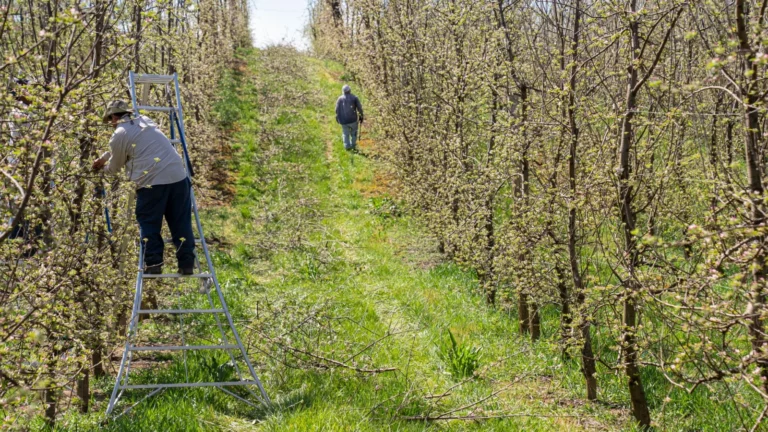
Fireblight is a bacterial disease that enters through open blossoms and fresh wounds, and rain splashes it from tree to tree. On a wet spring day, every pruning cut is a door. The rule I use is simple: do not prune a pear or an apple within three days of forecast rain, and never prune in the rain. If the only free Saturday is wet, wait.
A week late costs you nothing. A fireblight infection can take a mature tree down to the graft in one season.
Stone fruit is the opposite. Peaches, plums and apricots are best pruned in dry weather, and a dry July or August cut heals faster than a wet February one. This is the one place where the coastal climate is an advantage: our dry summer is a surgical window.
How much to take, in numbers you can use
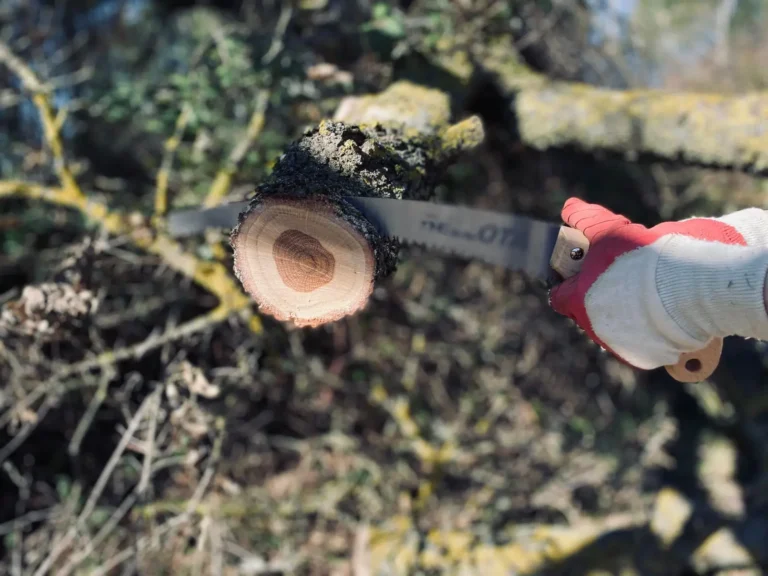
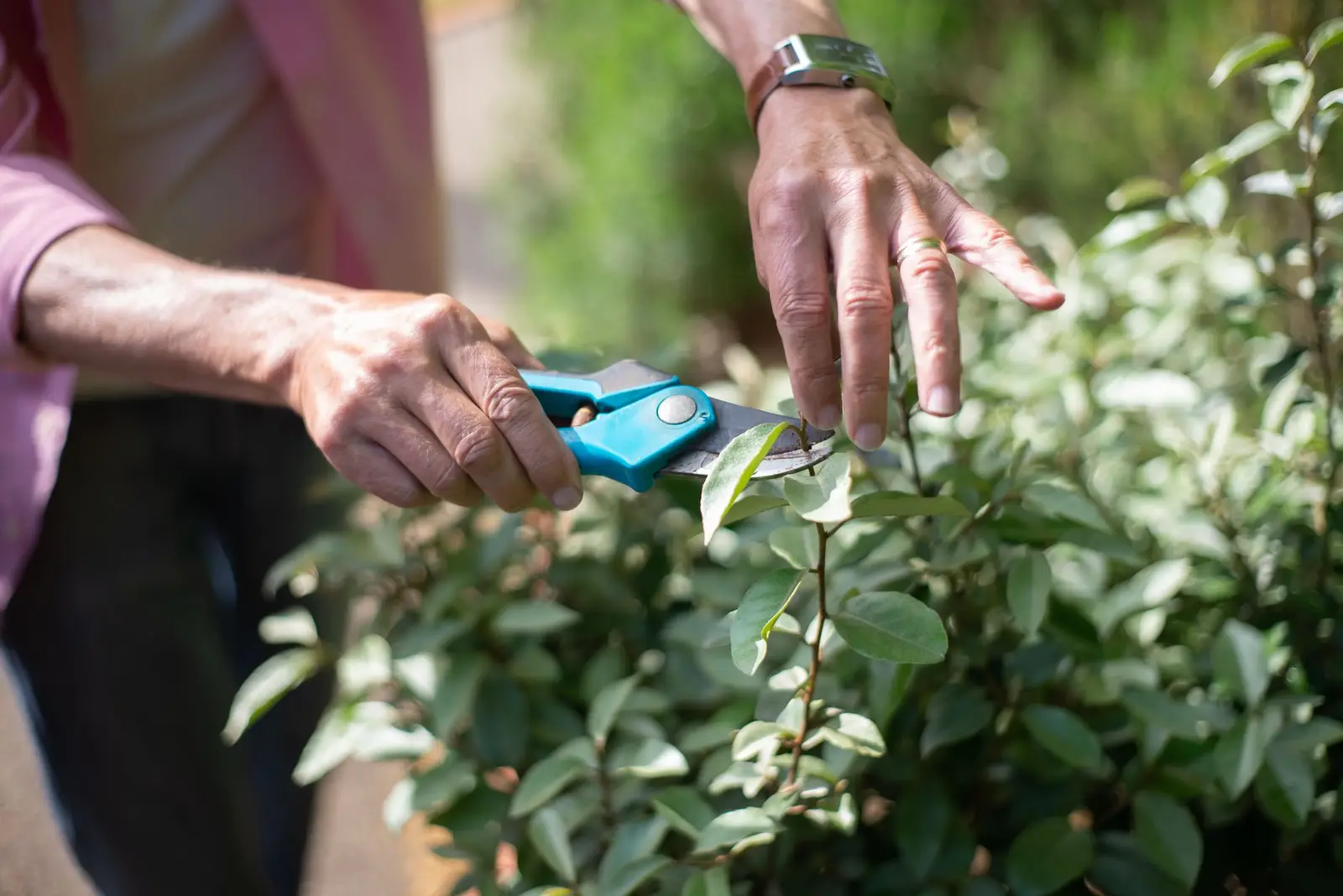
Remove no more than a quarter of the live canopy in a single year, and on an old tree, a fifth. Make every cut either to a bud facing the direction you want growth, or to a branch at least a third the diameter of the one you are removing. Leave the collar: the slight swelling where a branch meets its parent is a chemical barrier the tree builds for itself, and a flush cut removes it.
Do not paint the wound. Do not seal it with tar. The tree does that work better than anything in a can.
And if the tree has not cropped in three years, do not prune harder. Pruning is not a punishment. Check the light, the water and the pollination before you take another branch off.
The honest summary: on this coast, prune structure in the short dry gap after the rains, prune size in August, and choose varieties that expect a mild winter. The book is not wrong. It is just describing a different county.