

On Clay, Water Goes Where It Is Sent
Drainage & Grading in Atascadero, CA
Atascadero — this is the coast these pages are about.
Quick answer: Drainage & Grading in Atascadero, CA — Trees are watered at the root zone, deeply and infrequently — a long soak that reaches down, then a dry spell that lets roots look for water, rather than a daily sprinkle that keeps everything in the top inch of soil. On the fog belt the question is rarely whether there is moisture in the air but how much got down to the roots.
- Typical timing: Deep watering through the dry season, spaced further apart as the tree establishes; young trees need it far more often than mature ones.
- What it involves: Watering at the drip line rather than the trunk, checking the soil six to eight inches down, and mulching so the water stays where it landed.
- The standard: University extension guidance on landscape tree irrigation and drought response.
- Where we work: The coastal terrace from Cambria to Morro Bay, sandy soil and clay both.
- Our own record: 503 pages and 291 stories published on this site. Counted from our own archive, not a stock table.
Field note. What we see here is that salt air and wind dry a canopy faster than the thermometer suggests, so a tree can be water-stressed on a grey week when nothing looks hot to the person holding the hose.
On the other hand, more water is not a cure-all: on clay, a daily soak drowns roots more often than drought does, and the symptoms look almost identical from above.
On Clay, Water Goes Where It Is Sent — or Where It Wants
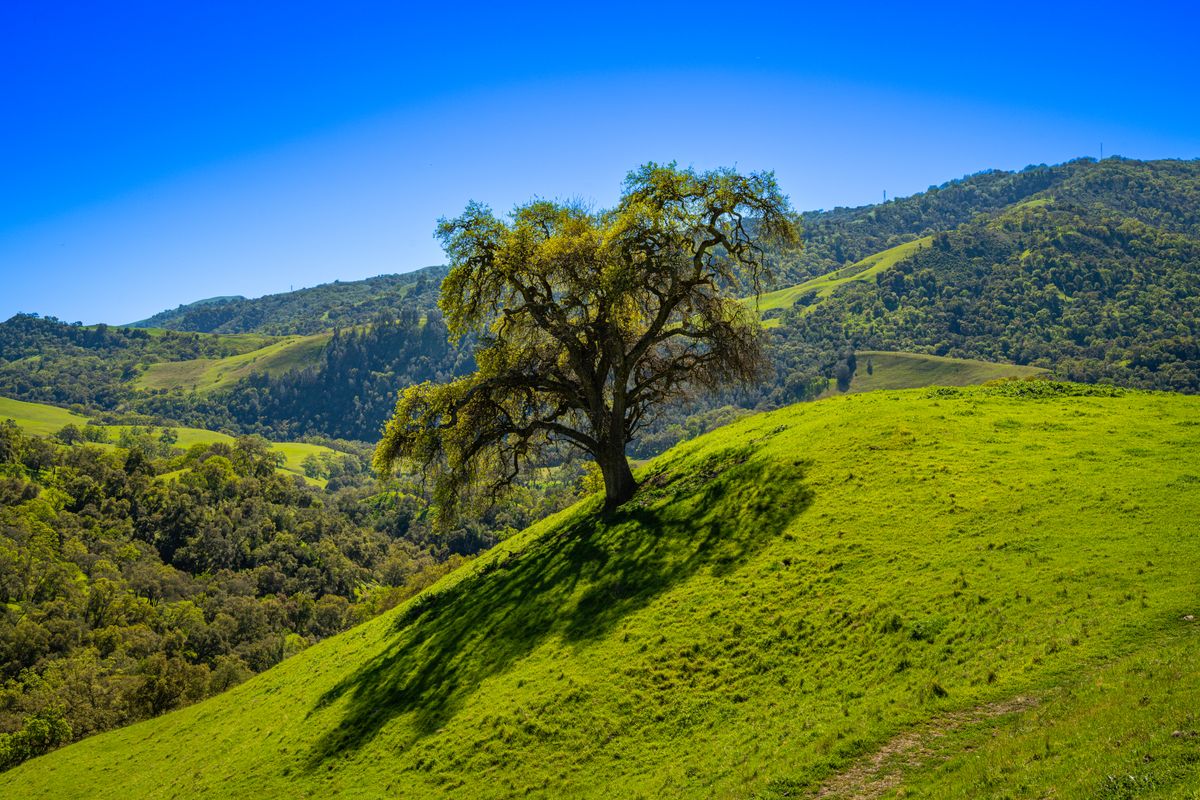
Drainage and grading in Atascadero is the work that decides whether a wet winter is a nuisance or a disaster, and the clay is what makes it unforgiving. Water does not soak away here the way it does on the coast. It sits, it finds a seam, and it takes the path of least resistance down a slope or into a foundation, and by the time the damage is visible the cause is usually a downspout installed fifteen years ago.
Reading the Site Before Digging
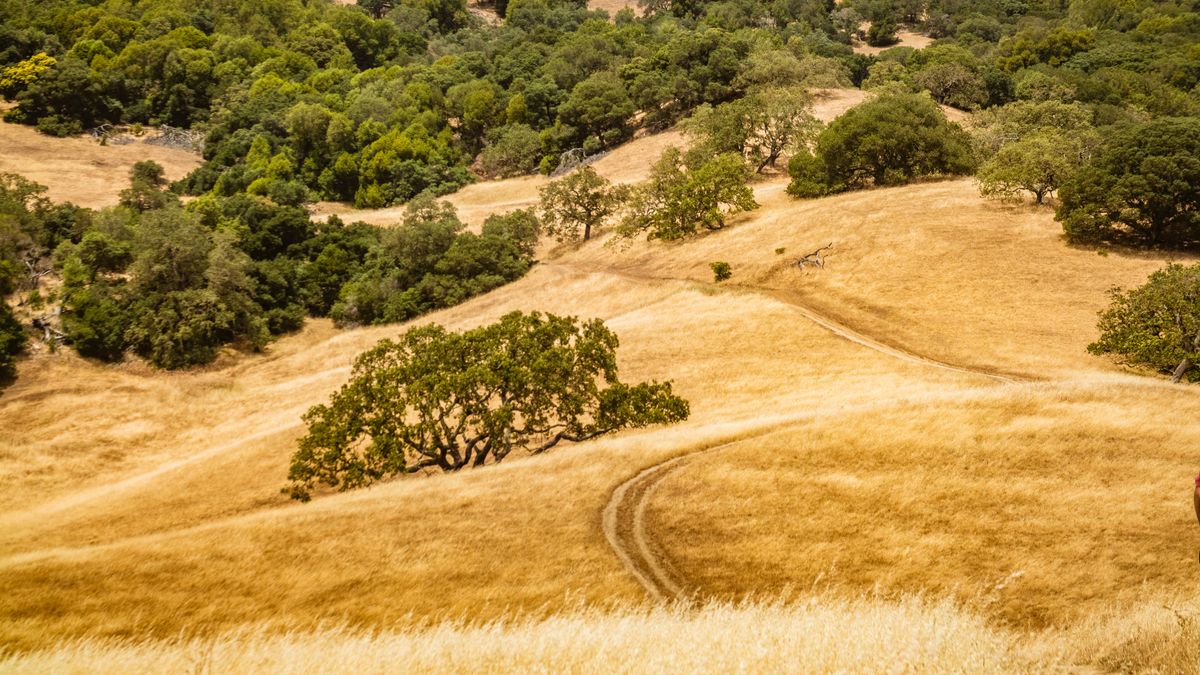
We start above the problem, not at it. Where does the water enter the property — the roof, the driveway, the neighbour's uphill pasture, a spring that appears every February? Where does it currently go? And where should it go, given that the discharge point becomes the beginning of the next property's problem if it is chosen carelessly.
Grading is the cheapest tool and the one most often ignored: a swale that moves water around a structure costs far less than a French drain that tries to catch it after it has arrived.
The Tools and What Each Is For
- Swales and surface grading. Catch water high and carry it at the surface where it can be seen and maintained.
- French drains and curtain drains. Intercept subsurface flow before it reaches a foundation, a cut slope or a root zone. On clay they need the right aggregate and the right fall or they silt up and quietly stop working.
- Downspout extensions and splash management. The cheapest fix on almost every lot, and the one most often missing.
- Dry wells and dispersion. Useful where there is somewhere for the water to go, not where the soil is already saturated.
- Retaining and terracing. Where the grade itself has to change, and where an engineer may need to be involved.
Grading Around Trees
This is the part that gets overlooked and then blamed on the trees. Cutting through a root zone severs roots and can destabilise a tree; filling over one buries the flare and suffocates the roots.
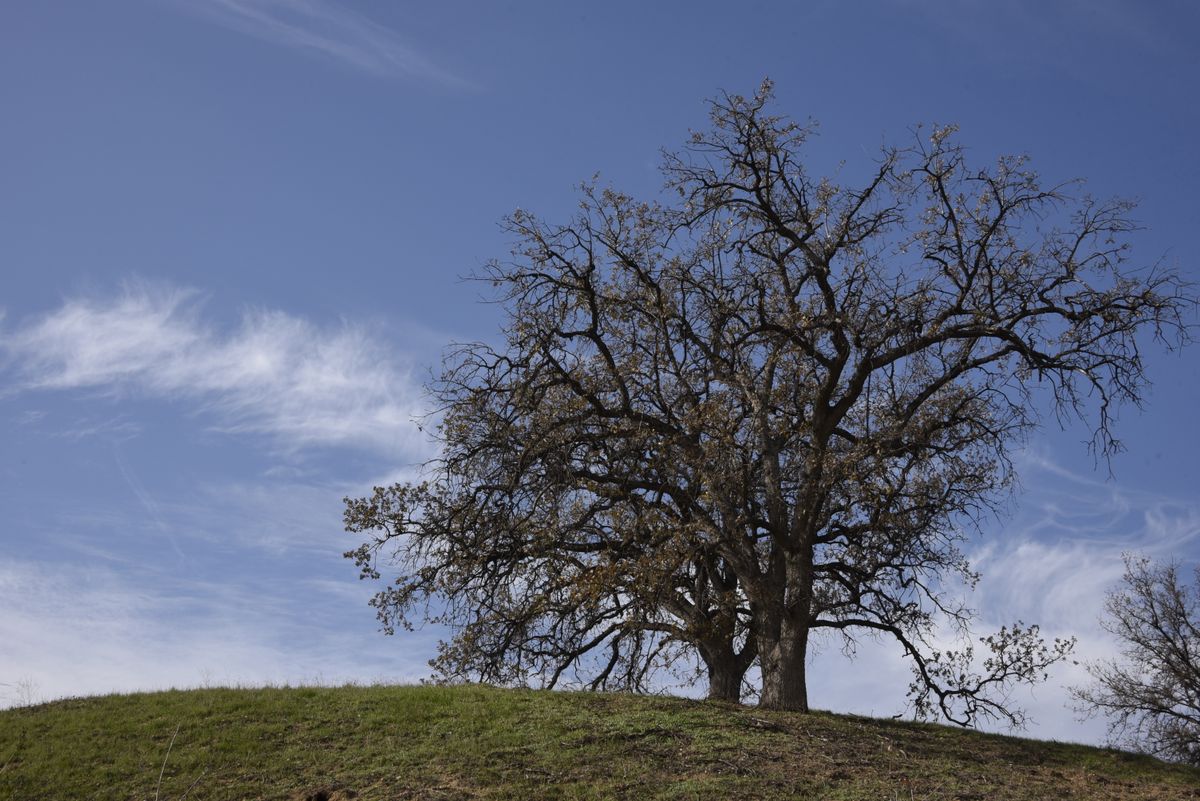
On a lot with mature oaks, a drainage plan and a tree protection plan are the same conversation — the critical root zones have to be marked before the machine arrives, and the routes have to be chosen around them. Where the flare has already been buried, that is a root zone job afterwards.
Where It Connects
Drainage is one layer of a bigger problem. Surface soil loss after a grading job is erosion control; a bank that is moving rather than eroding is slope work; and planting that finishes a project and holds it is revegetation. Getting the order right is most of the value.
Sort the Water Out First
Tell us where the water comes from and show us a photograph after the first real rain — that is the most useful thing an owner can provide. Call (805) 927-4414 or use the contact page, and see pricing for how site work is quoted.
Questions, quotes, or just exploring — we’re here to help.