

The Oak Survives the Build, or It Does Not
Construction Tree Protection in Atascadero
Atascadero — this is the coast these pages are about.
Quick answer: Construction Tree Protection in Atascadero — Most tree trouble on the Central Coast is identified before it is treated: a borer, a canker and a drought-stressed root system can look the same from the ground, and each has a different answer. Diagnosis is the first cut — host, sign and season — and the least-toxic control that fits comes after it.
- Typical timing: Monitoring from bud break; fungal problems follow the wet spring, borers the dry summer and the stressed tree.
- What it involves: Identifying the host and the organism, judging whether the tree can compartmentalise the damage, and removing what cannot be saved.
- The standard: UC IPM pest notes and the ISA standard for hazard assessment.
- Where we work: Cambria and the coastal oak, pine and cypress stands around it.
- Our own record: 503 pages and 291 stories published on this site. Counted from our own archive, not a stock table.
Field note. What we see on this coast is that the tree under fog is often the healthier one and the tree on a hot exposed edge is the one that gets hit — stress is the invitation, and the coast hides it well.
On the other hand, treatment is not always the kindest answer: for a hazard tree with internal decay, careful removal protects the neighbours, and replanting does more for the site than a season of injections.
The Oak Survives the Build, or It Does Not Survive the Decade After
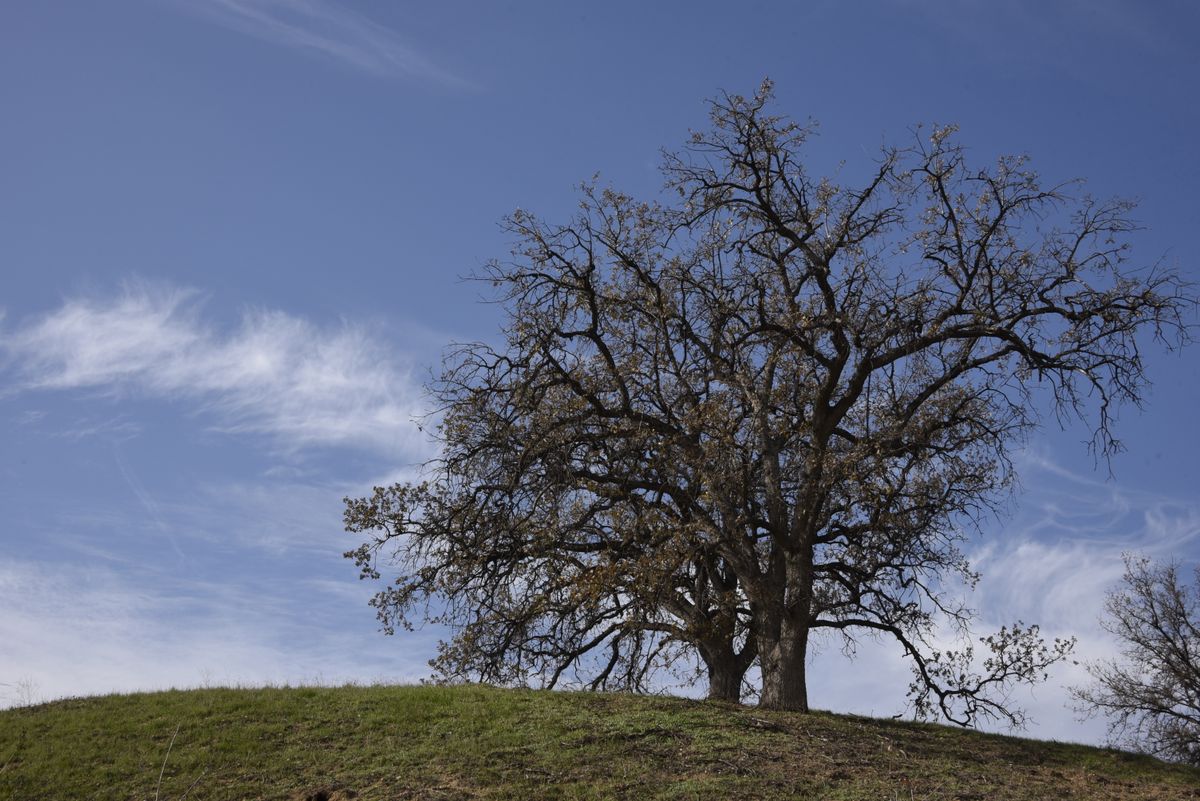
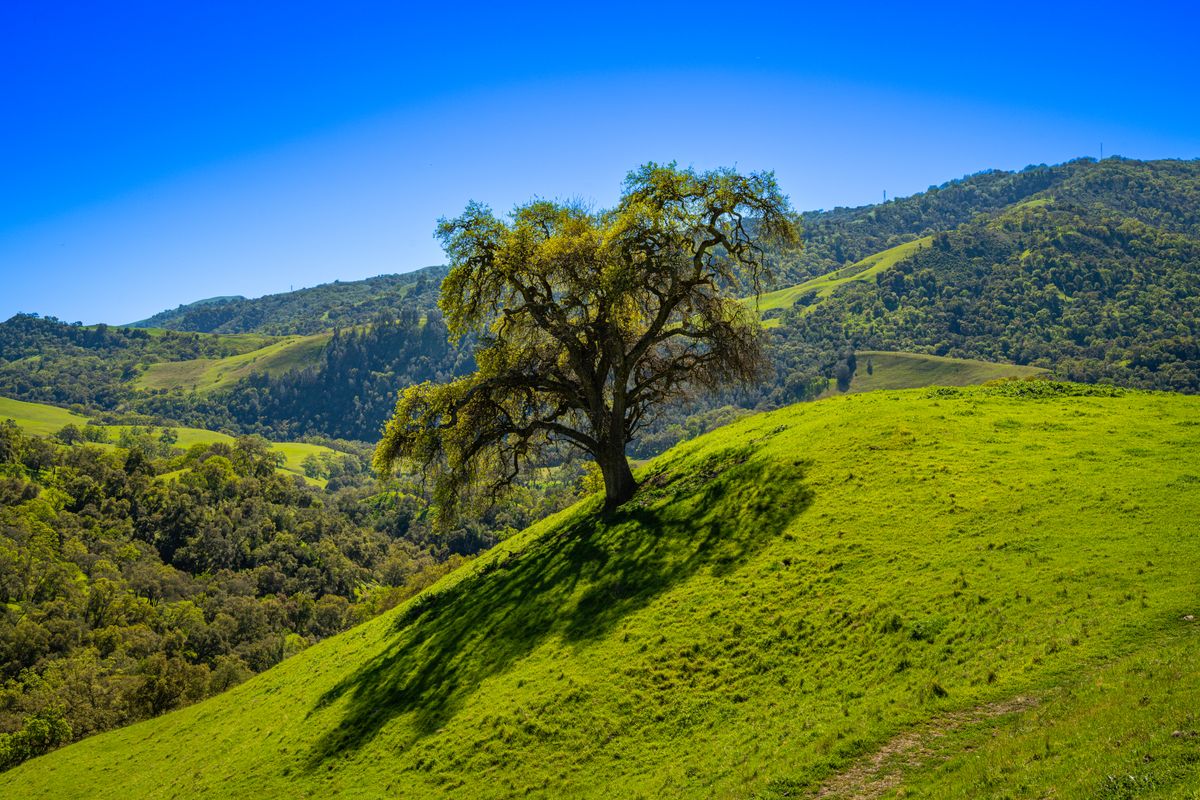
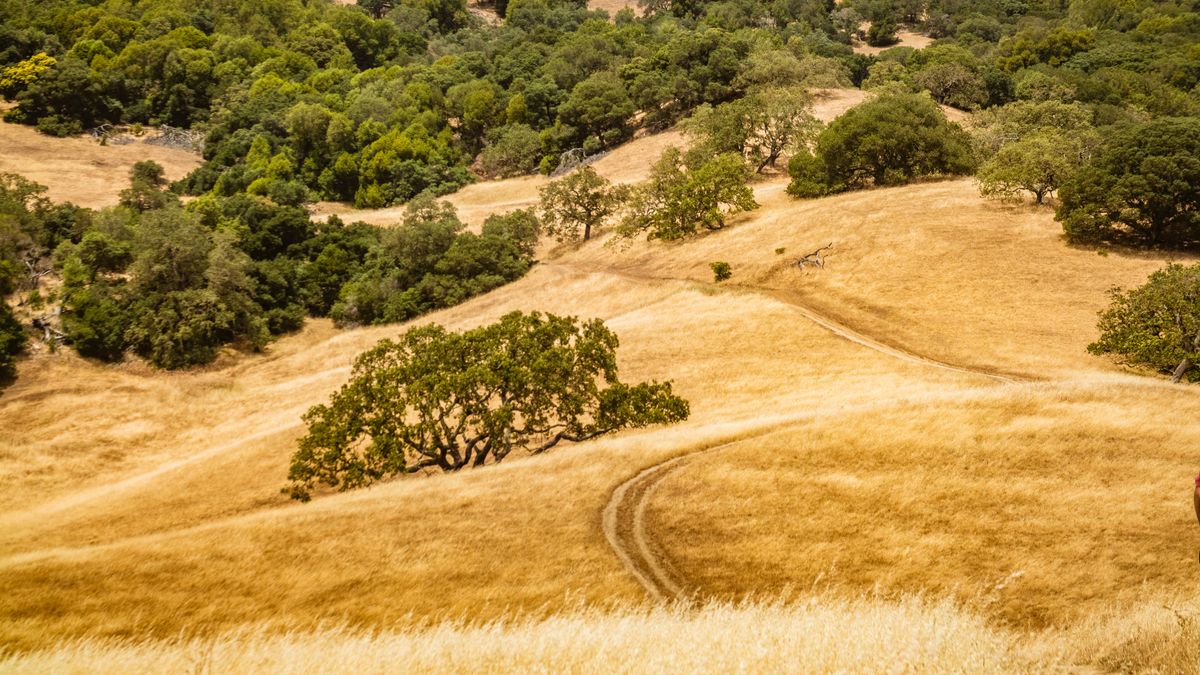
Construction tree protection in Atascadero is mostly about the oaks that were here first. A grading permit for a house, a shop, or a new driveway on one of these oak-studded parcels will usually ask what happens to the trees, and the answer has to be settled on paper before a machine is on site, because a root zone that is compacted in March does not announce its death until the summer after the owners move in.
Roots are what make this work less obvious than it looks. The tree's absorbing roots are in the top foot of soil and they reach well past the branch tips, so the ground a builder thinks of as open space is the ground the tree is eating from.
Drawing the Critical Root Zone
The protection zone is scaled to the trunk, and on a mature valley oak or blue oak that is a generous circle — not the drip line, and never the narrow ring around the base. Once that circle is on the plan, the sequence falls out of it: no stockpiles, no washout, no equipment parking, no trenching, no fill.
Compaction is the quietest injury here, and clay makes it worse. Atascadero's soils go from workable to brick-hard under a loaded truck, and a compacted root zone loses the pore space roots need for air. The fix afterwards is slow and partial, which is why a fence in the right place beats any amount of remediation later.
Grade, Fill and the Root Flare
Adding six inches of soil over a root zone is enough to kill a mature oak, and on a sloped lot the cut side of a terrace hurts just as much. The root flare has to stay visible at the finished grade.
Where a plan cannot avoid changing grade, the honest options are to move the structure, to retain the soil with an engineering design that does not bury the roots, or to accept that the tree is a removal and plan for the value.
Trenching for utilities, irrigation, and drainage is the other common killer. A trench driven across a root zone severs the roots on one side and leaves the tree leaning on the other, and it can take years to show. We mark the routes we can and advise on the ones we cannot.
The Plan and the Monitoring
The deliverable is a written protection plan that a builder, an architect and an inspector can all work from: the trees to keep by tag number, the zone drawn on the site plan, the fencing specification, the prohibited activities, and the arborist's role during the work. Where the city's own tree rules apply, that document is often the thing the permit is waiting on.
We also monitor. A single visit before the foundation pour and another before the final grade catches the piling that drifted and the load of fill that arrived on a Friday, and the cost of that visit is nothing against the cost of a mature oak lost to a building pad. On a parcel where the trees are the reason for the property, the plan is not a formality; it is what the owners are buying.
Before You Break Ground
Send us the site plan and tell us what is being built and where the trucks will park. Call (805) 927-4414 or use the contact page, and see our services for the rest of the tree work we do around the county.
Questions, quotes, or just exploring — we’re here to help.