

Lifting an Oak Off a Ranch House in One Pick
Crane-Assisted Removal in Atascadero, CA
Atascadero — this is the coast these pages are about.
Quick answer: Crane-Assisted Removal in Atascadero, CA — Most tree trouble on the Central Coast is identified before it is treated: a borer, a canker and a drought-stressed root system can look the same from the ground, and each has a different answer. Diagnosis is the first cut — host, sign and season — and the least-toxic control that fits comes after it.
- Typical timing: Monitoring from bud break; fungal problems follow the wet spring, borers the dry summer and the stressed tree.
- What it involves: Identifying the host and the organism, judging whether the tree can compartmentalise the damage, and removing what cannot be saved.
- The standard: UC IPM pest notes and the ISA standard for hazard assessment.
- Where we work: Cambria and the coastal oak, pine and cypress stands around it.
- Our own record: 503 pages and 291 stories published on this site. Counted from our own archive, not a stock table.
Field note. What we see on this coast is that the tree under fog is often the healthier one and the tree on a hot exposed edge is the one that gets hit — stress is the invitation, and the coast hides it well.
On the other hand, treatment is not always the kindest answer: for a hazard tree with internal decay, careful removal protects the neighbours, and replanting does more for the site than a season of injections.
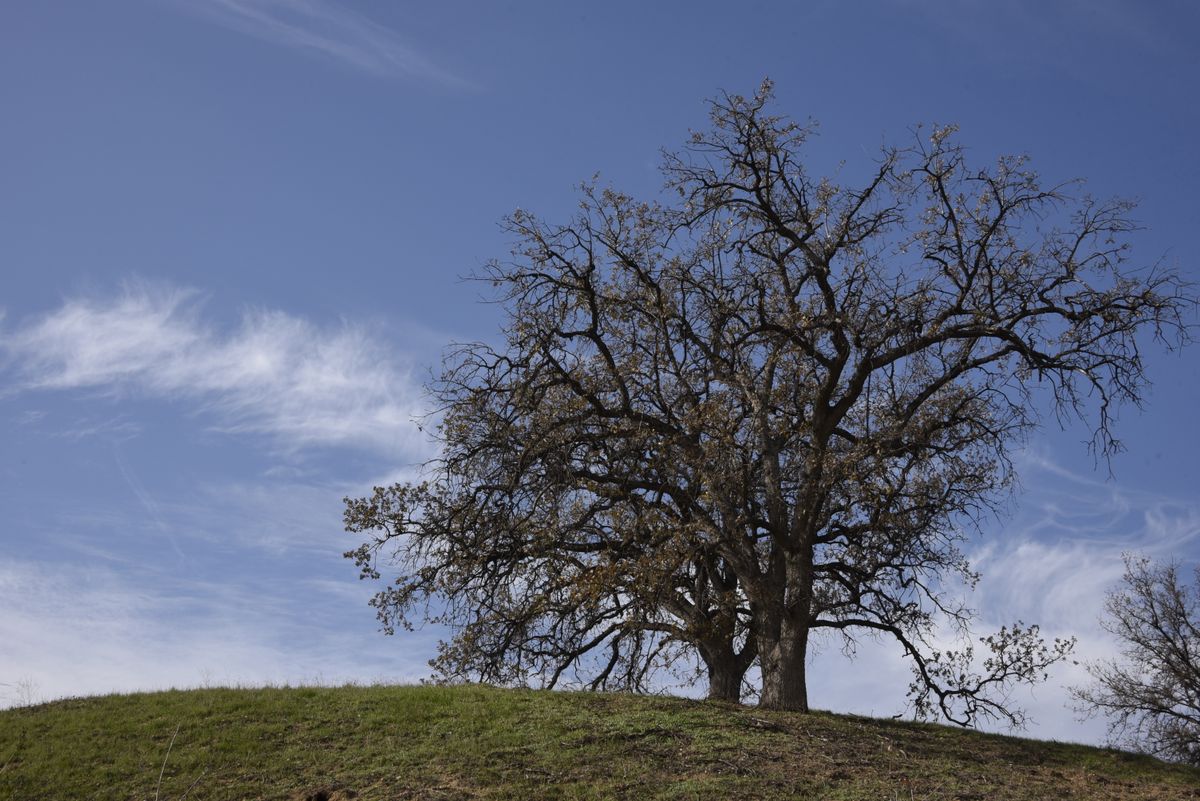
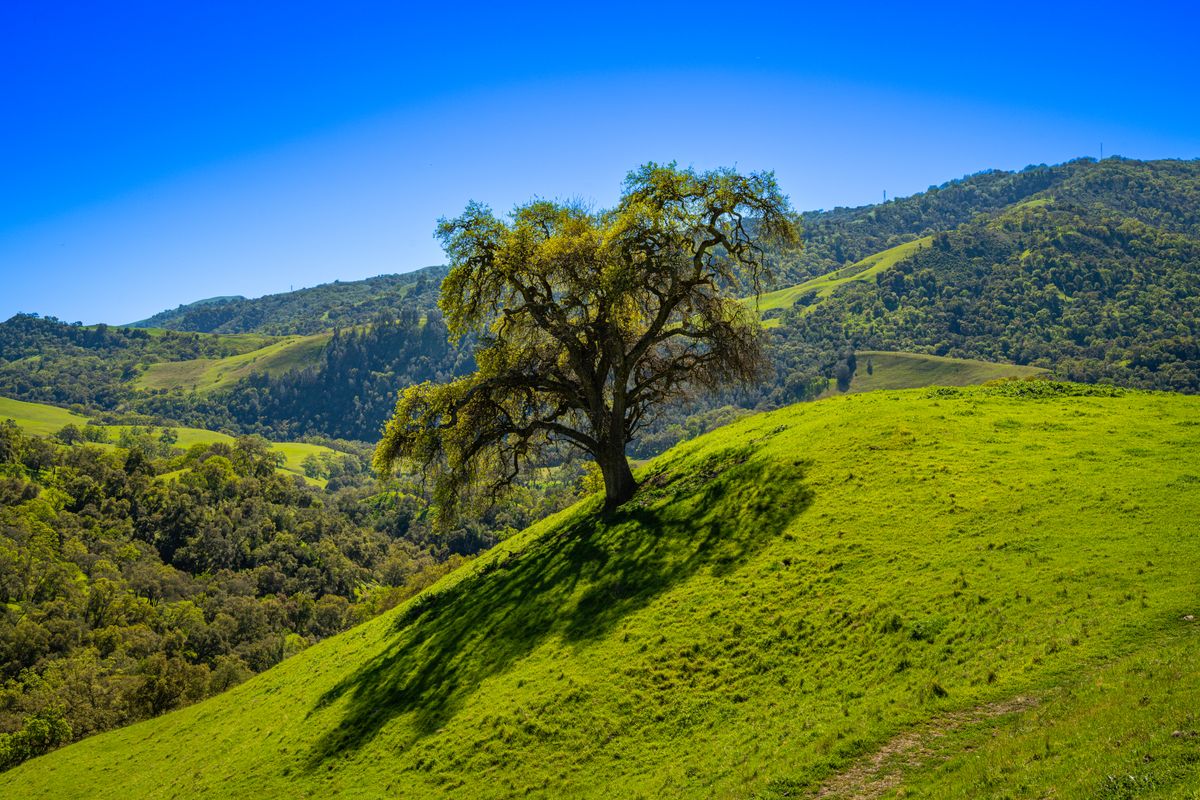
A crane makes sense in Atascadero for one specific reason: the big oaks. A coast live oak beside a ranch house has limbs that weigh more than a small car, and lifting them off in one pick is safer and faster than lowering them a metre at a time down a rigging line. The second reason is the dead pines — wood that cannot be trusted under a climber is wood a crane never has to stand on.
Crane-assisted removal is not the default here; it is what we use when the tree or the site makes climbing a worse answer.
What changes when the crane arrives
Pieces come off larger and fewer. Instead of a dozen cuts aloft and a full rigging system, three or four picks can bring a mature oak to the ground, and each of them is made from a stable platform rather than from a limb the climber has to trust. Nobody stands under the load, nobody relies on a rope that has to arrest a swinging piece, and the crew on the ground is mostly guiding and blocking.
The trade is that the work depends on the machine and the setup being right, so the planning moves entirely to the ground before anything is cut.
What a setup needs
- A place to stand — outriggers need level, firm ground, and adobe clay in February is neither. We look at where the pads go, what is under them, and whether the ground has been recently worked.
- A reach that clears the drop zone — the machine has to sit far enough out that nothing swings over a house, a well head, a septic field or the barn, and the boom still has to reach past the piece's centre of gravity.
- An access route — gate widths, overhead lines, soft shoulders on a rural drive, and the airstrip-side parcels where the approach is easy and the turns are not.
- The paperwork — a crane on a public road can mean a closure or a permit, and on a narrow county lane that is a conversation with the county rather than a decision made on the morning.
When rigging is the better answer
Plenty of trees here are not crane jobs, and saying so is part of the quote. A tree with a clean drop zone, room to work and sound wood is often cheaper and faster with a climber and a rigging line, and the garden is spared a tracked machine. A tree in a walled yard, behind a hedge, or on a slope the crane cannot pad on is a rigging job by default.
The honest comparison is not which machine is more impressive but how many pieces have to be controlled and how much of the site the setup costs you.
The oak question behind all of this
Removing a mature oak is worth slowing down for, because it is often a decision made in one afternoon that took eighty years to grow. Where a fork or a limb is the problem rather than the tree, the better answer may be cabling and bracing or a structural prune, and we will say so even when it costs us the bigger job.
Where the tree has genuinely failed at the base and the target is a building, the crane is how it comes down without the building learning about it — see hazardous tree removal.
Field note — Noah Lockhart walks the set-up before he walks the tree: the pick plan is only as good as the ground the truck is parked on.
Photographs of the tree from several angles, plus one of the vehicle access, are usually enough for us to say whether a crane is worth mobilising. Call (805) 927-4414 or use the contact page.
Questions, quotes, or just exploring — we’re here to help.