



Building Soil Where There Is Mostly Sand
Compost & Soil Amendment
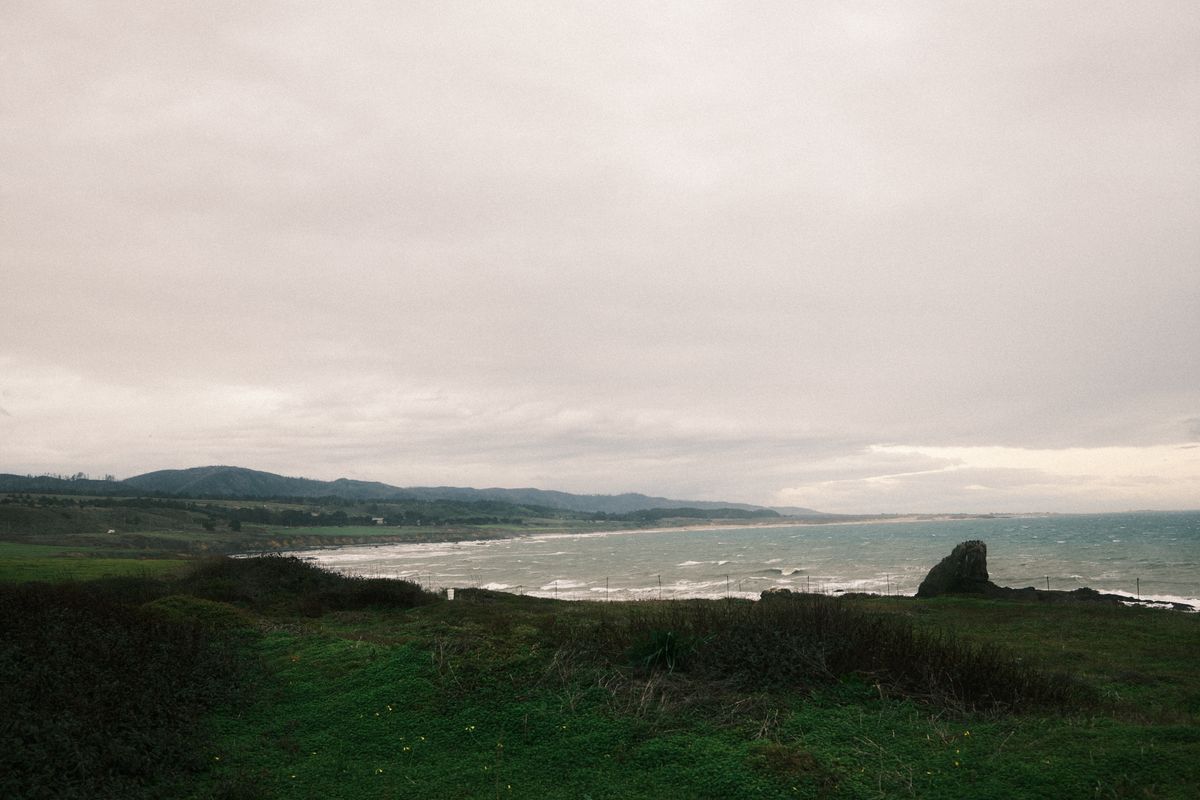
San Simeon — this is the coast these pages are about.
Quick answer: Compost & Soil Amendment — Mulch is the cheapest thing that happens to a tree: a flat layer over the root zone holds moisture through the dry season, keeps the soil temperature steady and feeds the soil life the tree depends on. Almost every mulch problem is a depth problem or a contact problem — too thick, or piled against the trunk where the bark has to stay dry.
- Typical depth: Two to four inches, flat, from the drip line inward — never a cone against the trunk.
- Typical timing: After planting or after a clean-up; refreshed in autumn so winter rain carries it down.
- What it involves: Keeping the root flare visible, keeping mulch off the bark, and choosing material that breaks down rather than mats.
- The standard: ISA and university extension guidance on arboricultural mulching and the root flare.
- Our own record: 503 pages and 291 stories published on this site. Counted from our own archive, not a stock table.
Field note. What we see most on this coast is not too little mulch but too much, in the wrong place: the volcano against the trunk that keeps the bark wet through the fog season and invites rot where the tree cannot show it until the canopy thins.
On the other hand, a thin ring of the wrong material is worse than none at all — matted, water-repellent mulch sheds the rain it was meant to store.
Sandy ground above the San Simeon bluffs has one talent and one failing. It drains so freely that a tree's roots never sit wet, which is why cypress and pine do well here. It also holds almost no nutrients or water of its own, so anything planted into it lives off whatever it was given at planting time — and that reserve runs out within a couple of seasons.
Compost and soil amendment is how that reserve gets rebuilt. It is a slow investment rather than a quick fix, and it is the difference between a planting that survives and one that looks reasonably well for two years and then stops.
What Good Compost Actually Does
The useful part of compost is not the nutrients, which are modest. It is the structure and the biology.
- Aggregation. Organic matter binds sand particles into crumbs that hold water and air at the same time, which pure sand cannot do.
- Water retention. Every percent of organic matter in sandy soil measurably increases how much water stays in the root zone after irrigation or rain.
- Biology. Compost carries the fungi and bacteria that break down mulch and make nutrients available, and a living soil does most of the work a fertiliser is sold to do.
- Cation exchange. It gives sandy ground a way to hold onto nutrients instead of letting them leach straight past the roots.
What to Use, and What to Be Careful With
A well-made arborist or green-waste compost, matured and turned so it is no longer hot, is what belongs in a tree planting or a root-zone trench. Manure-heavy products are higher in salts and can be hard on coastal plants already coping with spray; on this coast the salt load in the ground is one of the things we are trying to reduce, not add to.
Whatever goes in should be finished compost, not fresh material, or it will continue to heat and consume oxygen in exactly the place roots need it.
How Much, and the Planting-Hole Question
The old advice was to fill a planting hole with rich amendment, and the current guidance is more careful: on a heavy or badly drained site, amending only the hole creates an artificial pocket that roots refuse to leave, so they circle inside it. On the free-draining sand here that risk is lower, and a moderate amendment of the backfill is generally helpful.
The durable approach is to amend the whole planting area, not just the hole, and to keep feeding the soil from the top with mulch afterwards.
Pairing It With the Rest
Amendment works best as part of a sequence: break up compaction first, because compost worked into compacted ground will not stay there, and mulch over the top afterwards, because bare amended soil crusts and dries. If the site is a new planting, this is the layer beneath it; if the tree is already established and declining, the first question is whether the soil is compacted rather than deficient, and the answer usually involves air and structure rather than more material.
The soil chips come from our own work on the coast; the mulch that goes over the top is covered on wood chip mulch delivery.
Tell us what you are planting and what the ground is like. Call (805) 927-4414 or use our contact page, and read about everything we do on this stretch.
Questions, quotes, or just exploring — we’re here to help.