

When the Bluff Above the Highway Moves
Slope & Bluff Stabilization
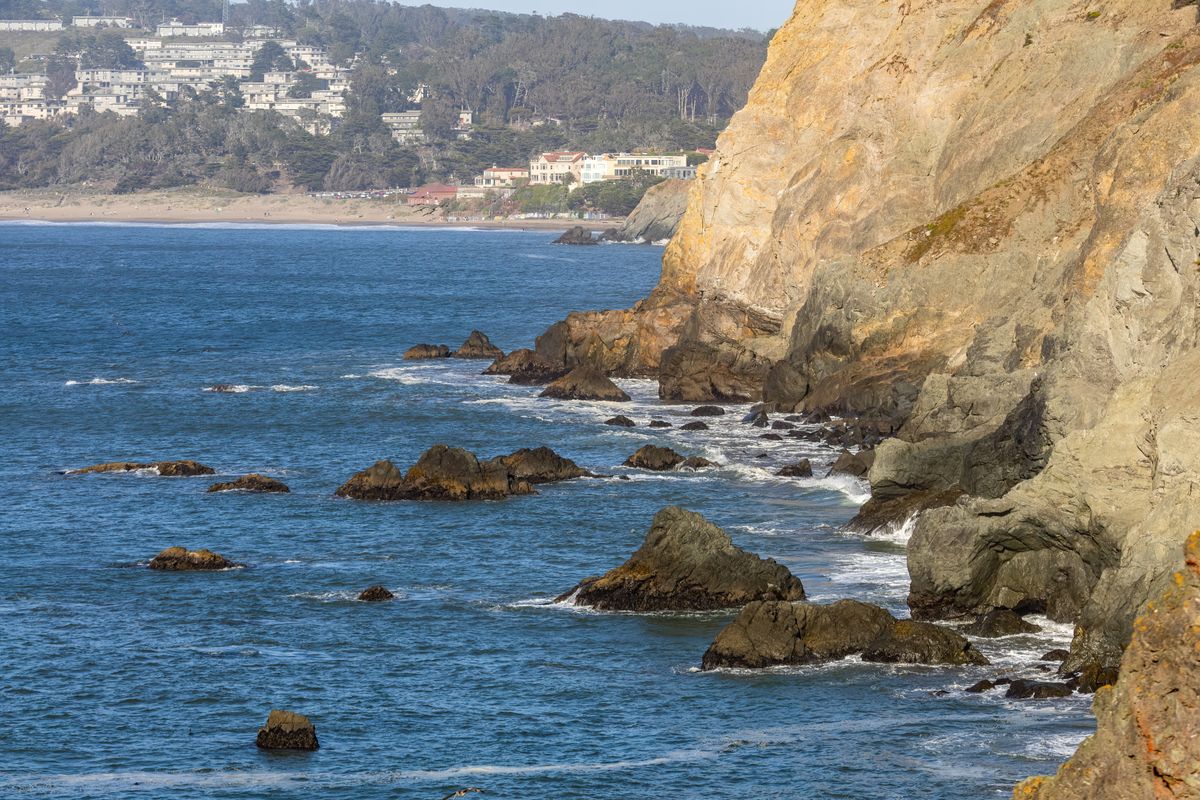
San Simeon — this is the coast these pages are about.
Quick answer: Slope & Bluff Stabilization — Trees on this coast live with fog, salt, wind and thin soil, and the work that keeps them healthy is decided by those conditions rather than by a calendar written inland. Structure, clearance and the root zone are what a tree here needs looked at, and small work done early is what keeps a tree out of the emergency list.
- What it involves: Structural pruning, clearance from structures and wires, deadwood removal, root-zone care and hazard assessment.
- Typical timing: Structural work in the dormant months; deadwood, clearance and hazard work whenever the tree needs it.
- The standard: The ISA standards for pruning and tree risk assessment, applied by ISA-certified arborists.
- Where we work: Cambria, San Simeon, Harmony, Cayucos, Morro Bay, Los Osos and the Cambria pine belt.
- Our own record: 503 pages and 291 stories published on this site. Counted from our own archive, not a stock table.
Field note. What we see on this coast is that the trees people worry about are usually not the ones in trouble: the pine with a clean crown and a lean that predates the house is often sounder than the tidy tree that has been quietly drowning in its own root zone.
On the other hand, there is no schedule that suits every tree — the same species on two sides of one street can need opposite care, which is why we look before we recommend.
The Steepest Stretch on the Route
Nowhere between Morro Bay and Carmel does Highway 1 climb the way it climbs here, and the parcels that sit above and below the road are cut into exactly that grade.
Slope stabilization on the San Simeon stretch is about mass movement — a bank that slumps after a wet February, a cut face that calves off at the toe, a pad that creeps downhill a little more each year — and it is a different problem from the surface soil loss that erosion control handles.
A gully cut by roof runoff in one storm is an erosion job. Ground that moves several feet at once is a stability job, and it needs different questions asked of it.
What This Ground Is
The hillside here is marine terrace and old sea-floor sediment, lifted in steps and then cut for the road, which leaves two things true at once.
Anyone who promises a slope treatment will halt coastal bluff retreat is selling something. What can be done is remove the triggers, slow the process and stop making it worse.
- The benches can hold a structure for generations — this coast has buildings on cut pads that have not moved in a hundred years.
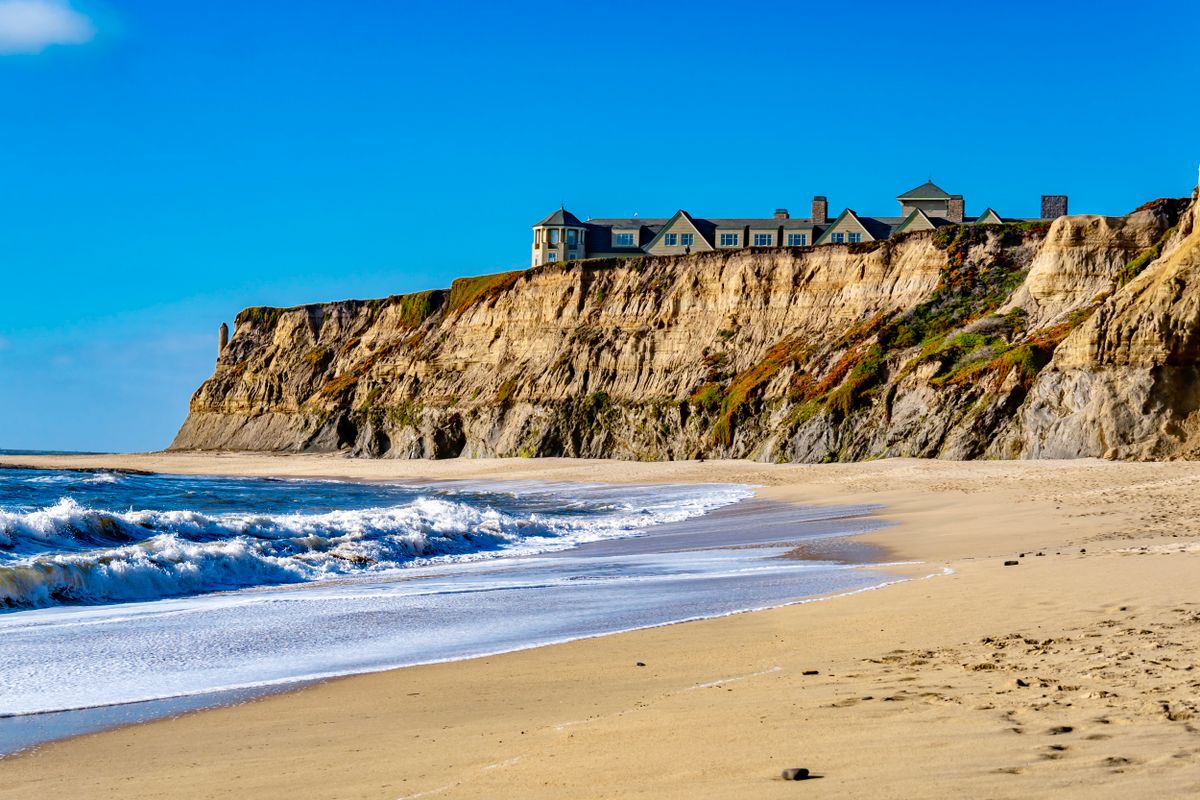
- The edges retreat. Wave attack at the base and water entering from above drive bluff retreat, and no wall, drain or planting scheme stops it permanently.
Water Is Almost Always the Trigger You Can Reach
The first question on any suspect slope is where the water goes, and it is usually the cheapest part to fix.
Drainage that respects the trees on a slope is its own job — see drainage and grading — and it is normally the first thing we recommend on a suspect hillside.
- Roof and surface runoff dumped onto the face instead of piped to a designed outfall.
- Irrigation running every summer on the same wedge of hillside, saturating it year after year.
- Septic leach fields and old dry wells leaking quietly beneath a house.
- Winter rain with nothing on the surface to slow it down.
What Vegetation Does, and Does Not Do
Roots genuinely reinforce the top few feet of soil, which is where most shallow failures begin, and foliage and litter slow the water before it enters the slope. But weight is not free: a large cypress or pine on a marginally stable bank adds load, and a windthrown tree takes its root plate with it and leaves a hole the size of a car.
On a suspect slope a big tree near the edge can be a liability rather than an anchor, which is why some hillsides need a tree taken off and a native cover established in its place.
When an Engineer Is the Right Answer
Sometimes drainage and planting are not enough, and the honest reply is that the slope needs a geotechnical engineer. Soil nails, anchored walls, buttress fill and dewatering systems carry real liability, and a tree service has no business guessing at them. Our role is the vegetation, the drainage we can reach, and saying clearly what we saw.
If the ground has visibly moved, if a structure on it has cracked, or if a wall is bulging, stop putting water on it, keep weight off it, and get the engineer in before anything else happens.
Work near a bluff here also tends to run into county rules and coastal review, so it is worth knowing what applies before a machine goes up the hill. Point us at the slope and tell us what has changed. Call (805) 927-4414 or use our contact page, and see the rest of what we do.
Questions, quotes, or just exploring — we’re here to help.