

Canker, Beetles and the Salt Myth
Pest & Disease Management in San Simeon, CA
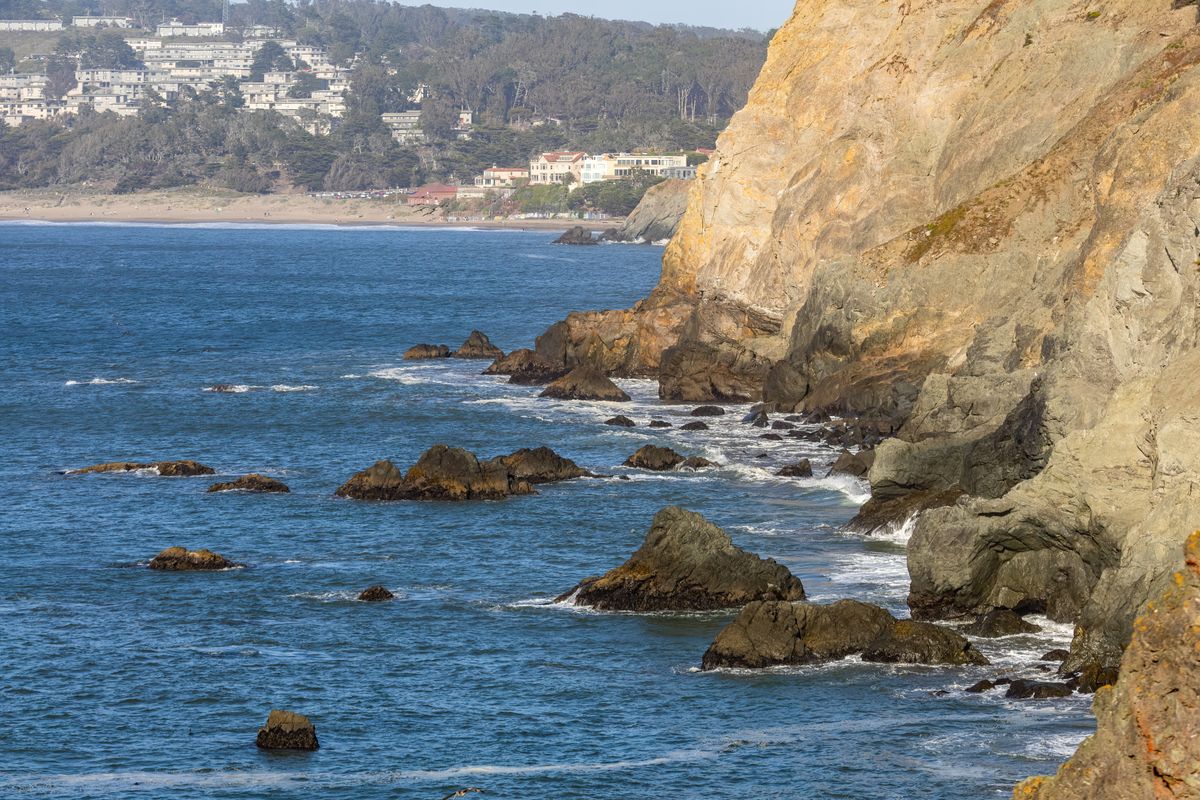
San Simeon — this is the coast these pages are about.
Quick answer: Pest & Disease Management in San Simeon, CA — Most tree trouble on the Central Coast is identified before it is treated: a borer, a canker and a drought-stressed root system can look the same from the ground, and each has a different answer. Diagnosis is the first cut — host, sign and season — and the least-toxic control that fits comes after it.
- Typical timing: Monitoring from bud break; fungal problems follow the wet spring, borers the dry summer and the stressed tree.
- What it involves: Identifying the host and the organism, judging whether the tree can compartmentalise the damage, and removing what cannot be saved.
- The standard: UC IPM pest notes and the ISA standard for hazard assessment.
- Where we work: Cambria and the coastal oak, pine and cypress stands around it.
- Our own record: 503 pages and 291 stories published on this site. Counted from our own archive, not a stock table.
Field note. What we see on this coast is that the tree under fog is often the healthier one and the tree on a hot exposed edge is the one that gets hit — stress is the invitation, and the coast hides it well.
On the other hand, treatment is not always the kindest answer: for a hazard tree with internal decay, careful removal protects the neighbours, and replanting does more for the site than a season of injections.
The cypress along the San Simeon highway are dying in rows, and most visitors assume the salt did it. Cypress canker is the likelier explanation, and the difference matters because one is weather and the other is a disease you can work around.
What actually threatens the trees on this coast
- Cypress canker — a fungal disease that enters through small wounds, kills the cambium in a band, and leaves a bleached skeleton in a hedge. It spreads readily between Monterey cypress, and it is the single biggest reason a screen here turns brown from the inside.
- Bark beetles after drought — the pine killers. A beetle needs a tree it can overcome, and a pine that has spent three dry years with its defences down is that tree. The pitch tubes and the boring dust are the confirmation.
- Root and crown rots — armillaria and the Phytophthora species behind sudden oak death. Both live in the soil, both are effectively untreatable in a mature tree, and both make the question a safety question rather than a health one.
- Scale and sooty mould — the sticky black coating on leaves and paving that says an insect is feeding above it.
- Salt burn and wind scorch — not a disease at all, and the diagnosis most often confused with canker on this stretch.
Start with the conditions, not the chemistry
Almost every one of those problems is easier to prevent than to cure, and the prevention is unglamorous: soil that drains, a root zone that is not compacted, watering that suits the species, competition removed, dead wood out before it becomes an entry point, and the right tree in the right place to begin with. A cypress screen planted tight in sandy ground thirty years ago and never touched is a canker waiting for its opening.
What treatment can and cannot do
Where there is a real, identified pathogen and a registered treatment, we will discuss it honestly — the cost, the number of applications, the fact that most of them are preventive rather than curative, and the fact that nothing restores wood that has already died. What we will not do is sell a spray for a tree whose actual problem is a root zone that does not drain, because that treatment fails and the tree is blamed.
When removal is the responsible answer
For a canker-infected cypress in a screen, removing the affected stems and opening the spacing is often what keeps the rest of the row alive — and once the disease has taken a trunk, no treatment brings it back. For a tree with a spreading root rot beside a structure, extraction is the honest recommendation rather than a series of injections.
Choosing to remove is not giving up on the tree; it is protecting the trees that can still be saved.
Tell us what you are seeing
Photographs of the affected foliage close up, of the trunk at the base, and of the row as a whole, plus how long it has looked like this. Call (805) 927-4414 or use the contact page, and start at tree inspection in San Simeon if you want the assessment first.
Questions, quotes, or just exploring — we’re here to help.