

Which Rules Apply on This Stretch
Permits & Tree Ordinances in San Simeon, CA
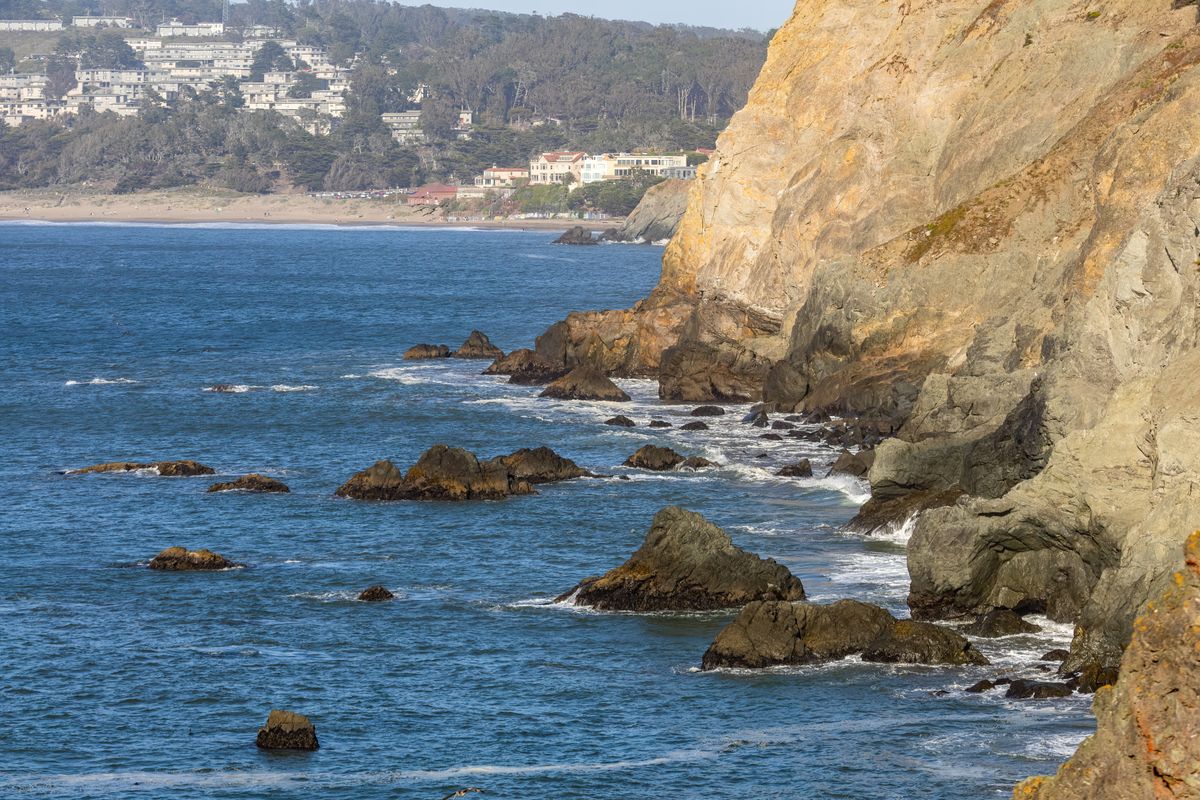
San Simeon — this is the coast these pages are about.
Quick answer: Permits & Tree Ordinances in San Simeon, CA — Removing a tree is planning before it is cutting: where the wood lands, what is under it, whether a rope or a crane takes the weight, and what is left when the crew drives away. A removal is finished when the drop zone is clear and the stump is dealt with, not when the trunk hits the ground.
- Typical timing: When the tree is a hazard, the schedule is immediate — storm damage, split leaders and leaners do not wait for good weather.
- What it involves: A written plan for the drop zone, rigging or crane work over structures, protecting driveways and roofs, and deciding the stump’s fate in advance.
- The standard: The ANSI Z133 safety standard for arboricultural operations, and ISA best practice for removals near structures.
- Where we work: Small town lots, coastal acreage and the narrow properties of the Cambria pine belt.
- Our own record: 503 pages and 291 stories published on this site. Counted from our own archive, not a stock table.
Field note. What we see here is that access decides the price more than height does: a pine over a fence on a slope with no driveway costs more to take down safely than a taller tree with a clear drop, and the plan is where that shows up.
On the other hand, removal is not the only safe answer — a tree with one failing limb, or a lean that can be corrected by reduction, is often better kept and managed than gone.
San Simeon is a very small place with an unusually large amount of oversight, and the paperwork is the reason a removal here sometimes takes weeks rather than a morning. Knowing which rules apply before anybody quotes the job is the difference between a schedule and a surprise.
Who regulates what on this stretch
Almost all of San Simeon is unincorporated San Luis Obispo County, and a good part of it sits inside the coastal zone, so land-use questions can run through the county and the coastal review process rather than through a city counter.
Add the State Park land and the historic estate on either side, which have their own oversight of plantings, and the practical position is this: a tree on a boundary with protected land, or a tree the county treats as significant, is not simply the landowner's decision.
What usually needs approval
- Protected and heritage species — native oaks and other designated trees, generally on the basis of size and species rather than convenience.
- Coastal-zone work — removals that change the character of a bluff or a view shed can need review even where the tree itself is not protected.
- Anything near a creek corridor or the bluff edge — where roots are doing erosion work, the question is a grading and drainage question as much as a tree question.
- Clearing as distinct from a single tree — a lot clearing is land use, and it gets treated as such.
What is normally exempt
Dead trees, trees that have become an active hazard, and emergency work after a storm are generally handled differently from a discretionary removal, which is why we photograph condition before anything is cut. An arborist's written opinion that a tree is dead or structurally failing is often the document that makes the exemption hold.
For tree removal permits in San Simeon, the report usually does the work
Where a permit or an agency letter is wanted, the application nearly always wants the same thing underneath it: a written assessment naming the species, the size, the condition and the reason for the work. Producing that early is what keeps a removal on schedule. See tree risk assessment in San Simeon for the report itself, and tree removal in San Simeon for the physical work once approval is in hand.
The honest timeline
A hazardous dead tree on a storm path is quickly handled. A protected live tree on a bluff, with neighbours who object, is not — and if it is refused, it is refused. We tell you which of those you have after walking the site, before a date is booked and before a deposit is taken.
Find out before you book
Send a photograph of the tree, its position relative to the boundary and the water, and anything the county has already sent you. Call (805) 927-4414 or use the contact page.
Questions, quotes, or just exploring — we’re here to help.