


Where the Winter Water Goes
Drainage & Grading in Harmony, CA
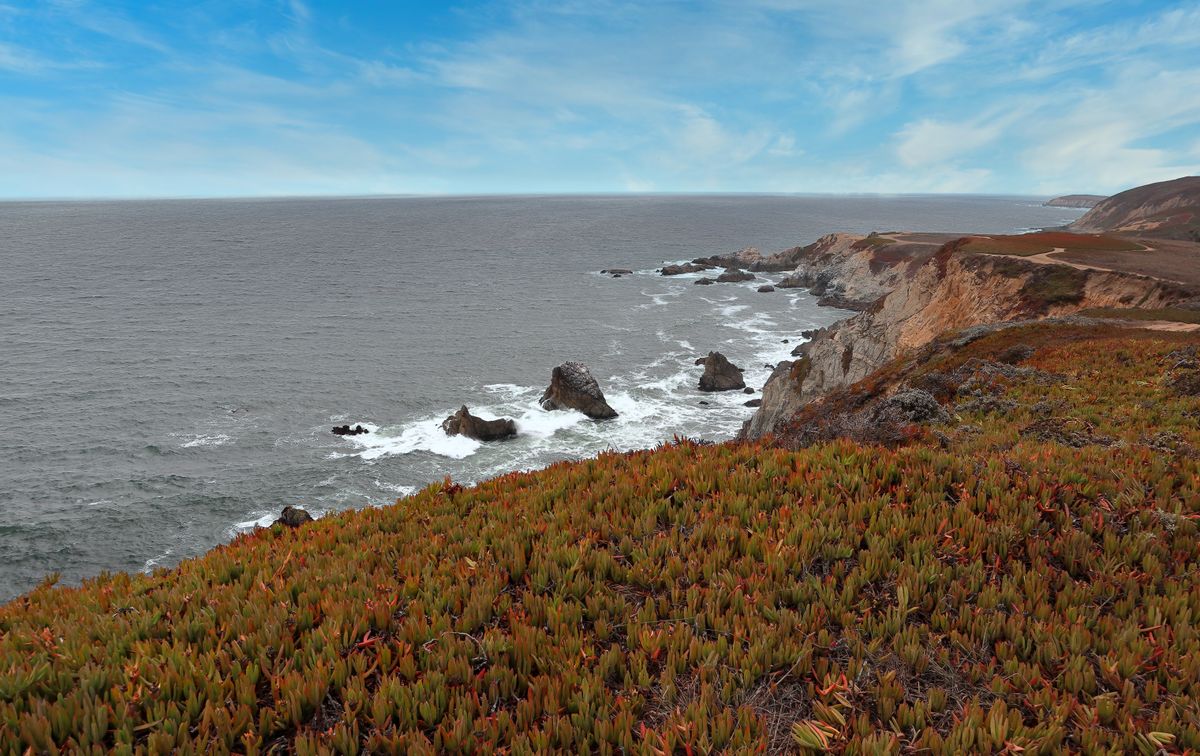
Harmony — this is the coast these pages are about.
Quick answer: Drainage & Grading in Harmony, CA — Trees are watered at the root zone, deeply and infrequently — a long soak that reaches down, then a dry spell that lets roots look for water, rather than a daily sprinkle that keeps everything in the top inch of soil. On the fog belt the question is rarely whether there is moisture in the air but how much got down to the roots.
- Typical timing: Deep watering through the dry season, spaced further apart as the tree establishes; young trees need it far more often than mature ones.
- What it involves: Watering at the drip line rather than the trunk, checking the soil six to eight inches down, and mulching so the water stays where it landed.
- The standard: University extension guidance on landscape tree irrigation and drought response.
- Where we work: The coastal terrace from Cambria to Morro Bay, sandy soil and clay both.
- Our own record: 503 pages and 291 stories published on this site. Counted from our own archive, not a stock table.
Field note. What we see here is that salt air and wind dry a canopy faster than the thermometer suggests, so a tree can be water-stressed on a grey week when nothing looks hot to the person holding the hose.
On the other hand, more water is not a cure-all: on clay, a daily soak drowns roots more often than drought does, and the symptoms look almost identical from above.
Winter is when Harmony's drainage questions arrive. Terrace ground takes a lot of rain quickly, drains fast in the sandy upper layer, and then meets a heavier seam below it where the water stops and spreads. Add a hundred years of farm tracks, a leach field, a barn with gutters discharging uphill of a bank, and the result is a property that is fine from May to October and complicated from November.
Drainage work is the least visible job on the list and it prevents more damage than anything else on it.
Find where the water actually goes
Before adding pipe, we walk the property in the rain if it can be arranged, because water on the move tells the truth that a dry site hides. The useful record is simple: where the roof water lands, where the drive sheds to, where the ground stays soft longest, and where the old farm ditches used to run — many of them are still there, half filled, and clearing one of them back out is cheaper than any new system.
Surface first, then subsurface
A swale that works with the grade moves a surprising amount of water with no pipe at all, and a shallow shaped channel across a slope above a building is often the whole answer.
Where the water is already concentrated underground, a French drain or a curtain drain intercepts it and carries it to a safe outlet — which matters, because a drain that simply moves a problem to the neighbour's bank is a legal question as well as an unkindness. Dry wells suit small roof areas on ground that percolates; they do not suit a terrace sitting on clay.
Where a pipe has to cross a root zone
A drain run that has to cross ground under a retained tree is planned before the dig rather than on the morning. The line that can be routed around the root zone is moved, the one that cannot is hand-dug, and the one that genuinely has to go straight through is dug against a trench on the far side of the tree so the roots keep a way round, with the trench backfilled and mulched the same week.
A pipe cut straight across a terrace tree's root plate in the winter is how a healthy eucalyptus at the lane becomes a failure two summers later.
Grading around trees is where damage happens
A grader is an efficient way to kill a mature tree. Raising the level over a root flare buries the roots that need air; taking it down cuts the ones feeding the crown; either can be invisible for three years. So the grade around retained trees is surveyed, the flare is found and protected, and the new surface is tied back to it rather than run over it.
Where the level has to change, the change happens away from the tree and the transition is built with an engineer's detail instead of a blade.
Downspouts, driveways and the little fixes
Much of the work is small: extending a downspout past the foundation to a splash block that sheds away, crowning a gravel lane so it sheds to the side rather than down the middle, cutting a cross drain in front of a gate, and stopping the one place where the gutter has been dumping onto a bank for years. On a farm parcel these fixes are often more effective than a new drain, and they cost a fraction of it.
If ground has started to stay wet, or a lane has begun to cut itself down, call (805) 927-4414 and we will read the water before we quote pipe. Slope and bank work is on the slope stabilization page; see our services or reach us on the contact page.
Field note — Samuel Delacroix would rather dig one shallow swale in the right place than lay a hundred metres of pipe in the wrong one.
Questions, quotes, or just exploring — we’re here to help.