


Reading the Ground Before the Bag
Tree Aeration & Fertilization in Harmony, CA
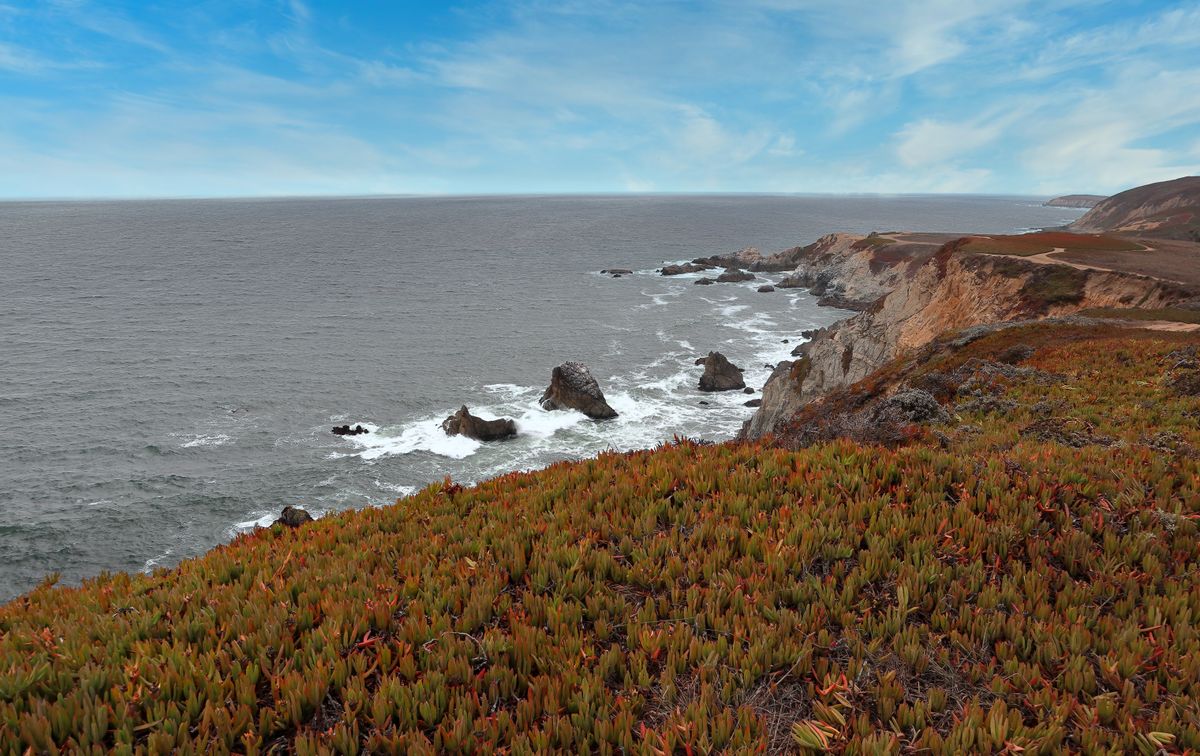
Harmony — this is the coast these pages are about.
Quick answer: Tree Aeration & Fertilization in Harmony, CA — A stump is the part of the problem that is still in the ground: it holds the roots that lift pavement, keeps a species alive if it re-sprouts, and occupies the spot where the next planting goes. Grinding removes it below the surface so the ground can be worked again, and the roots that matter are the ones under the driveway rather than the ones beside the trunk.
- Typical timing: Any month the ground is workable; rain-softened soil grinds fastest and leaves the cleanest spoil.
- What it involves: Assessing re-sprout risk by species, grinding below grade, raking the spoil back, and handling surface roots separately from the stump.
- The standard: ISA guidance on root cutting and the ANSI A300 pruning standard where roots and crown are worked together.
- Where we work: Cambria, San Simeon, Harmony, Cayucos, Morro Bay, Los Osos and the Cambria pine belt.
- Our own record: 503 pages and 291 stories published on this site. Counted from our own archive, not a stock table.
Field note. On this coast the stump is rarely the end of the job: Monterey pine and eucalyptus both keep enough energy in the roots to push new growth, so we are looking at the species before we quote the grind rather than after.
On the other hand, a stump left in a garden bed is sometimes the better answer — it decays, feeds the soil and costs nothing — so grinding is a choice, not a rule.
Feeding a tree on Harmony's terrace ground is not like feeding a lawn, and the first useful question is whether the tree is actually short of anything. Old farm ground here has had a century of grazing and mowing; it can be tight, low in organic matter, and sitting on a pH that has drifted with the salt air and the calcareous shell in the soil.
A slow-growing tree in that ground may be short of air and structure rather than short of nitrogen, and applying the second when it needs the first does nothing except push soft growth into a gale.
Start with the soil, not the bag
A soil test is worth the money when a tree is genuinely declining, when a planting has stalled, or when a lot is being returned to production and several trees are affected at once. It tells you pH, the major nutrients, and the organic fraction, and it stops the guess. On a single mature tree in reasonable health, the honest answer is often that no fertilizer is needed and the money is better spent on mulch and air.
Aeration before amendment
Roots in compacted ground cannot use nutrients that are already there. Aeration comes first: the compacted layer opened with an air tool or radial trenches so water, air and the roots themselves can move again. Only once the soil can breathe does adding anything make sense, and where the structure is the problem we usually build it with coarse organic matter in those same holes rather than with a granular product broadcast over the surface.
What the coastal soil does differently
Salt in the air and in the wind-borne spray adds sodium that competes with the nutrients a tree wants, and a site near the highway edge leaches and accumulates differently from ground further back. On the terrace the drainage is often fast, so anything soluble moves out of reach quickly unless it goes in with enough organic matter to hold it where roots can reach it. Slow-release material at a modest rate suits this ground better than a quick hit.
When not to fertilize
Two refusals matter here. A native oak should not be pushed at all — feeding it into soft summer growth works against the dormancy it depends on, and the risk of root disease rises with irrigation and lush growth. And a tree under stress from construction, grade change or root damage should not be fertilized while it is recovering; the salt load in a fertilizer makes the immediate problem worse, and the soil work is the treatment.
What it looks like when it works
The signs are modest and they take a season: a longer shoot extension than the year before, slightly larger and darker leaves, and a crown that fills back in at the edges rather than thinning further. Anything faster than that on a mature tree is soft growth, and on a windy stretch of coast soft growth is a liability.
Where the ground needs rebuilding rather than feeding, the work belongs with mulching; structural problems above are handled through the Harmony tree service.
If a tree has stalled and you are not sure whether it is food or ground, call (805) 927-4414 and we will test before we treat. See our services or reach us on the contact page.
Field note — Sofia Underwood would rather send a soil sample to a lab than sell a bag, because the two diagnoses lead to opposite treatments.
Questions, quotes, or just exploring — we’re here to help.