


Watering a Farm Tree Without Drowning It
Deep Watering & Drought Care in Harmony, CA
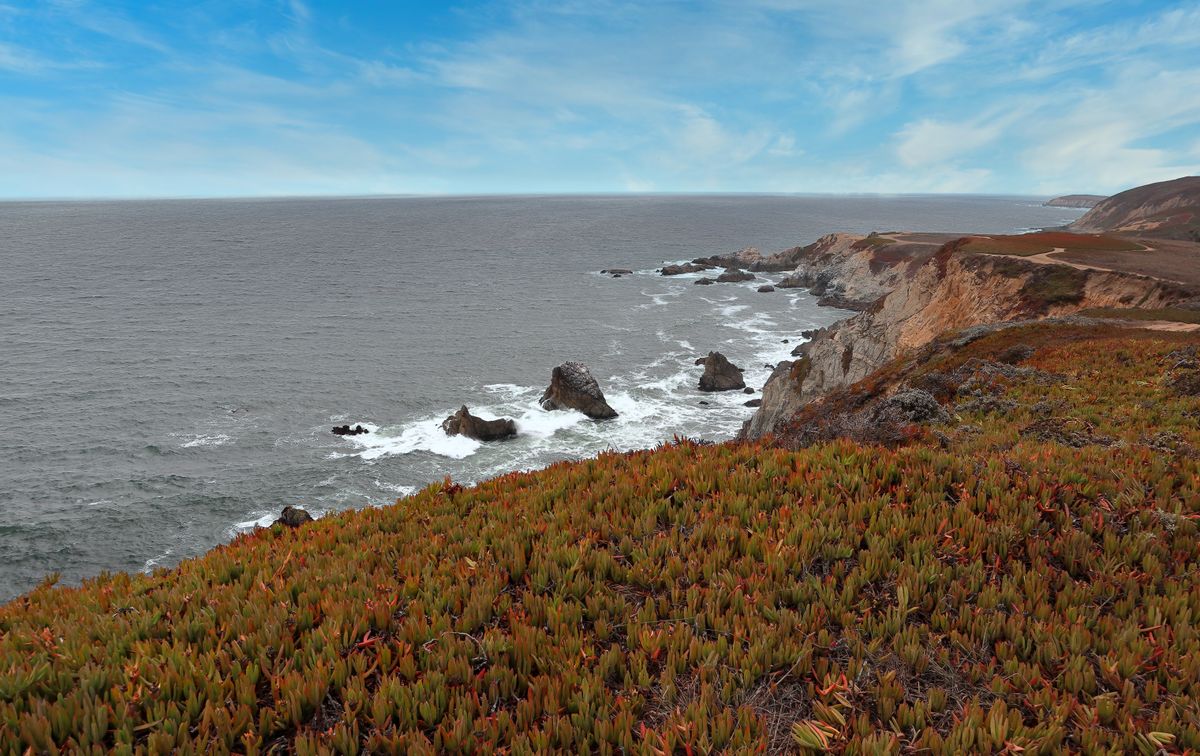
Harmony — this is the coast these pages are about.
Quick answer: Deep Watering & Drought Care in Harmony, CA — Trees are watered at the root zone, deeply and infrequently — a long soak that reaches down, then a dry spell that lets roots look for water, rather than a daily sprinkle that keeps everything in the top inch of soil. On the fog belt the question is rarely whether there is moisture in the air but how much got down to the roots.
- Typical timing: Deep watering through the dry season, spaced further apart as the tree establishes; young trees need it far more often than mature ones.
- What it involves: Watering at the drip line rather than the trunk, checking the soil six to eight inches down, and mulching so the water stays where it landed.
- The standard: University extension guidance on landscape tree irrigation and drought response.
- Where we work: The coastal terrace from Cambria to Morro Bay, sandy soil and clay both.
- Our own record: 503 pages and 291 stories published on this site. Counted from our own archive, not a stock table.
Field note. What we see here is that salt air and wind dry a canopy faster than the thermometer suggests, so a tree can be water-stressed on a grey week when nothing looks hot to the person holding the hose.
On the other hand, more water is not a cure-all: on clay, a daily soak drowns roots more often than drought does, and the symptoms look almost identical from above.
Harmony's trees have two very different water problems within a few hundred metres of each other. The old windrows and the cypress at the highway edge grow on their own and resent being watered at all, while anything planted in the last few years — a replacement, a screen, a young tree in the yard — sits in ground that drains hard through the terrace and needs help through the first three summers.
Getting the two confused is the most common way a tree here is killed by kindness.
Water the root zone, not the trunk
A hose laid against the base of a tree waters the wrong place. The absorbing roots are out at the edge of the canopy and beyond, so the water goes there: a slowly soaked band at and past the drip line, moved around the trunk rather than parked in one spot.
Cycle and soak beats one long flooding — a first pass to wet the surface, a wait, then a second to push the water down past the shallow roots instead of running it off the slope.
How much, and how to read the ground
Volume matters less than depth and repetition. The test is not the calendar but the soil: a hand pushed into the root zone a day after watering should find moisture well below the surface, and the soil two inches down should be cool and dark rather than either bone dry or soured and waterlogged.
Terrace ground over a clay seam can hold water higher than expected, which is why a site that looks dry on top can still be drowning below.
Fog, wind and the summer the coast forgets to dry out
Along this stretch the summer is often wet at dawn and dry by afternoon, and a tree can look adequately supplied while its soil is still drying out underneath. Wind matters as much as rain: a cypress in the highway wind loses water through the leaves on a hot afternoon regardless of what the ground holds, which is why the same tree can scorch in a week of clear weather and look untouched in a week of fog.
The oak exception, stated plainly
Coast live oak and the native oaks do not want summer water. They evolved to go dormant in the dry season, and a gentle irrigation schedule that suits a young yard tree can open a mature oak to root disease and shorten its life. Under an oak the answer is mulch, no irrigation, and no change to the grade — the ground it grew up in is the ground it needs.
Drought stress looks like other things
A thinning crown, a dieback of small twigs, a canopy that browns at the edges and a flush of epicormic shoots up the trunk are all symptoms, and they can be water, they can be compaction and change of grade, and they can be a root problem years old. Reading which one it is before the first watering is the difference between a cure and a worsening.
Trees that need structural work as well are handled through the Harmony tree service, and the ground itself through mulching.
If a young tree has stalled through two summers, or an old one has started to thin, call (805) 927-4414 and we will look at the soil before the hose. See our services or the contact page.
Field note — Sofia Underwood checks the ground first and the canopy second, because the leaves report a problem the roots have been having for a year.
Questions, quotes, or just exploring — we’re here to help.