

What Is Actually Treatable Here
Pest & Disease Management in Harmony, CA
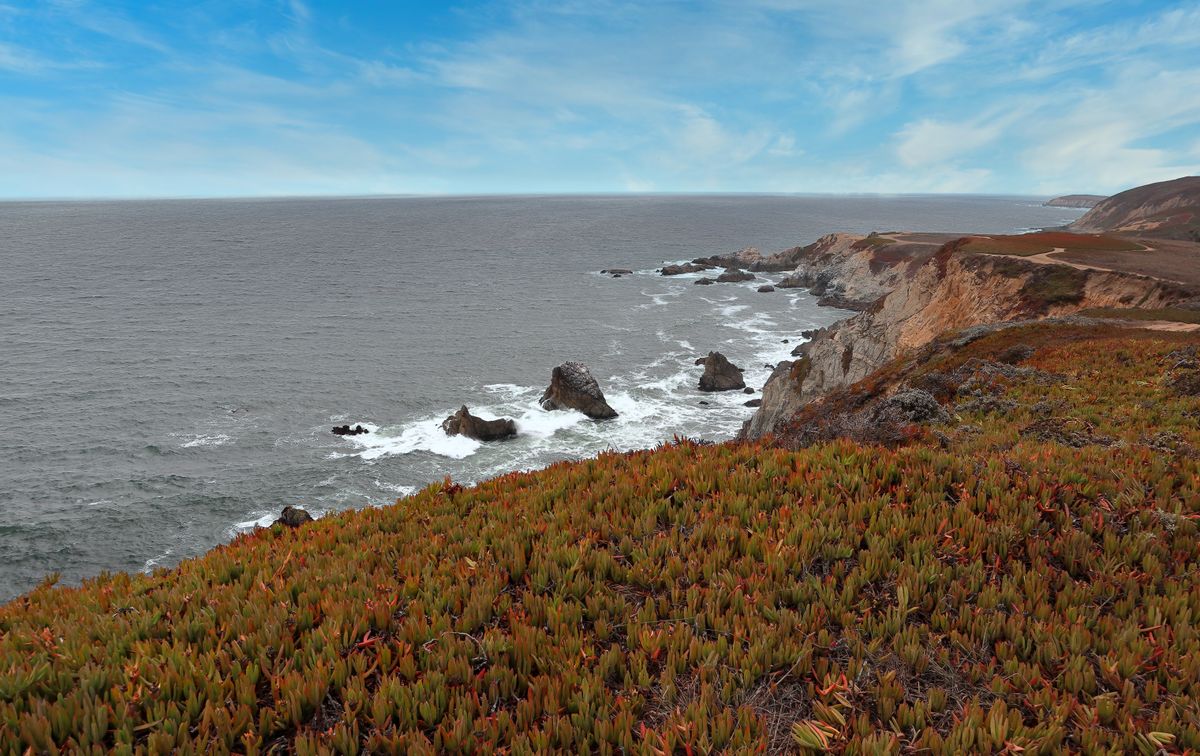
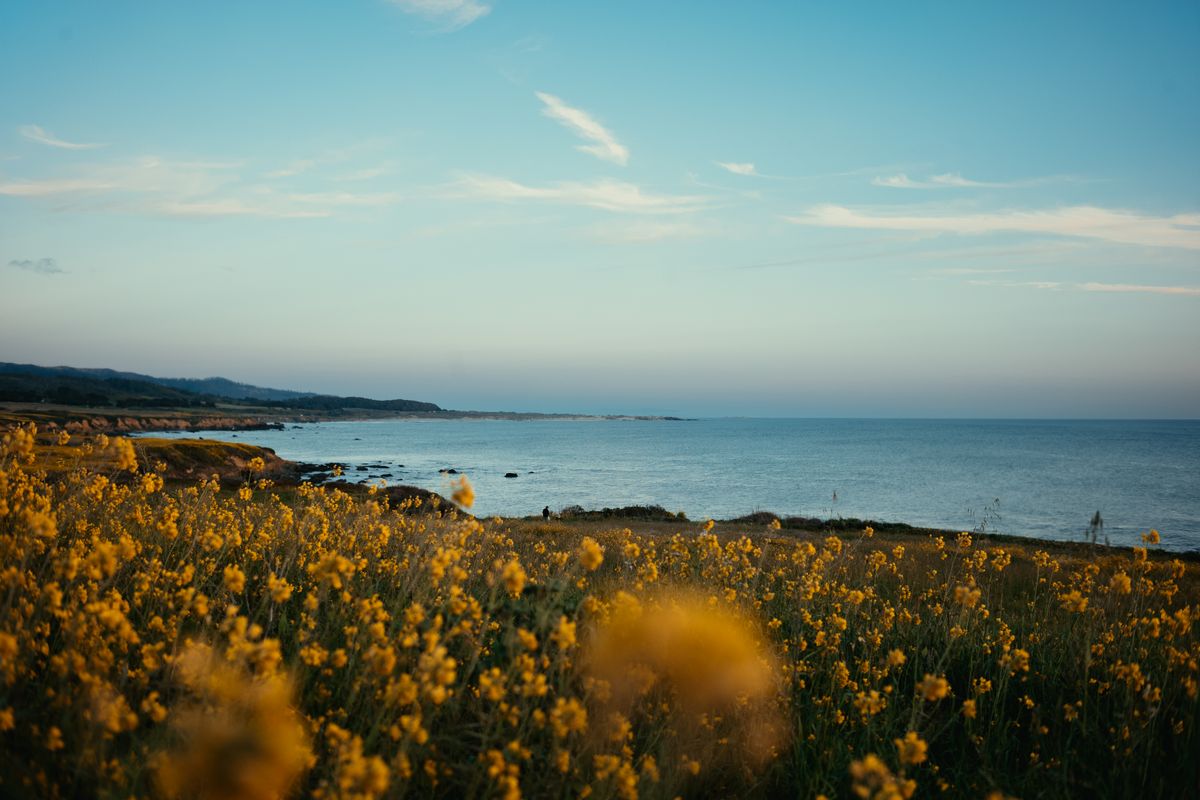
Harmony — this is the coast these pages are about.
Quick answer: Pest & Disease Management in Harmony, CA — Most tree trouble on the Central Coast is identified before it is treated: a borer, a canker and a drought-stressed root system can look the same from the ground, and each has a different answer. Diagnosis is the first cut — host, sign and season — and the least-toxic control that fits comes after it.
- Typical timing: Monitoring from bud break; fungal problems follow the wet spring, borers the dry summer and the stressed tree.
- What it involves: Identifying the host and the organism, judging whether the tree can compartmentalise the damage, and removing what cannot be saved.
- The standard: UC IPM pest notes and the ISA standard for hazard assessment.
- Where we work: Cambria and the coastal oak, pine and cypress stands around it.
- Our own record: 503 pages and 291 stories published on this site. Counted from our own archive, not a stock table.
Field note. What we see on this coast is that the tree under fog is often the healthier one and the tree on a hot exposed edge is the one that gets hit — stress is the invitation, and the coast hides it well.
On the other hand, treatment is not always the kindest answer: for a hazard tree with internal decay, careful removal protects the neighbours, and replanting does more for the site than a season of injections.
Tree pest and disease management in Harmony is mostly a story about drought. The pathogens that matter on this coast are not exotic arrivals so much as organisms that live here quietly and take their opportunity when a tree is water-stressed — and the century-old windbreak rows on these farm lots have had several dry years in a row to be stressed by.
The practical question is always the same: is this something treatable, or is it something to manage by removing the tree?
What actually matters on this stretch of coast
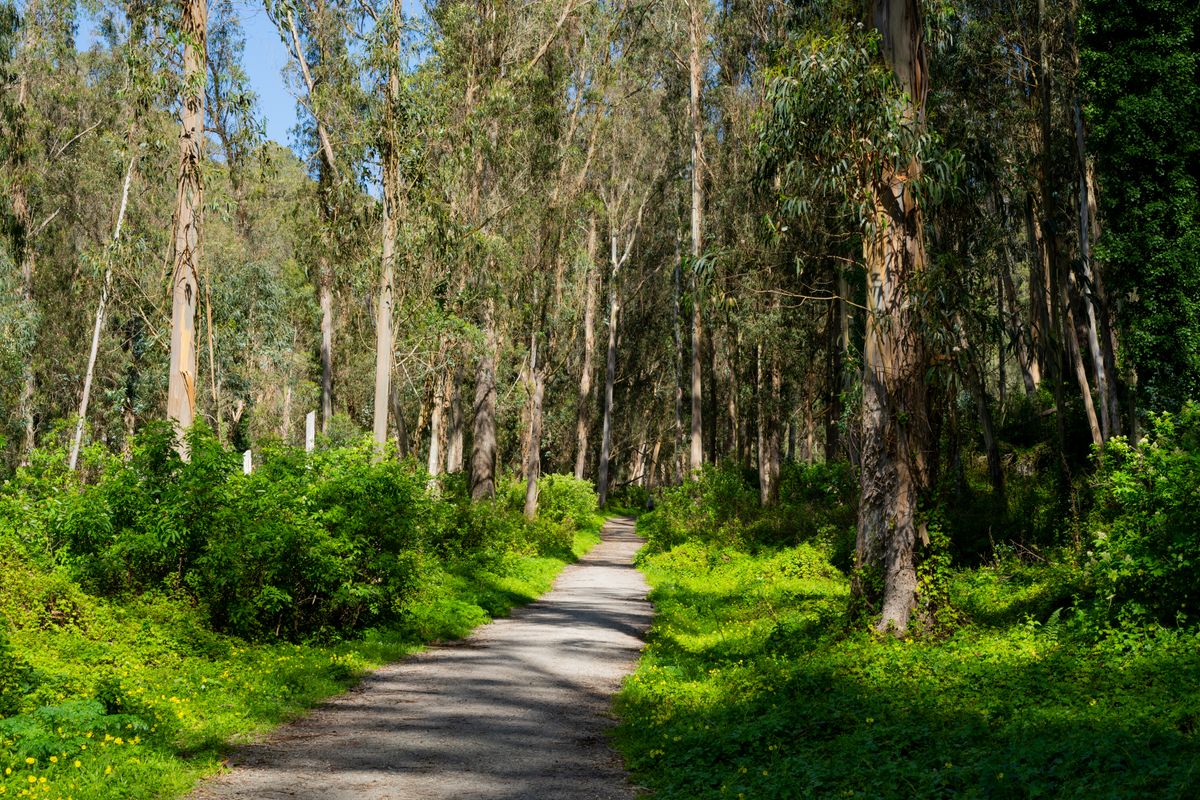
Pitch canker and bark beetles in the pines and the eucalyptus windrows are the ones that get noticed, usually after a dry spell, and both are strongly associated with trees that have already been weakened. Phytophthora — the organism behind sudden oak death — is present in this county and matters for the native oaks on the inland edges, where it moves with moisture and soil.
Armillaria, the oak root fungus, spreads underground along roots and shows up as a group of declining trees rather than one. Cypress canker takes out individual cypress and is a reason the older planted rows here have gaps. Scale insects come with the sap and the honeydew, more a nuisance than a killer.
Integrated management means the cultural work first
The order is deliberately unglamorous. Get the water right — for the planted eucalyptus and cypress that usually means less, not more, because the ground holds moisture from artesian supply; for the native oaks on the higher ground, it means no summer water at all. Take compaction out of the root zone. Remove the dead wood that harbours the beetles.
Keep the trees that are healthy vigorous enough to defend themselves, because a tree's own defences do most of the work. Only after that does chemistry come onto the table, and often it does not need to.
When treatment is worth it, and when it is not
Treating a tree that is already heavily infested with bark beetles is usually money spent on a removal that is coming anyway. Treating a group of oaks around an infected neighbour, on the other hand, can be worth doing, because reducing root-to-root spread in a stand of native oaks is a real objective and the trees are long-lived.
Cypress canker in a single tree in a row is a removal question; in a specimen it may be a pruning question, because air movement through the crown genuinely helps.
Removal as the responsible answer
Some of the time the right call is to take the tree out and not plant the same species back. Where a windrow has been progressively lost to canker, the replacement is a species that suits the site rather than another cypress, and that is a better outcome than a decade of injections.
On a parcel inside Cal Fire's State Responsibility Area there is a fire argument for removal too, because a diseased tree with dead material in its crown is fuel.
If you think something is spreading through your trees, call (805) 927-4414 or use the contact page and we will identify it before recommending anything. Our services page has the wider picture.
Field note — Dr. Liam Zimmerman identifies the organism before anyone quotes a treatment. Half the calls of an infestation here are actually a water problem that was never fixed.
Questions, quotes, or just exploring — we’re here to help.