

A Window Through the Windrow
View Clearing & Restoration in Harmony, CA
Harmony — this is the coast these pages are about.
Quick answer: View Clearing & Restoration in Harmony, CA — Trees on this coast live with fog, salt, wind and thin soil, and the work that keeps them healthy is decided by those conditions rather than by a calendar written inland. Structure, clearance and the root zone are what a tree here needs looked at, and small work done early is what keeps a tree out of the emergency list.
- What it involves: Structural pruning, clearance from structures and wires, deadwood removal, root-zone care and hazard assessment.
- Typical timing: Structural work in the dormant months; deadwood, clearance and hazard work whenever the tree needs it.
- The standard: The ISA standards for pruning and tree risk assessment, applied by ISA-certified arborists.
- Where we work: Cambria, San Simeon, Harmony, Cayucos, Morro Bay, Los Osos and the Cambria pine belt.
- Our own record: 503 pages and 291 stories published on this site. Counted from our own archive, not a stock table.
Field note. What we see on this coast is that the trees people worry about are usually not the ones in trouble: the pine with a clean crown and a lean that predates the house is often sounder than the tidy tree that has been quietly drowning in its own root zone.
On the other hand, there is no schedule that suits every tree — the same species on two sides of one street can need opposite care, which is why we look before we recommend.
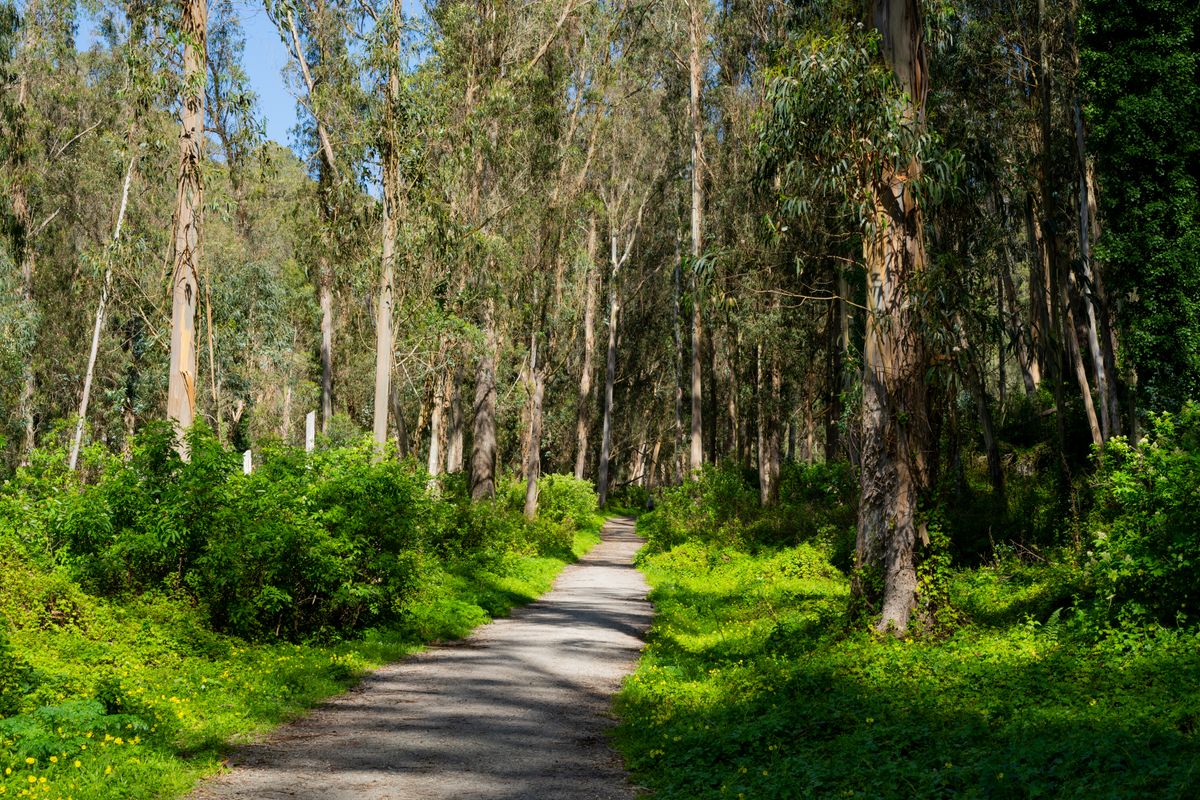
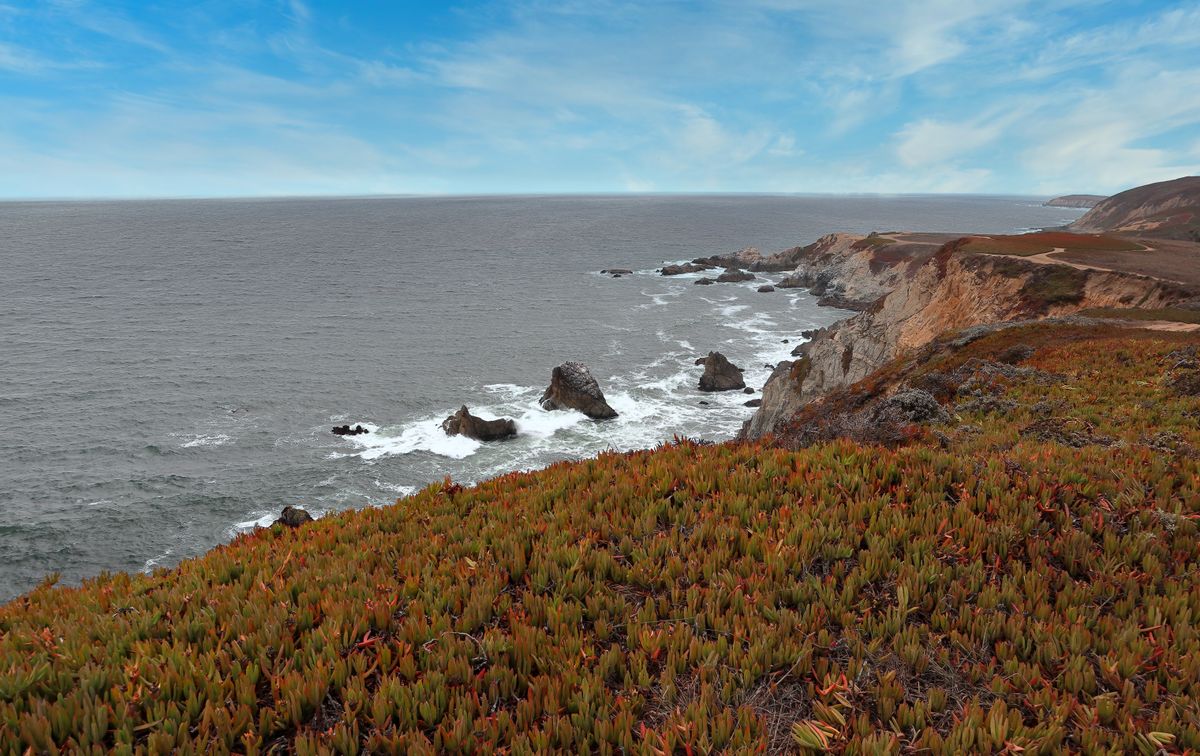
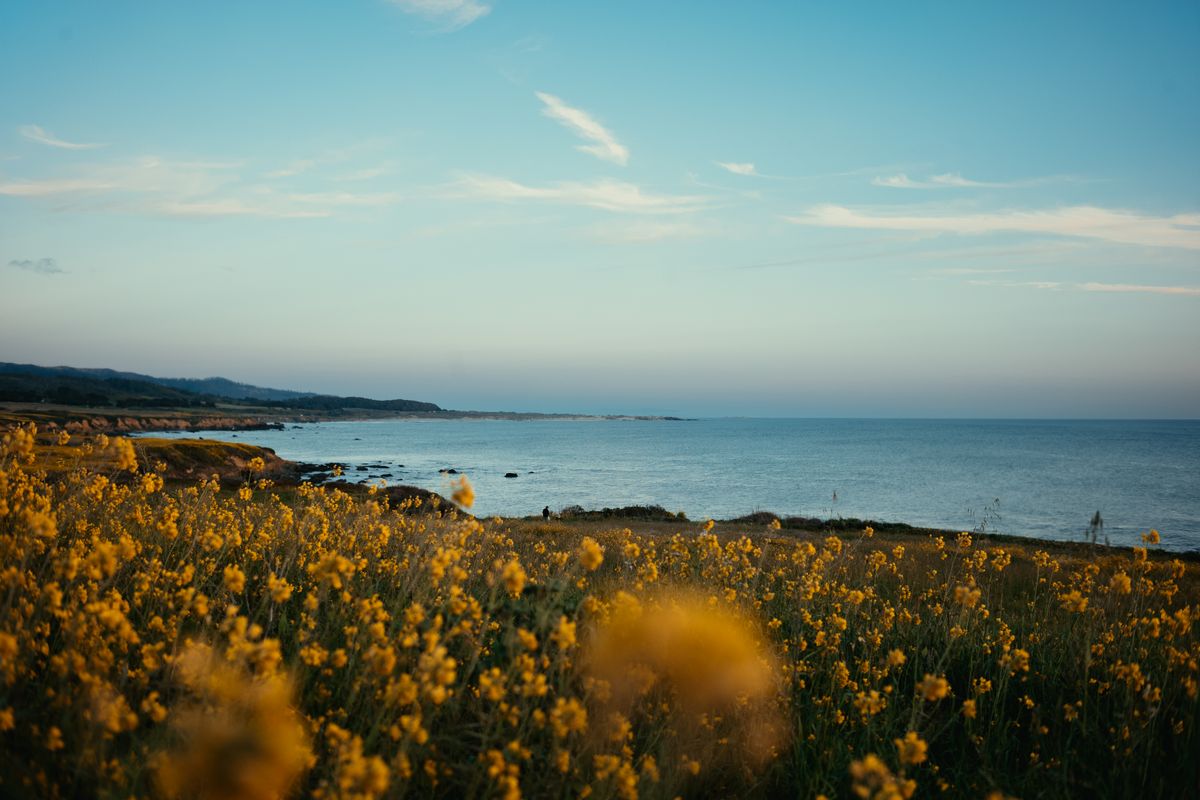
View clearing in Harmony is a narrower job than it sounds. The headline view belongs to the state park headlands and the water beyond it, and most of the parcels that can see it are looking between and over farm trees that were never planted for the view in the first place — a dairy windrow, a lane cypress, an olive row.
Restoring a sightline here means thinning a window through vegetation that has real work to do, not stripping a hillside.
Windowing rather than topping
The technique is selective: take specific limbs and specific small trees out of the line between the house and the horizon, and leave the rest of the canopy alone. Topping a tree to open a view is the failure everyone regrets — it produces a stubby, unstable tree that grows back into the sightline faster than a proper window would have needed touching again.
A window through a crown, cut back to laterals, holds its shape for years and leaves a tree that is still structurally sound.
How long a view lasts here
Faster than people expect. The coastal growing season is long, the ground holds moisture from artesian supply and creek flow, and a eucalyptus that has been opened will refill a gap in three or four years. That is not an argument against doing it; it is the reason to plan the work so the cut is at the right scale to begin with, and the reason to expect a maintenance visit rather than imagine the job is finished.
Whose tree is it
On the farm lots the view is often across a boundary. A tree on the property line belongs to the person whose land it stands on, and in a town the size of Harmony the practical answer to a disagreement is a conversation rather than a claim.
Where the tree was planted as a windbreak, removing it changes the shelter on the neighbour's side too — which is exactly the kind of thing worth agreeing on before anyone books a crew. If the tree is genuinely dangerous the conversation is different, but a view is not a hazard.
What the rules say
Harmony is unincorporated county ground inside the coastal zone, and there is no town tree ordinance to consult, which means the county's protections and the coastal review do the work. Native oaks carry their own setbacks, heritage trees are treated separately, and anything along the creek edge touches a third set of constraints. Ordinary pruning of a planted eucalyptus for a sightline does not need a permit; removing one, or working in the creek corridor, is a different question.
What we look at before cutting
What the tree is doing structurally — a windbreak whose removal exposes a building to the full gale is a real cost; whether the tree is a protected species or a heritage specimen; and whether a window at a lower height achieves the same view with a fraction of the work. Often the answer is one limb rather than one tree.
If a windrow has closed off your horizon, call (805) 927-4414 or use the contact page and we will walk the sightline with you. Our services page has the wider picture.
Field note — Margot Thackeray cuts the window, not the tree. One properly reduced limb often opens more sky than a whole felled cypress, and it leaves the windbreak standing.
Questions, quotes, or just exploring — we’re here to help.