

Planting Ground Nobody Will Water
Revegetation & Native Planting
San Luis Obispo — this is the coast these pages are about.
Quick answer: Revegetation & Native Planting — Trees are watered at the root zone, deeply and infrequently — a long soak that reaches down, then a dry spell that lets roots look for water, rather than a daily sprinkle that keeps everything in the top inch of soil. On the fog belt the question is rarely whether there is moisture in the air but how much got down to the roots.
- Typical timing: Deep watering through the dry season, spaced further apart as the tree establishes; young trees need it far more often than mature ones.
- What it involves: Watering at the drip line rather than the trunk, checking the soil six to eight inches down, and mulching so the water stays where it landed.
- The standard: University extension guidance on landscape tree irrigation and drought response.
- Where we work: The coastal terrace from Cambria to Morro Bay, sandy soil and clay both.
- Our own record: 503 pages and 291 stories published on this site. Counted from our own archive, not a stock table.
Field note. What we see here is that salt air and wind dry a canopy faster than the thermometer suggests, so a tree can be water-stressed on a grey week when nothing looks hot to the person holding the hose.
On the other hand, more water is not a cure-all: on clay, a daily soak drowns roots more often than drought does, and the symptoms look almost identical from above.
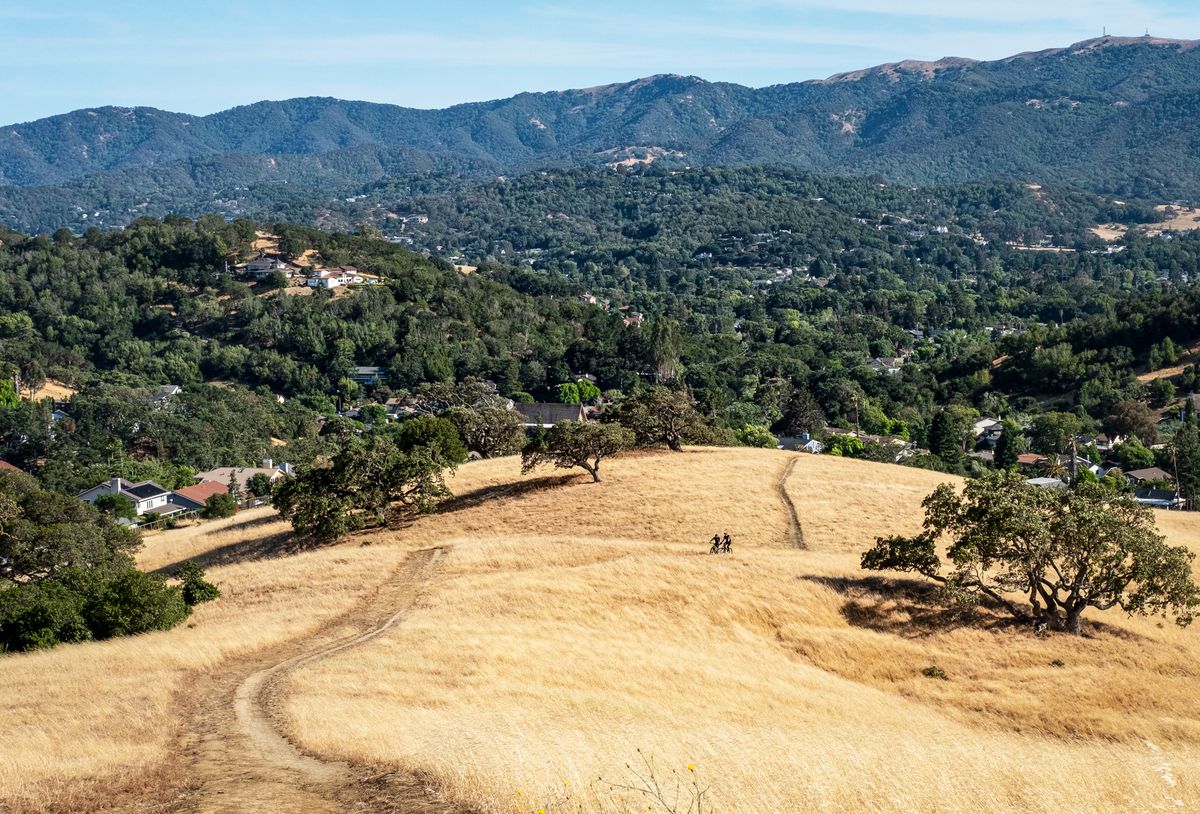
Revegetation in this valley is the art of planting ground that will not be watered. A burned hillside above the city, a bank scraped clean by a grading project, a lot cleared for a build that then stalled — all of them face the same first winter, when bare ground on a slope and six centimetres of rain in two days is how you lose the topsoil that took centuries to form.
The plants that fix that are the ones already adapted to dry summers, clay, and heat, and they need to be in before the rain rather than after the loss.
Choose for the site, not for the look
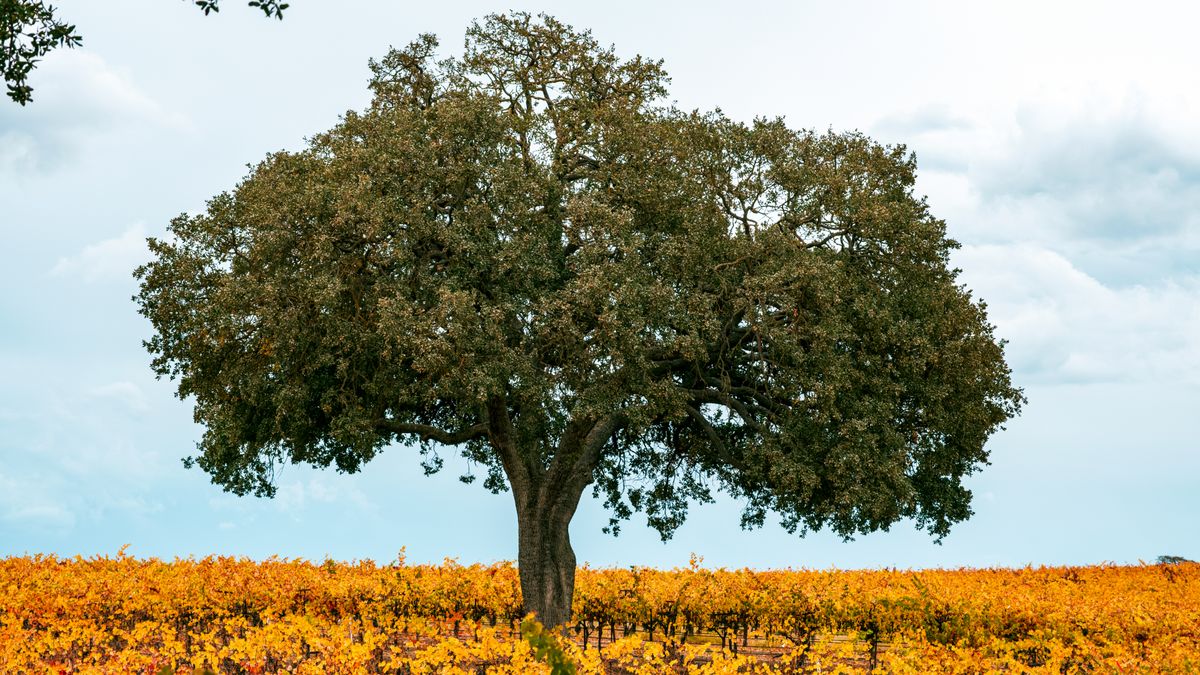
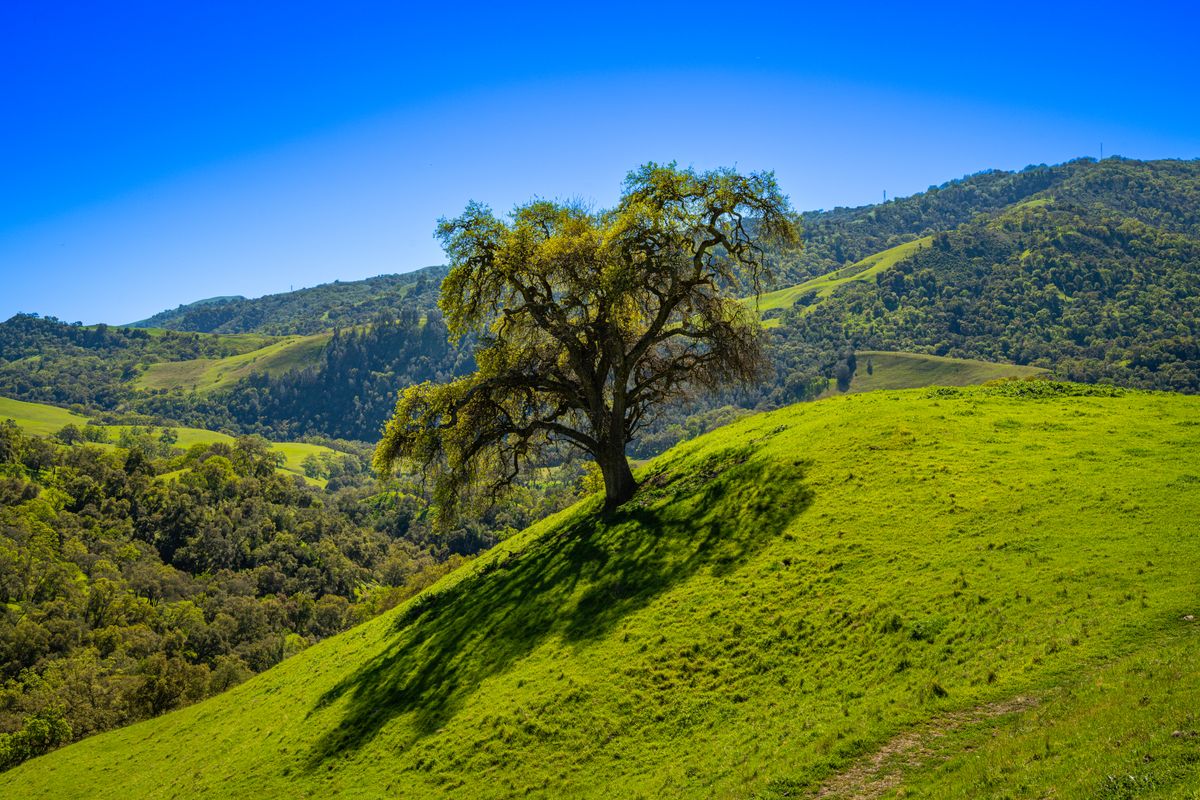
The city sits in a rain shadow warm enough that coastal species struggle and inland ones thrive. What establishes here without help: coast live oak and valley oak from local stock, California sycamore along the creek lines where the ground stays moist, toyon, ceanothus, coffeeberry, coyote brush, and the native bunchgrasses. What usually fails: anything that wants summer water and fog, and anything planted into compacted fill without preparation.
Establishment water — the one exception you have to plan
Native planting is not no-water planting in the first two seasons. Container stock needs watering through the first summer or two, and that water has to be delivered carefully anywhere near a mature oak, whose root zone should not be summer-irrigated at all. The usual answer is to plan the oak's root zone as a no-water island and to keep the irrigated planting outside it, which is a layout decision made on the plan rather than on the day.
Hydroseed, container stock, or both
Hydroseed covers a large slope cheaply and quickly, and on a steep face it is sometimes the only material that will stay where it is put. Container stock costs more per square metre and survives far better on harsh ground, and it is what we use where the goal is a plant community rather than a green flush for one season.
The honest combination on most projects here is container stock on the critical areas and seed elsewhere, with a mulch or erosion blanket over the whole thing so the first storm does not take it.
Vegetation must not compete with the trees you kept
The commonest mistake after a clearing job is to plant densely right up to the trunks of the trees that were retained. Turf, ground cover and shrubs within a root zone take the same shallow water and air the tree needs, and a young planting that grows fast becomes a competitor in three years. Leave the root zones mulched and open, and let the new planting carry the open ground.
Plan the planting around the rain
Send a photograph of the slope and tell us what the ground has been through. Call (805) 927-4414 or use the contact page and we will set a species list and a planting window that fits the season.
Questions, quotes, or just exploring — we’re here to help.