



Where the Winter Water Goes
Drainage & Grading
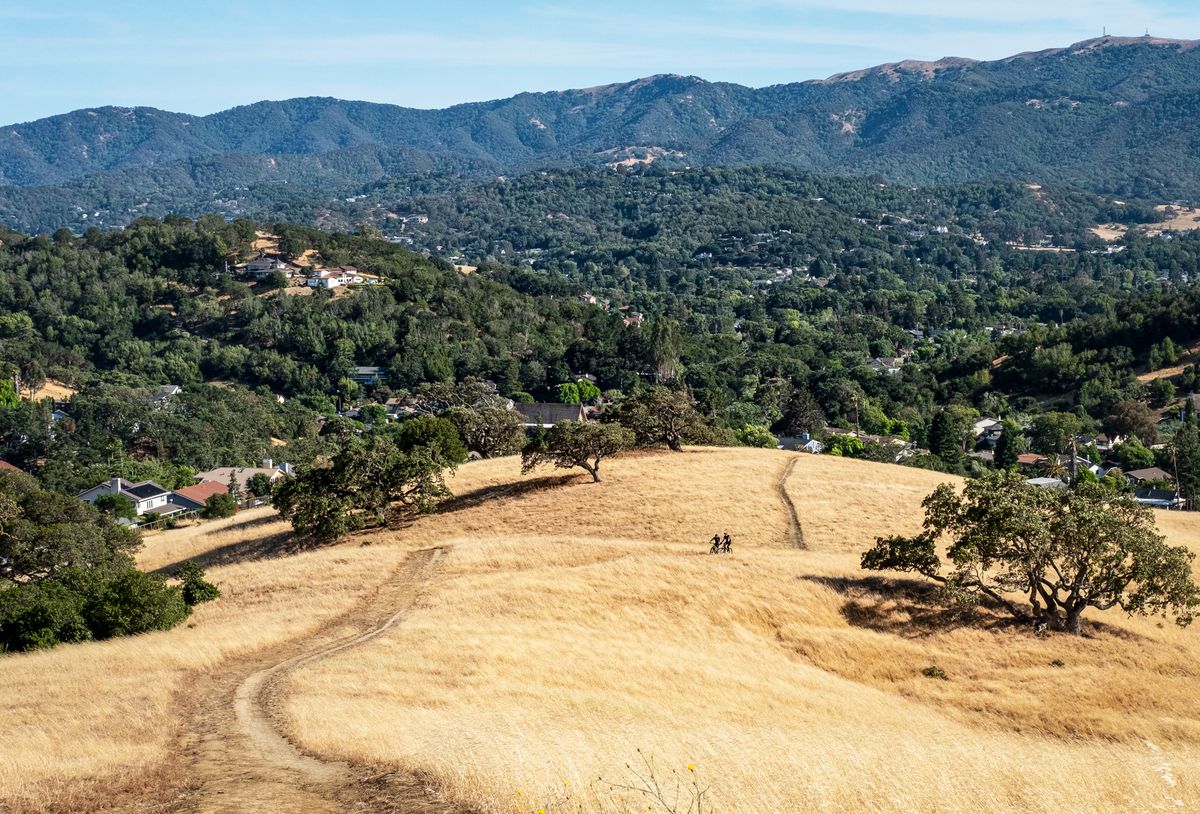
San Luis Obispo — this is the coast these pages are about.
Quick answer: Drainage & Grading — Trees are watered at the root zone, deeply and infrequently — a long soak that reaches down, then a dry spell that lets roots look for water, rather than a daily sprinkle that keeps everything in the top inch of soil. On the fog belt the question is rarely whether there is moisture in the air but how much got down to the roots.
- Typical timing: Deep watering through the dry season, spaced further apart as the tree establishes; young trees need it far more often than mature ones.
- What it involves: Watering at the drip line rather than the trunk, checking the soil six to eight inches down, and mulching so the water stays where it landed.
- The standard: University extension guidance on landscape tree irrigation and drought response.
- Where we work: The coastal terrace from Cambria to Morro Bay, sandy soil and clay both.
- Our own record: 503 pages and 291 stories published on this site. Counted from our own archive, not a stock table.
Field note. What we see here is that salt air and wind dry a canopy faster than the thermometer suggests, so a tree can be water-stressed on a grey week when nothing looks hot to the person holding the hose.
On the other hand, more water is not a cure-all: on clay, a daily soak drowns roots more often than drought does, and the symptoms look almost identical from above.
Yard drainage is the San Luis Obispo problem that presents as a tree problem. Water that cannot get through adobe clay has to go somewhere, and on a lot with any fall it usually goes sideways until it finds a low corner, where it sits against a trunk, drowns a root zone, and shows up two summers later as a thin crown nobody connects to the winter puddle.
Fixing the water is often the whole of the fix, and it is far cheaper than the tree work it prevents.
Where the water is coming from
Before a trench is dug, we find the source. Roof and driveway runoff, a neighbour's grade that has been raised, an irrigation system that runs to waste, a downspout that has discharged onto the same square metre since the house was built. On the hills here it is usually the first of those, arriving fast and concentrated. The map of where water enters and where it is meant to leave is the design.
Surface, then subsurface
Shallow swales and a regraded surface handle the volume that falls on site, and they are the most robust answer because they have no pipe to clog.
Where you need to move water through ground rather than over it, a French drain or a curtain drain carries it in a trench of gravel and perforated pipe, discharging to a daylighted outlet — never to a blind pit that will silt up and stop working without telling anyone. Dry wells suit small volumes on well-drained ground, and they are the wrong tool on clay.
Grading that respects the tree
The root flare is the reference point for every decision. Cutting a swale through a root zone removes roots and can change how a tree is anchored; adding fill to smooth a grade buries the flare and starves the root plate. Where a fall must be created near a mature tree, the change is kept outside the critical root zone and the water is carried in a lined channel rather than allowed to soak in at the base.
Downspouts and the lawn habit
Extending a downspout a few metres costs very little and solves a surprising share of these problems, as does turning irrigation down instead of up. Turf on clay wants constant shallow water, which is what keeps a root zone saturated through the growing season; reducing lawn or converting it to a planted bed with mulch cuts the water demand and the drainage load at once.
Terracing and retaining
On the steeper lots, terracing turns one long slope into a series of short ones and slows the water at each step. It also adds weight and needs a wall designed to hold it, so it is a decision to make with an eye on the slope above, not just the garden below.
Start with a walk of the lot
Show us where it floods and where the water comes from. Call (805) 927-4414 or use the contact page and we will map the flow before anything is dug.
Questions, quotes, or just exploring — we’re here to help.