


Dead Wood in the Hills Above Town
Dead Tree Removal in San Luis Obispo
San Luis Obispo — this is the coast these pages are about.
Quick answer: Dead Tree Removal in San Luis Obispo — Removing a tree is planning before it is cutting: where the wood lands, what is under it, whether a rope or a crane takes the weight, and what is left when the crew drives away. A removal is finished when the drop zone is clear and the stump is dealt with, not when the trunk hits the ground.
- Typical timing: When the tree is a hazard, the schedule is immediate — storm damage, split leaders and leaners do not wait for good weather.
- What it involves: A written plan for the drop zone, rigging or crane work over structures, protecting driveways and roofs, and deciding the stump’s fate in advance.
- The standard: The ANSI Z133 safety standard for arboricultural operations, and ISA best practice for removals near structures.
- Where we work: Small town lots, coastal acreage and the narrow properties of the Cambria pine belt.
- Our own record: 503 pages and 291 stories published on this site. Counted from our own archive, not a stock table.
Field note. What we see here is that access decides the price more than height does: a pine over a fence on a slope with no driveway costs more to take down safely than a taller tree with a clear drop, and the plan is where that shows up.
On the other hand, removal is not the only safe answer — a tree with one failing limb, or a lean that can be corrected by reduction, is often better kept and managed than gone.
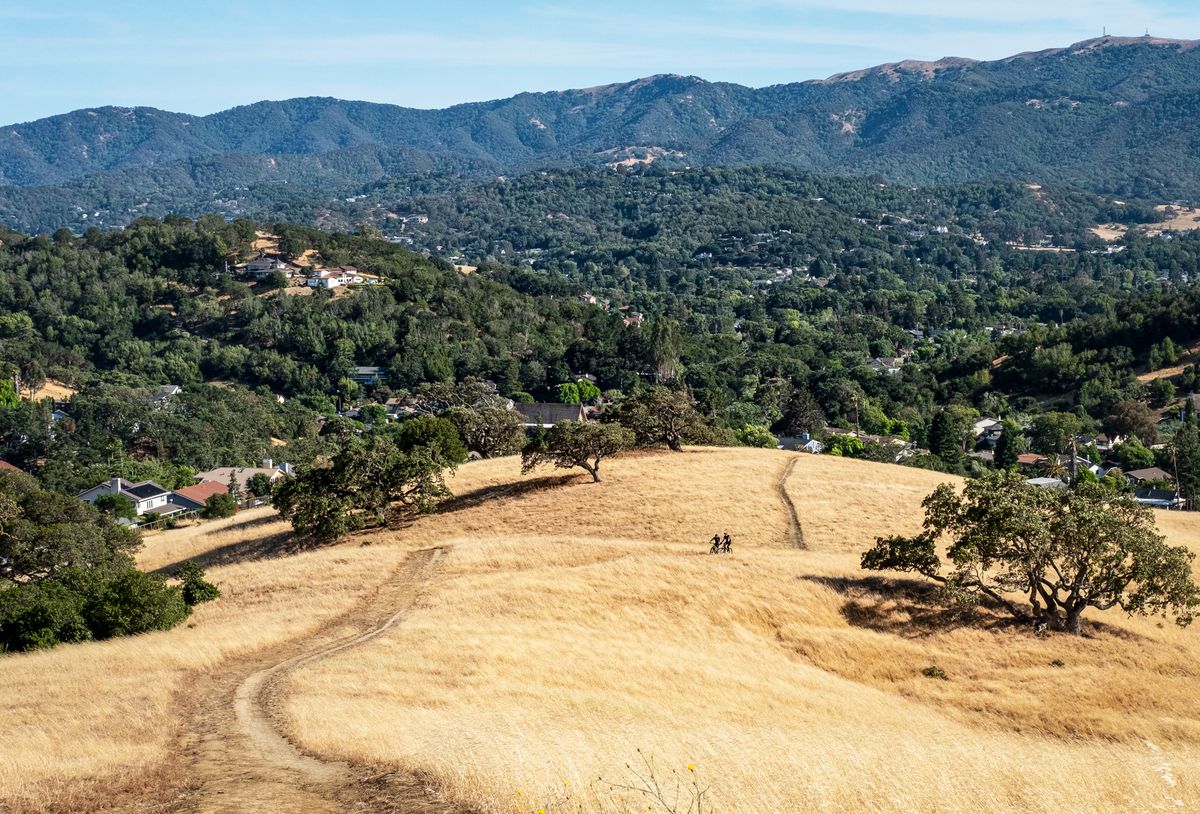
Drought and bark beetles have left San Luis Obispo with more standing dead wood than it had a decade ago, and most of it is up on the hills — the pines along the ridge above Poly canyon, the older Monterey pines on north-facing slopes, the oaks that died slowly across three dry summers and never leafed out again.
Dead tree removal san luis obispo is usually planned work rather than an emergency call, and that is the good news: a dead tree is a job you get to schedule.
Dead, dying, or simply dormant
The three look alike in February and nothing alike in June. A dead tree has no live cambium under the bark, and a scratch with a knife on a twig shows brown rather than green. A dying tree still has live tissue in places, with dieback at the tips and epicormic shoots on the trunk — the tree's own attempt to replace canopy it can no longer support. A dormant deciduous tree is fine and just has no leaves.
Getting this wrong wastes money on a healthy tree or leaves a hazard standing, which is why the diagnosis comes before the quote.
Why dead wood is a different job
Dead wood is brittle. It does not bend or hold a hinge the way green wood does, so the usual tricks do not work: a climber cannot trust a limb to take a load, a notch-and-back-cut behaves differently, and a piece that would have hinged and fallen on a live tree can snap and launch instead.
Every cut on a dead tree is planned for the assumption that the wood may fail early, loads stay small, and the rigging is placed where the tree can still take it.
The beetle story on these hills
The pines that died here were mostly killed by beetles working drought-stressed trees — a tree with enough water can pitch out a beetle, and a tree three years short of rain cannot. Once the needles have gone brown the beetle has already left, but the tree it leaves is dry, light and unpredictable, and it is dropping limbs on its own schedule.
The coastal live oaks die more slowly and more quietly, which is why they are often the ones an owner has to be told about.
Sequencing more than one
When several dead trees are standing, the order matters. The ones leaning toward a structure, the ones with a target underneath and the ones that would land on the access route all come out in a planned sequence with a landing zone that serves the whole job. Doing them one at a time costs more than doing them together, and it means walking a crew back under the trees that are still standing.
After the removal
We clear the site, take the brush, and decide the stump on its own merits — ground where a lawn or patio goes in, left where the roots are holding a slope. If the tree died for a soil or water reason, that reason is still in the ground, and putting the same species back into the same spot is how the same dead tree gets planted twice. See tree planting & installation before you replant.
Book an assessment
Send a photo of the bark and the base if you are not sure whether it is dead. Call (805) 927-4414, reach us through the contact page, or start at our services.
Questions, quotes, or just exploring — we’re here to help.