

Water That Will Not Leave
Drainage & Grading
Los Osos — this is the coast these pages are about.
Quick answer: Drainage & Grading — Trees are watered at the root zone, deeply and infrequently — a long soak that reaches down, then a dry spell that lets roots look for water, rather than a daily sprinkle that keeps everything in the top inch of soil. On the fog belt the question is rarely whether there is moisture in the air but how much got down to the roots.
- Typical timing: Deep watering through the dry season, spaced further apart as the tree establishes; young trees need it far more often than mature ones.
- What it involves: Watering at the drip line rather than the trunk, checking the soil six to eight inches down, and mulching so the water stays where it landed.
- The standard: University extension guidance on landscape tree irrigation and drought response.
- Where we work: The coastal terrace from Cambria to Morro Bay, sandy soil and clay both.
- Our own record: 503 pages and 291 stories published on this site. Counted from our own archive, not a stock table.
Field note. What we see here is that salt air and wind dry a canopy faster than the thermometer suggests, so a tree can be water-stressed on a grey week when nothing looks hot to the person holding the hose.
On the other hand, more water is not a cure-all: on clay, a daily soak drowns roots more often than drought does, and the symptoms look almost identical from above.
The Winter Is Where the Problems Show Up
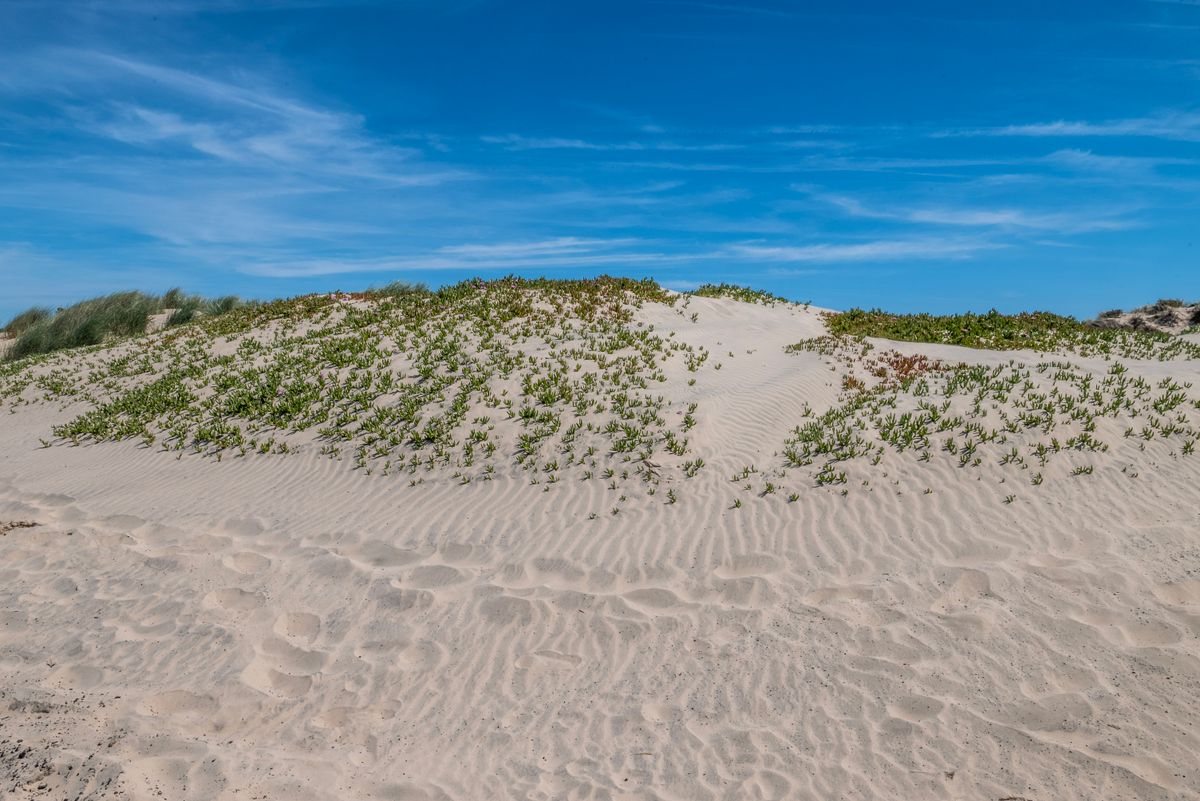
Yard drainage los osos properties need is dictated by two facts of the ground: the sand here drains fast until it has been compacted or has a hard layer under it, and the water table in the flats near the bay sits high enough after a wet January to turn a low corner of a yard into a pond that will not leave.
Both are manageable, and both get worse when a grade is changed without thinking about where the water used to go.
Surface Water First
The cheapest drainage is almost always at the surface. A swale that carries roof and driveway runoff around a tree rather than across its root zone, a downspout extended to daylight instead of discharging at the foundation, a driveway re-graded so it falls away from the house — these are unglamorous and they solve most of what people call a drainage problem.
- Swales and shallow ditches shaped so water moves without scouring, with the flow directed to a safe outlet rather than to a neighbour's lot.
- Downspout and curtain drains to pick up roof water and the shallow groundwater that keeps a slope or a planting bed wet.
- Dry wells where the sand genuinely accepts water — and nowhere near a septic leach field, which on many Los Osos lots is the one thing that must not be loaded further.
Under the Surface
Where the problem is a hard pan or a compacted layer holding water above it, a French drain or a curtain drain intercepts the flow and carries it away below grade. On dune sand the critical design question is where the water goes when it gets there; a drain that discharges onto a slope simply moves the erosion downhill.
Geotextile and clean gravel in the trench keep sand from silting the pipe shut, which is the failure that turns a working drain into a wet stripe in the lawn after two seasons.
Grading Around Trees Is Not Free
A grade change is a root-zone event. Soil added over a flare suffocates the bark and the roots beneath it; soil cut away removes the roots that were holding the tree. On a lot where regrading is part of the plan, the work near any tree worth keeping is done by hand, the flare is left where it was, and the finished grade falls away from the trunk rather than toward it.
Where a tree has already been buried or paved over, that injury is soil and root-zone remediation, and it is best found before the new grade is final.
Where Drainage Meets the Slope
On the hillside lots the two services are one job. Water collected at the top of a bank and discharged at the wrong place is how a slope starts moving, which is the subject of slope and bluff stabilization. Where the soil is already leaving the surface, that is erosion control.
Get the Water Looked At Before It Rains
The best time to assess drainage is in the dry, when you can still see the grades and the outlets. Call (805) 927-4414 or use the contact page to arrange a visit, and start at our services for the wider picture here.
Questions, quotes, or just exploring — we’re here to help.