

A Schedule That Survives the Board
HOA & Apartment Programs in Morro Bay, CA
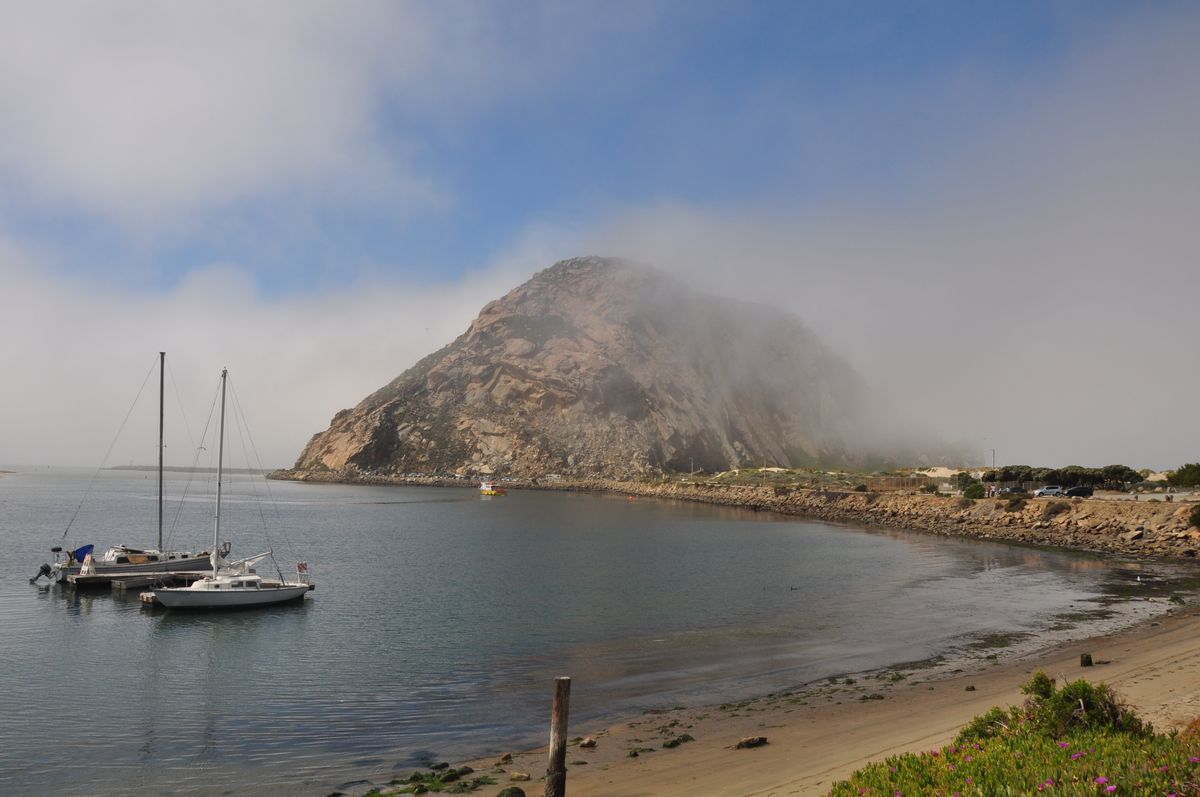
Morro Bay — this is the coast these pages are about.
Quick answer: HOA & Apartment Programs in Morro Bay, CA — Trees on this coast live with fog, salt, wind and thin soil, and the work that keeps them healthy is decided by those conditions rather than by a calendar written inland. Structure, clearance and the root zone are what a tree here needs looked at, and small work done early is what keeps a tree out of the emergency list.
- What it involves: Structural pruning, clearance from structures and wires, deadwood removal, root-zone care and hazard assessment.
- Typical timing: Structural work in the dormant months; deadwood, clearance and hazard work whenever the tree needs it.
- The standard: The ISA standards for pruning and tree risk assessment, applied by ISA-certified arborists.
- Where we work: Cambria, San Simeon, Harmony, Cayucos, Morro Bay, Los Osos and the Cambria pine belt.
- Our own record: 503 pages and 291 stories published on this site. Counted from our own archive, not a stock table.
Field note. What we see on this coast is that the trees people worry about are usually not the ones in trouble: the pine with a clean crown and a lean that predates the house is often sounder than the tidy tree that has been quietly drowning in its own root zone.
On the other hand, there is no schedule that suits every tree — the same species on two sides of one street can need opposite care, which is why we look before we recommend.
An HOA or apartment complex in Morro Bay does not need a tree crew so much as a schedule that survives a change of board. The problem with shared property is not that the trees are hard; it is that nobody owns the problem, so work happens in reaction to a complaint or a near miss, and the same tree is inspected three times in five years by three different people on three different budgets.
Start with a plan, not a work order
A tree program for a shared property begins with the thing an individual owner rarely needs: a written inventory of the common-area trees with a condition note and a recommended action for each, sorted by urgency. That document is what turns a series of emergency calls into a multi-year cycle, and it is the same deliverable described in tree inventory and management plan. Without it, every board inherits a problem without a history.
Who is responsible for what
On a Morro Bay complex the boundary between common area and owner responsibility is usually defined in the CC&Rs and frequently misunderstood.
Trees inside a limited common area, trees overhanging a parking space, and trees rooted on one lot with a canopy over another all sit differently, and the board that documents its decisions avoids the argument that follows a limb landing on a car. Where a tree is genuinely shared, the conversation should happen with the neighbour before the saw is out.
Working around residents
Crews and residents in the same small area need arranging: parking cleared the night before, notices posted where people actually look, work scheduled away from the morning the bins go out, and the noisy work kept inside civil hours. On a dense downtown block it is worth walking the access route with the manager beforehand, because the narrowest point in Morro Bay is often the one that decides whether a crane can be used at all.
Liability, and why the paperwork is the protection
A board's exposure is not usually the tree; it is the absence of a record that the tree was looked at. Documented inspections on a cycle, the recommended work with a date against it, and a file of what was completed give a board its defence and give the next board its starting point.
That is why the assessment side — the risk and hazard work behind tree risk assessment — matters more on a portfolio than on a single lot.
Budgeting and the emergency protocol
Two things make a program work commercially. First, a budget the board can see across three to five years, so the removal of a declining pine is a planned line rather than a special assessment. Second, a written emergency protocol: who the board calls, who can authorise out-of-hours work, and where the vehicle access and shut-off points are.
When a storm takes a limb out of a cypress at eleven at night, the crew that arrives should not be reading it off a stranger's note.
Tell us the number of buildings and roughly how many trees are in the common areas, and we will scope a first walk. Call (805) 927-4414 or use the contact page, and see the Morro Bay hub for the rest of the work here.
Field note — Adrian Delacroix writes board reports in plain language on purpose: a recommendation that has to be translated at the meeting does not get funded.
Questions, quotes, or just exploring — we’re here to help.