

When the Hill Starts to Move
Slope & Bluff Stabilization in Morro Bay, CA
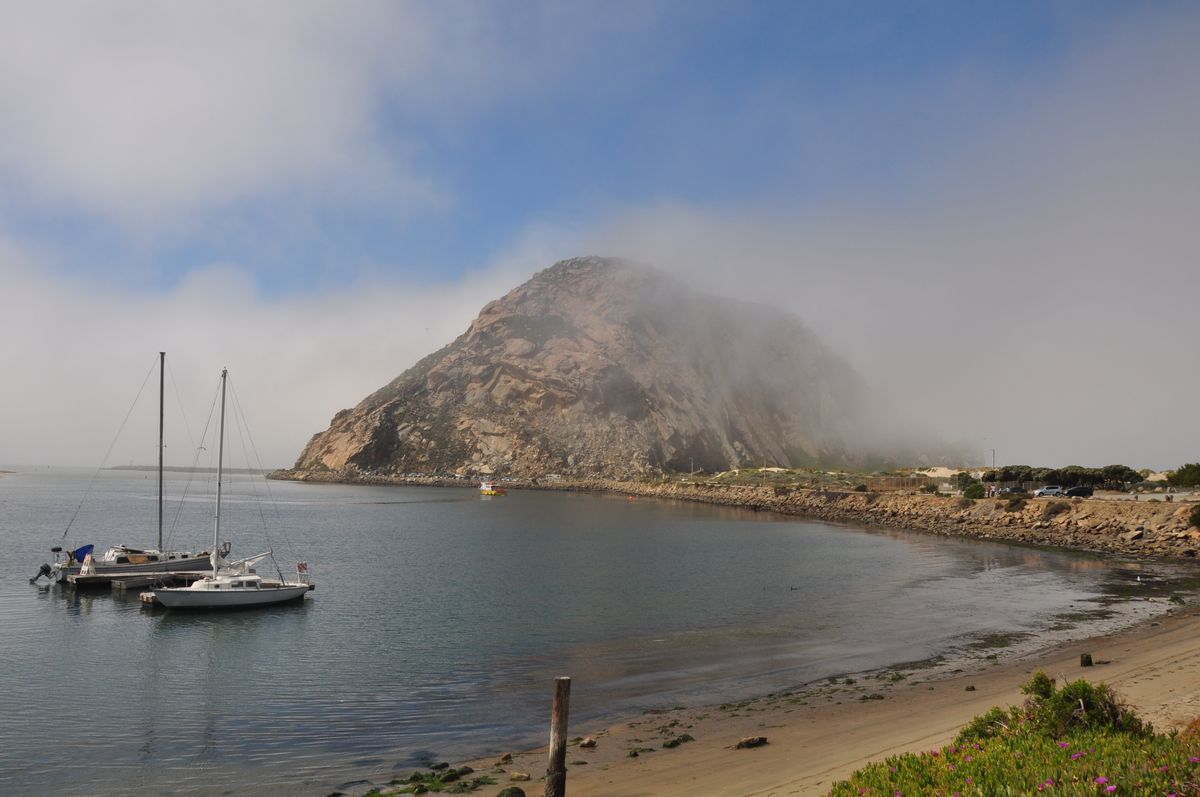
Morro Bay — this is the coast these pages are about.
Quick answer: Slope & Bluff Stabilization in Morro Bay, CA — Trees on this coast live with fog, salt, wind and thin soil, and the work that keeps them healthy is decided by those conditions rather than by a calendar written inland. Structure, clearance and the root zone are what a tree here needs looked at, and small work done early is what keeps a tree out of the emergency list.
- What it involves: Structural pruning, clearance from structures and wires, deadwood removal, root-zone care and hazard assessment.
- Typical timing: Structural work in the dormant months; deadwood, clearance and hazard work whenever the tree needs it.
- The standard: The ISA standards for pruning and tree risk assessment, applied by ISA-certified arborists.
- Where we work: Cambria, San Simeon, Harmony, Cayucos, Morro Bay, Los Osos and the Cambria pine belt.
- Our own record: 503 pages and 291 stories published on this site. Counted from our own archive, not a stock table.
Field note. What we see on this coast is that the trees people worry about are usually not the ones in trouble: the pine with a clean crown and a lean that predates the house is often sounder than the tidy tree that has been quietly drowning in its own root zone.
On the other hand, there is no schedule that suits every tree — the same species on two sides of one street can need opposite care, which is why we look before we recommend.
The hills above Morro Bay are an old marine terrace, and an old marine terrace does not fail suddenly. It fails at the seam where water has been arriving for years without anywhere to go — under a driveway, behind a retaining wall, at the top of a cut slope. Anything that moves here has been preparing to move for a long time, and the first useful visit is usually about water rather than about soil.
Mass movement is a different problem from soil loss
The distinction matters because the remedies are different. Surface erosion is soil leaving a slope a grain at a time; the fix is cover and interception. Mass movement is a block of ground losing its shear strength and travelling; the fix is drainage, geometry and sometimes structural support. A Morro Bay lot can be doing both at once, and treating a slump as if it were wash-off wastes the season in which it could have been caught.
Drainage first, always
Almost every slope failure on this coast has water in it: roof downspouts discharged at the top of a bank, a French drain that discharges into the hill rather than off it, an irrigation system running under a native oak on a steep lot, a septic leach field above a cut.
Redirecting water, keeping it out of the slope, and giving it a route to the street is unglamorous work and it is the single most effective thing that can be done. That conversation overlaps heavily with drainage and grading.
What vegetation does, and does not do
Roots reinforce soil, and a well-vegetated slope resists shallow movement better than a bare one — that is real and measurable. But vegetation also adds weight, catches wind, and can drop a tree that takes its root plate with it, and deep roots crossing a failure plane do not hold a deep-seated slide.
So the honest position is: keep the cover, remove the leaning windthrow risk, and do not let anyone sell a planting as a substitute for a geotechnical solution. On the steep lots above the harbor that usually means careful work on the trees at the edge and a planting that holds the surface, which is revegetation.
When an engineer has to be involved
If the ground has visibly moved — a rotated block, a tension crack across a path, a wall that has begun to lean outward — the work belongs to a geotechnical engineer before it belongs to a tree crew. Crib walls, soil nails and buttresses are engineering decisions with liability attached, and no amount of pruning stabilises a failing slope. We will say so plainly and name what we see rather than quoting the work we would prefer to sell.
The coastal-zone layer
Morro Bay is an incorporated city inside the coastal zone, so bank and bluff work here can carry review that inland slopes never see. Clearance, spoils and any structural element near a bluff edge are worth checking before the first machine arrives. Where the work is vegetation and drainage rather than structure, it is usually simpler — but it is still checked first.
If a bank above your property has changed shape this winter, get eyes on it early: a crack is information, and the risk assessment that reads the trees and the ground together is the cheapest way to find out what you are dealing with. Call (805) 927-4414 or use the contact page.
Field note — Samuel Delacroix walks the top of a slope before the bottom, because that is where the water gets in.
Questions, quotes, or just exploring — we’re here to help.