


What Is Actually Treatable
Pest & Disease Management in Morro Bay, CA
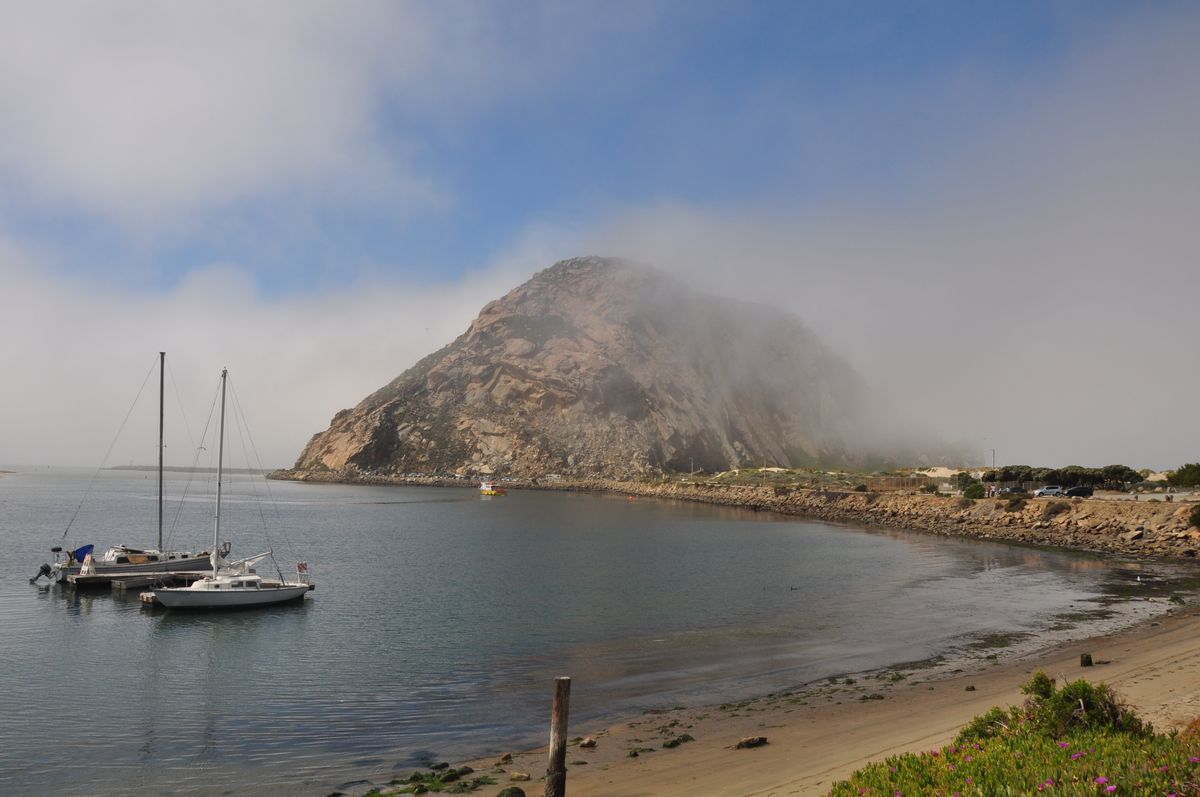
Morro Bay — this is the coast these pages are about.
Quick answer: Pest & Disease Management in Morro Bay, CA — Most tree trouble on the Central Coast is identified before it is treated: a borer, a canker and a drought-stressed root system can look the same from the ground, and each has a different answer. Diagnosis is the first cut — host, sign and season — and the least-toxic control that fits comes after it.
- Typical timing: Monitoring from bud break; fungal problems follow the wet spring, borers the dry summer and the stressed tree.
- What it involves: Identifying the host and the organism, judging whether the tree can compartmentalise the damage, and removing what cannot be saved.
- The standard: UC IPM pest notes and the ISA standard for hazard assessment.
- Where we work: Cambria and the coastal oak, pine and cypress stands around it.
- Our own record: 503 pages and 291 stories published on this site. Counted from our own archive, not a stock table.
Field note. What we see on this coast is that the tree under fog is often the healthier one and the tree on a hot exposed edge is the one that gets hit — stress is the invitation, and the coast hides it well.
On the other hand, treatment is not always the kindest answer: for a hazard tree with internal decay, careful removal protects the neighbours, and replanting does more for the site than a season of injections.
The list of things that can go wrong with a tree on this coast is long, and most of it is irrelevant to any particular tree. What matters is a much shorter list of organisms that genuinely damage trees around Morro Bay, and the discipline of not treating the ones that are merely present.
A fungus growing on a dead stub is not a disease to be sprayed; a canker bleeding down a cypress limb is a real problem with a real course of action.
What actually does damage here
- Cypress canker. The dominant problem on the Monterey cypress that line so many streets in town. It shows as sunken, bleeding patches and dieback that runs down a branch, and it spreads in wet weather — which is exactly the weather this coast has.
- Bark beetles after drought stress. A pine that has gone a couple of dry years without enough water thins in the crown and becomes attractive to beetles, which can take a tree from looking tired to dead within a season. The beetle is usually the second event, not the first.
- Root and butt rots. Armillaria and the various decay fungi behind a dying tree, often found by the conk at the base and often the reason a tree's decline has become irreversible by the time anyone looks.
- Sudden oak death. A genuine consideration anywhere oaks grow on this coast, though its distribution is patchy and the answer is more about not making it worse than about curing it.
- Scale and sooty mould. Common and mostly cosmetic on shade trees, but a sign worth reading if the tree is also stressed.
- Wood-decay fungi on palms and eucalyptus where bark or fronds meet the trunk, which matter because the failure is often at the head rather than the base.
Integrated management, in practice
With trees, the chemical is usually the last tool rather than the first, and often the wrong one entirely. The order that works is: get the water and the soil right, remove the infected material that is beyond saving, keep the crown open enough that the foliage dries, and accept that a pathogen which has already colonised a trunk is not going to be cured by anything applied to the outside of it.
Where spraying is genuinely indicated — some scale situations, some foliar fungi — it is a targeted treatment with a stated interval, not a programme. Anyone selling a standing annual fungicide treatment for a mature landscape tree should be asked for the evidence.
The disposal question nobody asks
Where a tree is removed because of a wood- or branch-borne pathogen, what happens to the material matters. Chips and logs from an infected tree moved to another site can carry the organism with them, and for the pathogens that spread through soil and water this is a real mechanism rather than a theoretical one.
On a property with healthy specimens worth protecting, the infected material should leave rather than become the mulch ring around the trees you want to keep.
Where this fits
Diagnosis comes before treatment, and the two are easy to confuse — the reasoning behind a diagnosis is set out under tree health diagnosis. Where the damage is already structural, no treatment reverses it, and where the tree is a cypress with canker well into the crown, the responsible answer is usually a staged risk assessment followed by removal rather than a long campaign of cutting back.
Where the priority is protecting a specimen that is still worth protecting, the work is often about the soil and water around it: see soil and root-zone remediation.
Have the tree identified
Photographs of the affected leaves, the damage on the trunk or branch, and the whole tree are what let us name the problem rather than describe the symptom. Call (805) 927-4414 or use the contact page, and see our services for the assessment and removal work.
Questions, quotes, or just exploring — we’re here to help.