

Why Is This Tree Declining?
Tree Health Diagnosis in Morro Bay, CA
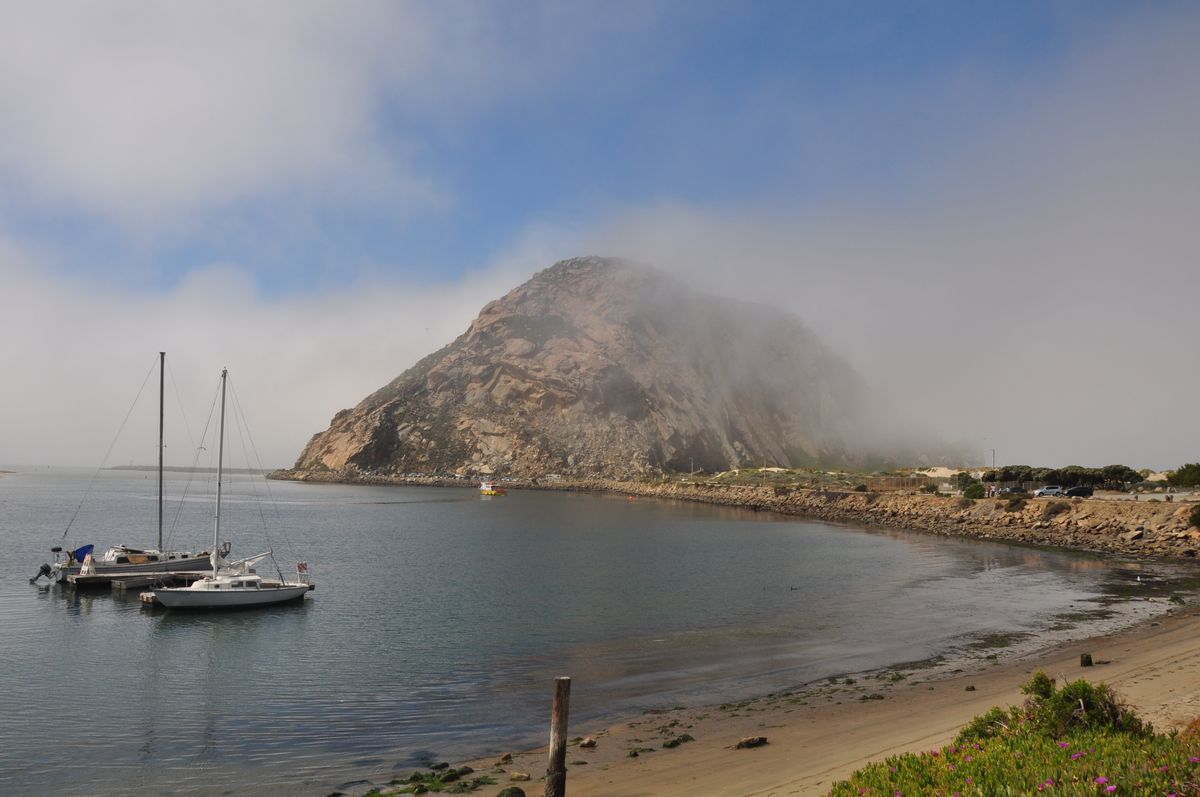
Morro Bay — this is the coast these pages are about.
Quick answer: Tree Health Diagnosis in Morro Bay, CA — Trees on this coast live with fog, salt, wind and thin soil, and the work that keeps them healthy is decided by those conditions rather than by a calendar written inland. Structure, clearance and the root zone are what a tree here needs looked at, and small work done early is what keeps a tree out of the emergency list.
- What it involves: Structural pruning, clearance from structures and wires, deadwood removal, root-zone care and hazard assessment.
- Typical timing: Structural work in the dormant months; deadwood, clearance and hazard work whenever the tree needs it.
- The standard: The ISA standards for pruning and tree risk assessment, applied by ISA-certified arborists.
- Where we work: Cambria, San Simeon, Harmony, Cayucos, Morro Bay, Los Osos and the Cambria pine belt.
- Our own record: 503 pages and 291 stories published on this site. Counted from our own archive, not a stock table.
Field note. What we see on this coast is that the trees people worry about are usually not the ones in trouble: the pine with a clean crown and a lean that predates the house is often sounder than the tidy tree that has been quietly drowning in its own root zone.
On the other hand, there is no schedule that suits every tree — the same species on two sides of one street can need opposite care, which is why we look before we recommend.
A tree that is thinning, yellowing or losing its top is showing a symptom, and the symptom is the least useful part of the information.
A Morro Bay cypress that has lost half its crown might be carrying canker in the branches, might be standing in soil that has been compacted by a driveway, or might have had a sewer trench run through its root zone five years ago — three causes, three different answers, and no way to tell them apart from the outside alone. Diagnosis is the work of narrowing that list before anything is treated.
The differential, in the order it is usually useful
- Water — too little or, more often here, too much. A tree in a low lot that floods each winter is drowning in the root zone; a tree on a hillside cut off from summer fog by a new structure may simply be dry. Both look like decline.
- Soil and grade. Compaction, fill placed over a root plate, or a grade change that buried a flare are among the quietest causes of a tree's slow death, and among the most common around recent building work.
- Root damage. A trench, a new wall, a lifted slab or a stump-ground area too close to the tree, all of which show up as canopy decline months or years later on the corresponding side.
- Nutrition and pH. Worth measuring rather than guessing, and worth being suspicious of the conclusion that a tree needs feeding, because feeding a tree whose problem is water usually makes it worse.
- Salt and wind. The coast has its own set of stresses, and burn from salt carried in on wind is a seasonal pattern rather than a disease.
- Pests and pathogens as a consequence. Bark beetles and canker tend to be the second event, arriving once the tree is already weakened, which is why treating the beetle first is usually treating the wrong thing.
Why diagnosing before treating matters so much
Most of the treatments homeowners are sold — a fungicide, a deep-root injection, a fertiliser programme — assume a cause, and if the cause is a raised grade or a buried flare the treatment does nothing useful while the real problem continues. The correction for a grade change is to remove the fill. The correction for waterlogged soil is drainage. Neither is a product.
That is the whole argument for spending the visit on diagnosis: the cheapest effective treatment on this coast is usually a change in what the ground is doing, not something poured on the tree.
Where the diagnosis leads
Where the cause is soil and grade, the repair is soil and root-zone remediation, sometimes with drainage work alongside. Where it is a pathogen or an insect doing real damage, the answer moves to pest and disease management.
Where the decline is advanced enough that the tree's safety is in question, the useful next step is not treatment at all but a risk assessment, because a tree that cannot be saved becomes a removal decision and it is better to reach that conclusion deliberately.
Send the symptoms
Photographs of the whole tree, of the thinning or discolouration, and of the ground within a few metres of the trunk are the three that answer most of the first questions. Call (805) 927-4414 or use the contact page, and see our services for the treatment work on this coast.
Questions, quotes, or just exploring — we’re here to help.