


Training the Tree Ahead of Its Defects
Structural Pruning in Morro Bay, CA
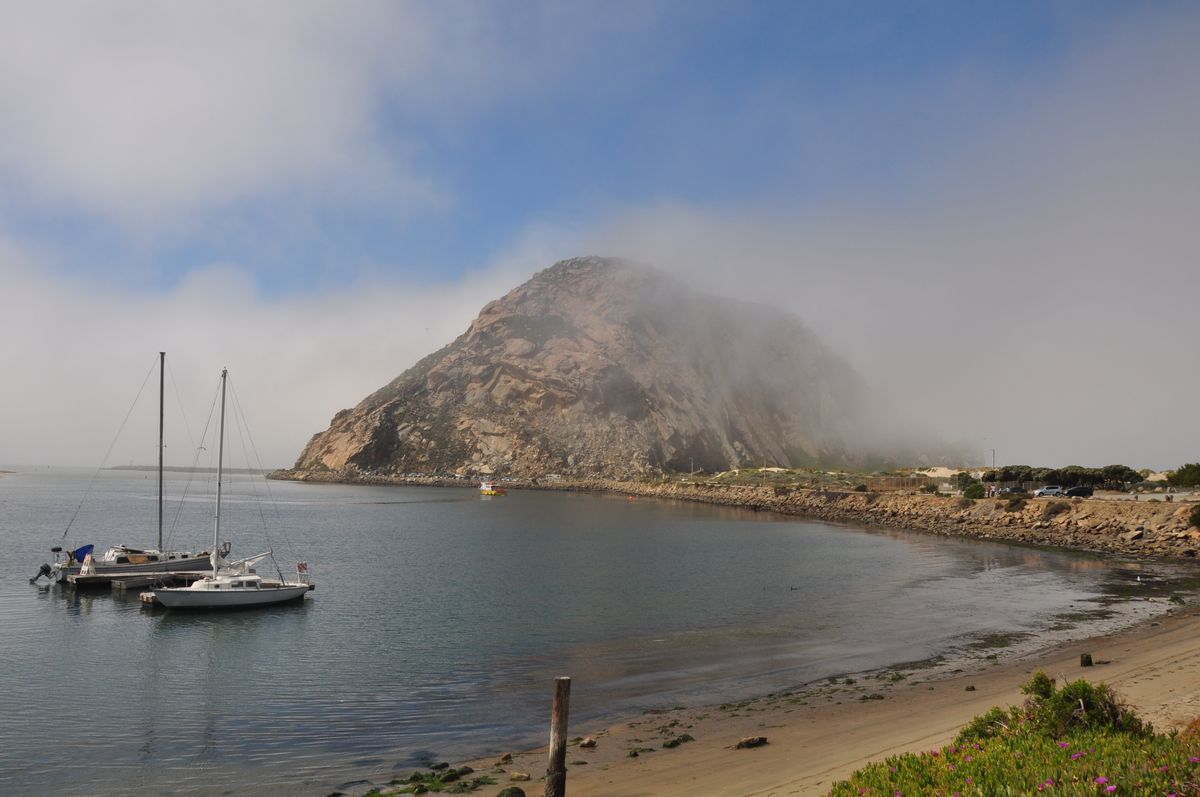
Morro Bay — this is the coast these pages are about.
Quick answer: Structural Pruning in Morro Bay, CA — Pruning is a plan before it is a cut: deadwood and broken limbs first, then clearance from roofs, wires and paths, then the structure the tree will carry for the next decade. The right cut heals and the wrong one invites decay, which is why the order matters more than the number of cuts.
- Typical timing: Structural work in the dormant months, light clearance and deadwood any time the tree is not under stress.
- What it involves: Removing dead and crossing limbs, thinning to let light through, lifting low limbs for clearance, and never topping a tree.
- The standard: The ANSI A300 pruning standard as applied by ISA-certified arborists — including the three-cut method on every limb worth saving.
- Where we work: Cambria, San Simeon, Cayucos, Morro Bay, Los Osos and the towns between.
- Our own record: 503 pages and 291 stories published on this site. Counted from our own archive, not a stock table.
Field note. What we see on this coast is a pruning calendar that does not match the inland one: salt air, fog and wind mean a cut that would be minor in the valley can be the one that opens a crown to decay here, so we look at the species and the exposure before the season.
On the other hand, not every tree wants to be pruned: leaving a healthy canopy alone is a decision that pays, and a tree with plenty of space is often better served by doing nothing.
A tree's problems are mostly decided young. The fork that splits in a storm, the limb that fails over a roof, the codominant pair that eventually needs a cable — almost all of them are the long consequence of how the tree was allowed to grow in its first twenty years.
Structural pruning is the work of intervening in that process deliberately: choosing which stem leads, spacing the branches that will carry the canopy, and removing the ones that would become the defect. It is the least visible pruning on this page and the one with the longest payoff.
What it looks like on a young tree
On a recently planted or volunteer tree the work is small and targeted:
- Establish one leader. Where two stems are competing at the top, the weaker is reduced or removed so a single stem takes dominance and the trunk grows straight and strong.
- Space the scaffold branches. Permanent limbs should be arranged up the trunk and around it rather than clustered at one height, so the tree carries load evenly as it grows.
- Remove the temporary branches gradually. Young trees need their lower branches to feed the trunk and to thicken it, so those come off in stages rather than all at once — which is why good structural work is a programme rather than a visit.
- Keep the live crown ratio healthy. A tree should not carry more than roughly a third of its height in bare trunk, even while being trained.
Corrective work on a mature tree
On an established tree the options narrow. A mature fork with included bark between the stems — bark pinched inside the join, which is a place that will never knit — is not something pruning will repair once it is large. What structural pruning can do is subordinate one of the stems: reduce the competing one repeatedly over several years so it grows more slowly, while letting the dominant stem thicken.
That is a slow, deliberate intervention, and where a fork already carries weight over something that matters, it is usually paired with cabling and bracing, which supports the fork rather than trying to change it.
Why it matters on a small coastal lot
Trees on these blocks grow up hemmed in — a wall on one side, a fence on another, the neighbour's roof closing the space on a third. A tree that develops a lopsided crown because it grew toward the light across a gap carries that asymmetry for a century, and the wind eventually tests it. Lifting a young tree's leader is cheap and easy while the tree is small enough to work from the ground.
The same correction on a forty-year-old cypress is a climbing job with a much narrower set of answers. On the narrow downtown blocks, where most of the trees we look at have already been shaped by their surroundings, the useful moment for structure work is often when a tree is replaced — which is a conversation about planting as much as pruning.
The honest limits
Pruning cannot make a badly sited tree safe, and on some trees the correct structural answer is that the fork is too far gone to manage and the tree belongs over a hundred feet of open ground. We would rather say that than start a ten-year subordination programme on a tree that will not tolerate it. Where the question is really about the tree's current risk rather than its future shape, the answer is a risk assessment instead.
Start while it is small
Send a photo of the whole tree from the side, and tell us its approximate age and what it will eventually overhang. Call (805) 927-4414 or use the contact page, and see our services for the rest of the pruning work.
Questions, quotes, or just exploring — we’re here to help.