



A Smaller Tree, Still the Same Tree
Crown Reduction in Cayucos
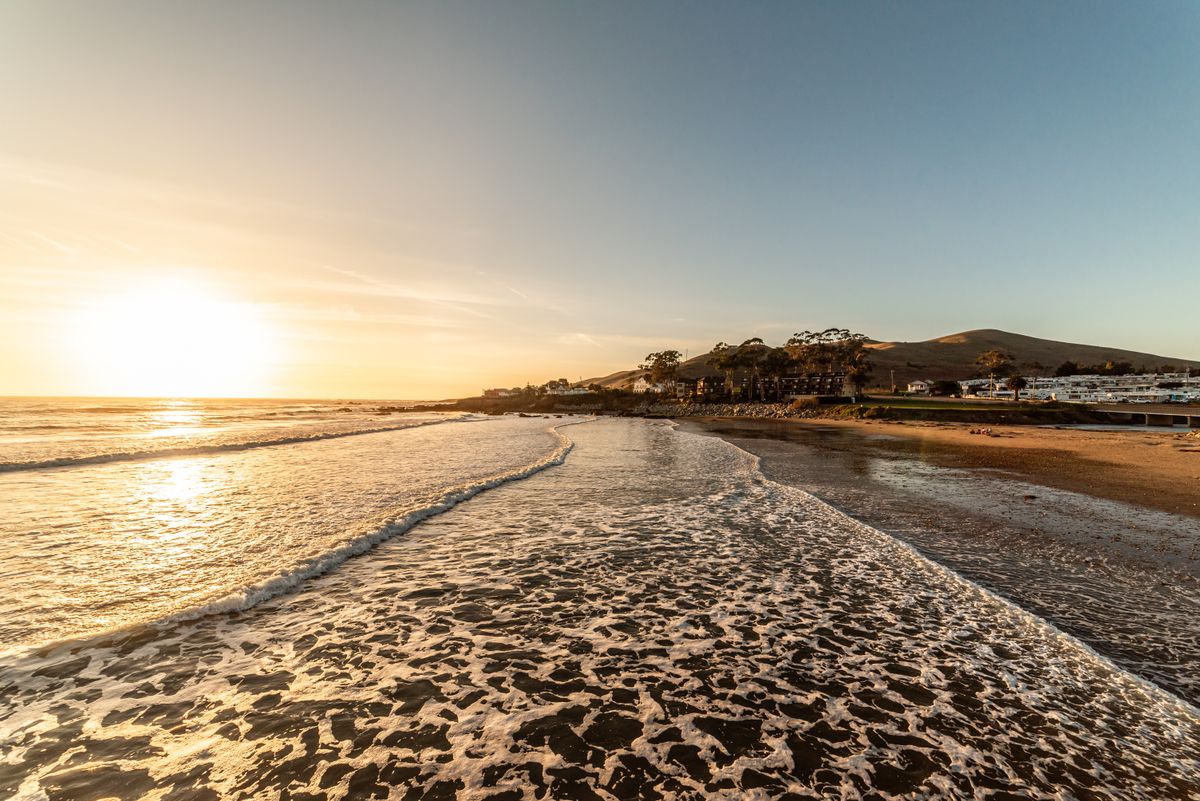
Cayucos — this is the coast these pages are about.
Quick answer: Crown Reduction in Cayucos — Trees on this coast live with fog, salt, wind and thin soil, and the work that keeps them healthy is decided by those conditions rather than by a calendar written inland. Structure, clearance and the root zone are what a tree here needs looked at, and small work done early is what keeps a tree out of the emergency list.
- What it involves: Structural pruning, clearance from structures and wires, deadwood removal, root-zone care and hazard assessment.
- Typical timing: Structural work in the dormant months; deadwood, clearance and hazard work whenever the tree needs it.
- The standard: The ISA standards for pruning and tree risk assessment, applied by ISA-certified arborists.
- Where we work: Cambria, San Simeon, Harmony, Cayucos, Morro Bay, Los Osos and the Cambria pine belt.
- Our own record: 503 pages and 291 stories published on this site. Counted from our own archive, not a stock table.
Field note. What we see on this coast is that the trees people worry about are usually not the ones in trouble: the pine with a clean crown and a lean that predates the house is often sounder than the tidy tree that has been quietly drowning in its own root zone.
On the other hand, there is no schedule that suits every tree — the same species on two sides of one street can need opposite care, which is why we look before we recommend.
Crown reduction in Cayucos is asked for when a tree has outgrown the space it was planted in — and on these lots that happens sooner than anyone expects, because a lot is fifty feet wide and a Monterey cypress reaches sixty. The tree has closed over the roof, the neighbour's deck, or the only place the sun lands in the afternoon, and the owner wants it smaller without wanting it gone.
Reduction is the honest way to do that. Topping is the way people usually try first, and it is the reason there are so many ruined pines and eucalyptus along this coast.
Reduction Cuts Versus Topping
A reduction cut is made back to a live lateral branch that is big enough to take over the terminal role — typically at least a third the diameter of the wood being removed. The tree keeps a leader, the cut is sealed by its own defence, and the limb that took over continues to grow.
Topping is a cut across a limb with no regard for where it lands. The result is a stub that cannot close, a sunburned and decayed interior, and a burst of fast regrowth from just below the cut — regrowth that is weakly attached to wood that is now rotting. Topped trees on a beach lot become the trees that shed limbs onto cars a decade later. There is no genuine argument for topping a tree you intend to keep.
How Much Comes Off, and in How Many Passes
Not very much, and not all at once. The practice ceiling is a modest fraction of the live crown in a single reduction — take a tree back by a third of its height in one visit and you have effectively topped it, whatever the technique. The growth response is proportional to the severity, and a hard reduction buys a smaller tree and a heavier, weaker crown at the same time.
The alternative is a sequence. Reduce the longest, heaviest limbs to laterals, take the crown down in stages over two or three growing seasons, and let the tree close each round of cuts before the next. It costs more visits and produces a tree that is still standing in twenty years.
What Reduction Is Good For Here
- Clearance over a structure. Where lifting the crown is not enough because the whole canopy is over the wall, reduction takes the outer spread back.
- Wind loading on a heavy lateral. Shortening an end-heavy limb reduces the leverage at the attachment, which is a genuine structural benefit rather than a cosmetic one.
- A view that has closed in. Often the job is reduction of specific limbs rather than the whole crown — see view clearing for that approach.
- Utility and driveway clearance. Where limbs must come back from a line or a sightline.
What Reduction Cannot Do
It cannot fix a species that is in the wrong place. If the tree is going to be too big again in five years, the honest conversation is about replacement, and on a coastal lot the useful question is what to plant instead — which is a planting conversation, not a pruning one.
It also cannot rescue a tree with a structural defect: if the failure risk is in the fork or the root plate, a shorter crown does not change it, and a written risk assessment is where that gets answered.
Book a Reduction
Tell us how much smaller you need it and what is under it, and send a photograph taken from far enough back to show the whole tree. Call (805) 927-4414 or use our contact page, and start at our services for the rest of the work we do on this coast.
Questions, quotes, or just exploring — we’re here to help.