


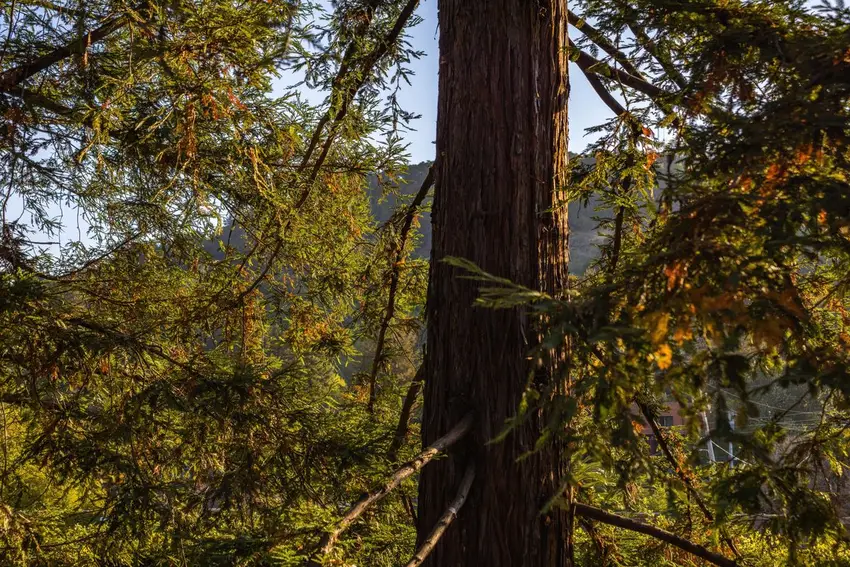

Quick answer: Insurance Clearance in Cambria, CA — Defensible space is the work that decides what a fire has to burn between the wildland and the house: dead material out, ladder fuels separated, and the tree you keep limbed up rather than removed. It is measured in zones from the structure, and the first few feet are the ones that matter most.
- Typical timing: Best done in the cool months so the debris is gone before the dry season; clearance rules apply year-round.
- What it involves: Removing dead and dying material, separating shrubs from low limbs, limbing trees near structures, and keeping the roof and gutters clear.
- The standard: Cal Fire's defensible-space guidance for the first 100 feet, applied to the trees a property actually has.
- Where we work: The wooded parts of Cambria, San Simeon, Harmony and the surrounding ranch country.
- Our own record: 503 pages and 291 stories published on this site. Counted from our own archive, not a stock table.
Field note. What we see on this coast that surprises people is how much of the fuel load is low: the limb at four feet and the brush beneath it carries fire into a canopy that would otherwise survive, so the work is often lifting rather than felling.
On the other hand, over-clearing has its own cost — bare ground erodes, and the wind that comes with the fog belt is harder on a thinned stand than the fire risk it removes.
Start With the Letter, Not the Tree
Insurance compliance tree clearance begins with the letter, not the tree. When a carrier sends an inspection finding or a cancellation-risk notice about vegetation, it names what it saw and what it wants, and the work that satisfies it is defined by those words rather than by a general tidy-up.
We see a steady trickle of these on the coast, and they fall into two families: a requirement about the property as a whole — defensible space, brush, fuel — and a requirement about a specific tree or a specific clearance. Getting the family right is the first decision, because they lead to different work.
Reading What the Letter Actually Says
The language is usually a short list, and each line maps to something concrete:
What such letters almost never contain is a specification. They describe a condition, not a cut. That gap is where most of the work of compliance actually sits, and it is the part worth doing with someone who can turn a condition into a defensible scope.
- "Overhanging branches over the roof or structure" — a clearance job. See chimney and roof clearance.
- "Dead or dying trees" and "dead wood" — removal or deadwooding, decided by what the tree would hit.
- "Defensible space" and "brush clearance" — the zones, which is the defensible space inspection followed by brush and fuel work.
- "Trees within X feet of the structure" — a measured clearance, which is a pruning or removal decision rather than a blanket rule.
- "Vegetation encroaching on the access or driveway" — a road and clearance problem.
Matching the Work to the Requirement
Two failure modes are common and opposite. The first is under-doing it: clearing one limb from the roof while the deadwood the inspector also named stays put, and getting a second letter. The second, more expensive one is over-doing it: cutting a protected tree, or stripping a healthy canopy, to look compliant when the letter asked for something narrower.
On a parcel with oaks or other protected trees, satisfying a carrier by removing a tree you were not permitted to remove trades one problem for a much worse one, and the permit and ordinance question has to be answered before the saw comes out.
Where the letter is about a tree's condition rather than its clearance, the answer is a documented judgement. A written risk assessment gives the carrier a level, a target and a time frame in the language the industry uses, which is usually more persuasive than a photograph and a promise.
The Deadline Is the Whole Story
These letters come with a date — an end-of-policy term, a re-inspection window, a thirty-day response. Work backwards from it. A blocked road, a wet week and a protected-tree permit can each add days, and a letter answered the day before it expires is answered badly. If the timeline is genuinely impossible, tell the carrier rather than the tree: insurers respond to a documented plan with dates in it far better than to silence.
What Closes the File
Documentation is not an extra here; it is the deliverable. We photograph each item before and after, name the tree or the condition the letter described, and provide a written summary that matches the work done to the requirement listed. Where the compliance question is about the property as a whole, that summary is best built on a proper inspection with findings written zone by zone, so the carrier sees the same structure it asked about.
We cannot promise what an individual underwriter will decide — nobody can, and any tree service that does is guessing with your policy. What we can promise is that the work is scoped to the requirement, done properly, and documented well enough that the file stands on its own.
If It Is a Claim Rather Than a Condition
There is a different document for a tree that has already failed and done damage. If the carrier is asking what happened rather than what needs doing, the right page is insurance claim documentation — same audience, different question, and the difference determines what gets photographed and written.
Send Us the Letter
Forward the notice with the property address and the date on it. We will read it, tell you which of its lines are requirements and which are suggestions, and come back with a scope and a schedule that fits the deadline. Call (805) 927-4414 or use our contact page, and see our services for everything else.
Questions, quotes, or just exploring — we’re here to help.