
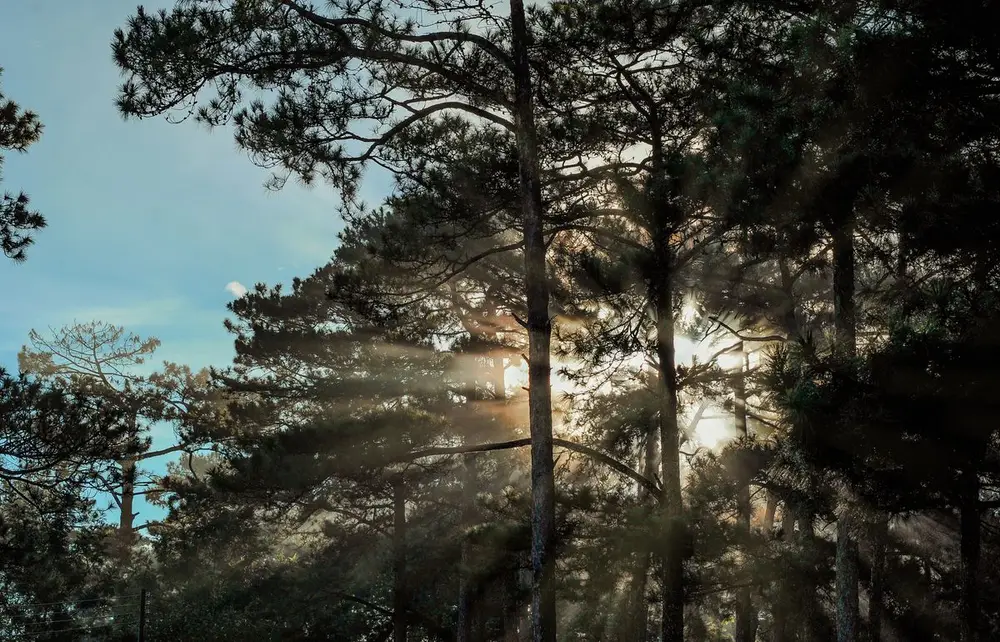

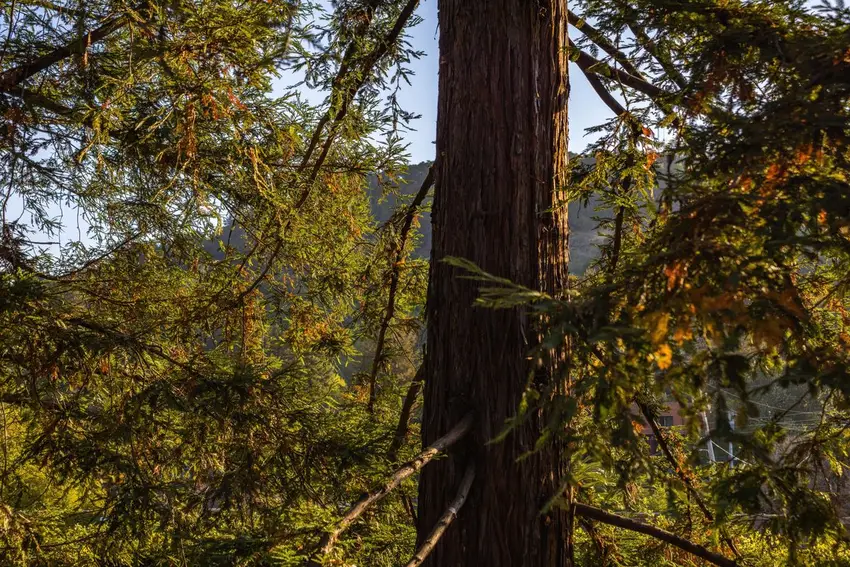
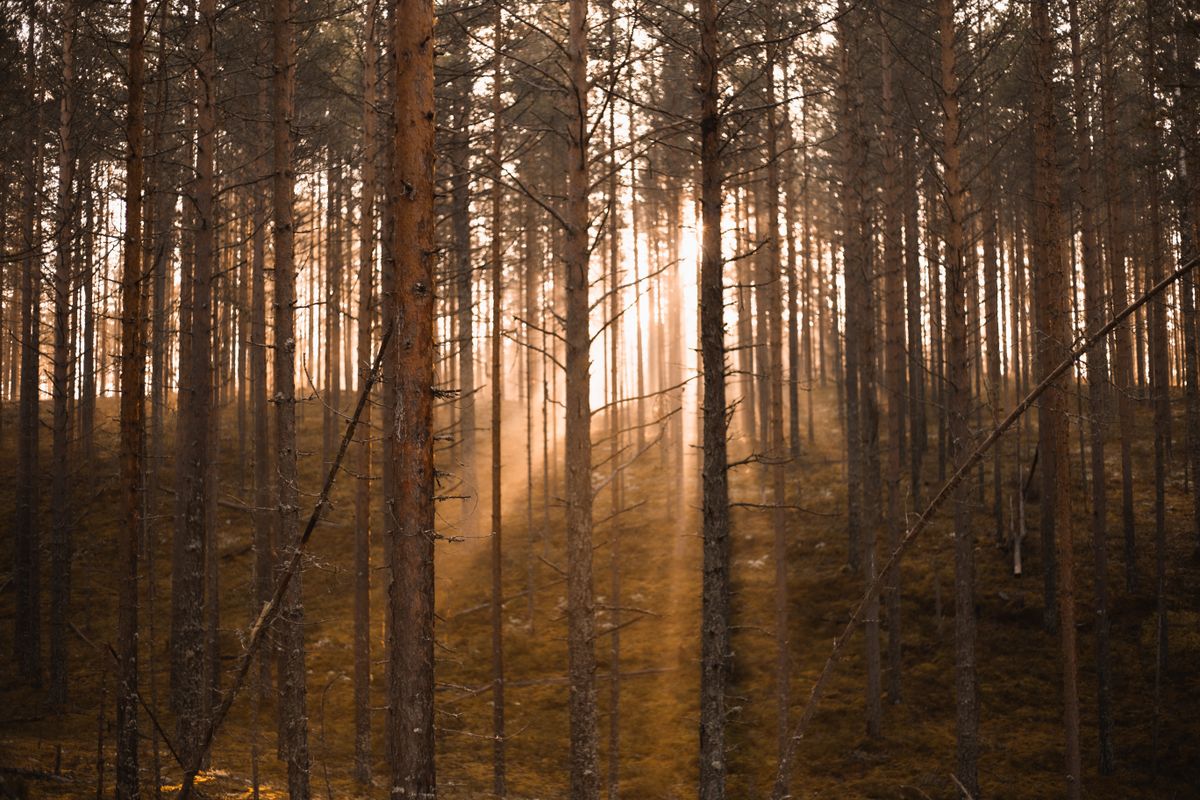
Armillaria (the honey mushroom) is a root and butt rot. Under the bark you find white mycelial fans; on the surface, clusters of honey-coloured mushrooms in autumn. On a coast live oak it is serious and it spreads through the soil.
Quick answer: Hazard Tree Evaluation in Cambria, CA — Removing a tree is planning before it is cutting: where the wood lands, what is under it, whether a rope or a crane takes the weight, and what is left when the crew drives away. A removal is finished when the drop zone is clear and the stump is dealt with, not when the trunk hits the ground.
- Typical timing: When the tree is a hazard, the schedule is immediate — storm damage, split leaders and leaners do not wait for good weather.
- What it involves: A written plan for the drop zone, rigging or crane work over structures, protecting driveways and roofs, and deciding the stump’s fate in advance.
- The standard: The ANSI Z133 safety standard for arboricultural operations, and ISA best practice for removals near structures.
- Where we work: Small town lots, coastal acreage and the narrow properties of the Cambria pine belt.
- Our own record: 503 pages and 291 stories published on this site. Counted from our own archive, not a stock table.
Field note. What we see here is that access decides the price more than height does: a pine over a fence on a slope with no driveway costs more to take down safely than a taller tree with a clear drop, and the plan is where that shows up.
On the other hand, removal is not the only safe answer — a tree with one failing limb, or a lean that can be corrected by reduction, is often better kept and managed than gone.
Standards and sources: Safety standards (ISA — International Society of Arboriculture) · Homeowner guidance (TCIA — Tree Care Tips)
Prepared by Cambria Pines Tree Service Inc. — ISA-certified arborists working on the Central Coast.
A Hazard Is a Tree Plus a Target
A hazard tree evaluation answers one question honestly: if this tree fails, what does it hit? A leaning pine out in the middle of an open pasture is not a hazard — it is a tree that may fall. The same pine with a bedroom, a driveway or the only road out beneath it is a hazard, and the evaluation is the work that separates those two cases.
Hazard is a relationship between a defect and a target. Neither half on its own is a reason to cut anything down.
Most of what we do on this coast is that kind of reading: the conks on a trunk, the seam that opened over the winter, the soil heaving at the base, the lean that was not there last year. A hazard tree evaluation is not a certificate and it is not a guarantee.
It is an informed judgment about a living thing, made by someone who looks at trees all year rather than once, and the sections below explain how we reach one.
Reading the Tree Part by Part
A tree fails from the top down, the middle out or the ground up, and each region gives different signs. We walk it in that order.
- The crown. Dieback in the upper canopy, an unbalanced crown, a sudden crop of epicormic shoots along a limb or the trunk, and dead branches that were alive last season. A thinning crown is often the first visible symptom of something happening underground, months or years before the trunk shows anything.
- The trunk. Wounds, seams, dead strips of bark, cavities, and the fruiting bodies that tell you there is decay behind the wood. A hollow does not fail on its own — but a hollow plus a heavy lateral load over a roof is a different arithmetic.
- The unions. Where two stems or a limb and the trunk meet. A union with a pronounced V and a ridge of bark running down into it is the single most common serious defect in the oaks here.
- The root plate. The soil immediately around the base. Fresh lift, a crack, a gap opening on the side away from the lean, mushrooms at the root flare, and soil that has moved all point at the foundation, not the wood.
- The site. What changed recently: a new driveway, a grade change, a trench, a trenching for a fence, a roto-tilled garden, a neighbour's new drainage. Most of the serious root damage we see has a shovel behind it.
What Each Clue Implies
Fungal fruiting bodies are the most misread clue on the coast, so it is worth naming the ones that matter.
A conk is evidence of decay, not a death sentence. The question it raises is how much sound wood is left, and often only a closer look — sometimes with a sounding mallet, sometimes with a resistograph — can answer that.
Ganoderma is a flat, brownish, shelf-like bracket at the base of an oak, and it points at butt rot at the very place the tree carries its whole load.
Bracket conks on a pine — the red-belted conk and its relatives — mean the trunk has been decaying for years behind a sound-looking face.
Bleeding cankers on a coast live oak — dark, sticky fluid running down the bark — are worth an expert's eyes; that is the signature associated with Phytophthora ramorum in this county.
Cypress canker on a Monterey cypress shows as sunken, resinous lesions and dead tops, and it is how a windbreak dies from the inside.
The Target Decides the Urgency
Once there is a defect, what the tree can hit sets the clock. We describe targets in plain terms: a house, a garage, a car that is parked in the same spot every night, a power drop, a road, a septic tank, a fence that can be replaced without a second thought, open ground.
A target that is occupied and irreplaceable — a bedroom, a school bus route, a main driveway — raises the stakes enormously. A target that is turf raises them barely at all.
A Simple Urgency Scale
- Act now. Visible failure in progress: a root plate lifting, a crack that is opening, a limb already split and hanging, fresh soil movement. Keep people and vehicles away and get work moving today.
- Act soon. A significant defect with a high-value target and no sign of active movement. Plan the work in weeks, not seasons.
- Monitor. A defect with a modest target where the tree is still sound enough to be worth keeping. Re-check on a schedule — every year, and after every serious wind.
- No action. A defect with no meaningful target, or a "defect" that is normal for the species. Monterey pines shed heavy limbs as a matter of course; not every summer drop is a hazard.
What a Walk-Through Cannot Tell You
An evaluation like this one is a visual, ground-level assessment by an experienced eye, and that is a genuinely useful piece of information. It is also limited, and saying so is part of doing it honestly. It cannot see inside the wood, it cannot see the roots, and it cannot predict wind. It is a snapshot in time on a tree that keeps changing.
For a documented, formal opinion — the kind a county, an insurer or a court will actually read — the right instrument is a written tree risk assessment, which records its methods and its ratings instead of leaving them in someone's head. Where the concern is simply whether the tree is worth keeping at all, our tree inspection service is the lighter step.
Getting a Second Set of Eyes
If a tree worries you, describe what you are seeing and what is underneath it. Photographs help: the whole tree, the base, and one clear shot of whatever has you concerned. We will tell you plainly whether it is a monitor, a plan, or a same-day call — and when removal really is the answer, our tree removal service handles it. Call (805) 927-4414 or start at our contact page.
Next step
Ready when you are.
Questions, quotes, or just exploring — we’re here to help.