


Fire Clearance & Defensible Space in Atascadero, CA
Atascadero — this is the coast these pages are about.
Quick answer: Fire Clearance in Atascadero, CA — Defensible space is the work that decides what a fire has to burn between the wildland and the house: dead material out, ladder fuels separated, and the tree you keep limbed up rather than removed. It is measured in zones from the structure, and the first few feet are the ones that matter most.
- Typical timing: Best done in the cool months so the debris is gone before the dry season; clearance rules apply year-round.
- What it involves: Removing dead and dying material, separating shrubs from low limbs, limbing trees near structures, and keeping the roof and gutters clear.
- The standard: Cal Fire's defensible-space guidance for the first 100 feet, applied to the trees a property actually has.
- Where we work: The wooded parts of Cambria, San Simeon, Harmony and the surrounding ranch country.
- Our own record: 503 pages and 291 stories published on this site. Counted from our own archive, not a stock table.
Field note. What we see on this coast that surprises people is how much of the fuel load is low: the limb at four feet and the brush beneath it carries fire into a canopy that would otherwise survive, so the work is often lifting rather than felling.
On the other hand, over-clearing has its own cost — bare ground erodes, and the wind that comes with the fog belt is harder on a thinned stand than the fire risk it removes.
Atascadero is inside the state's fire-hazard landscape and under a utility's high-fire-threat designation, which means two things for anyone with trees on their land. The first is that defensible space is not a suggestion here; it is a standard that a letter, an insurer or an abatement notice can cite.
The second is that the work is decided by a wind event, not by a calendar — the same autumn pattern that puts the power grid into a shutdown posture is the one that decides whether the fuel on your parcel is an inconvenience or the reason the house is standing.
What actually burns on a parcel like this
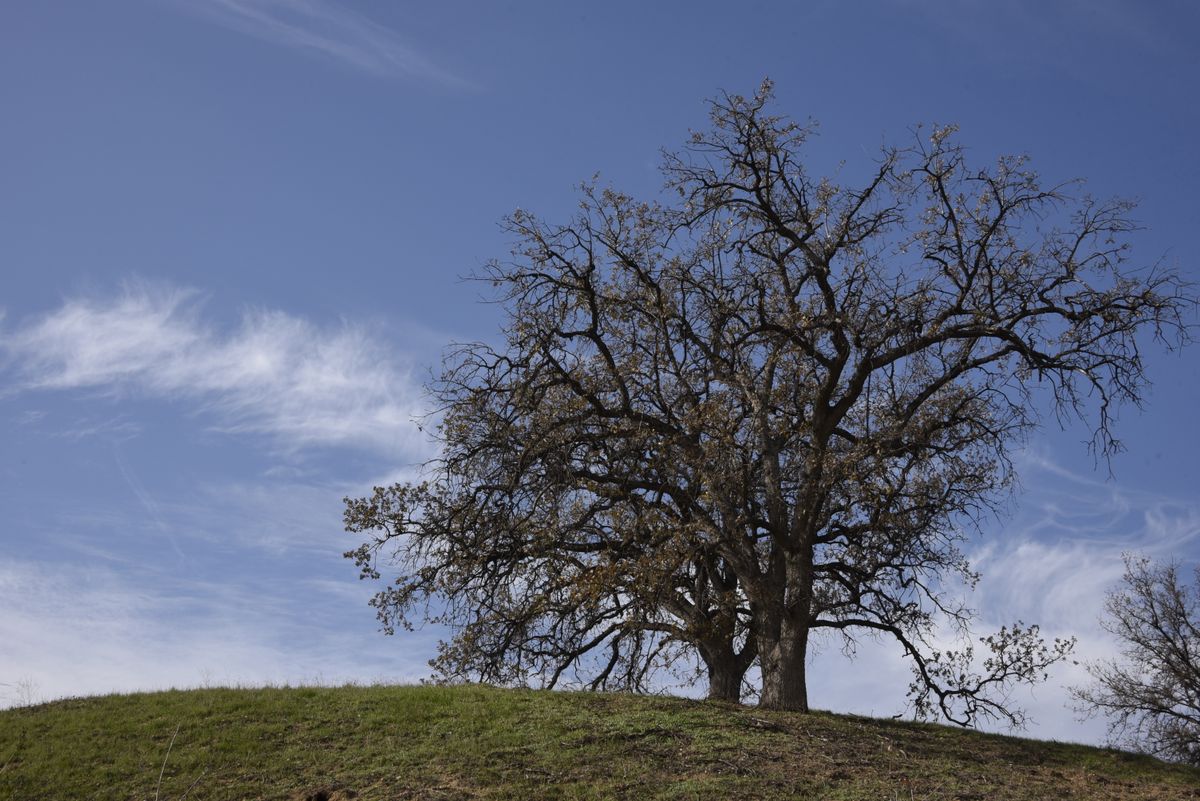
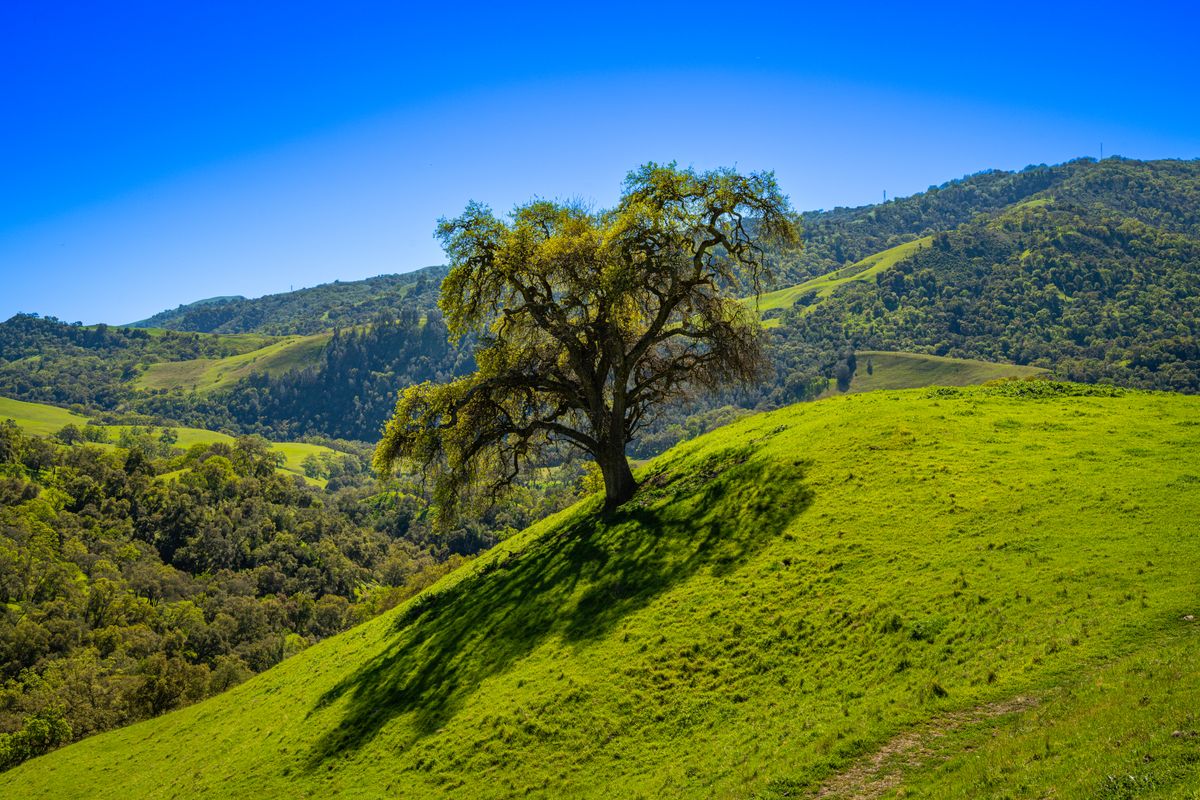
Most rural and semi-rural lots around this city are oak woodland with a grass crop under it, which behaves in a specific way: the grass carries the fire fast and at low intensity, the leaf litter and dead material under the oaks add mass, and the shrubs and dead lower limbs are what turn a ground fire into something that reaches a crown and starts throwing embers at a roof.
So the work is grass managed through the dry months in bands around the structures and along the access, surface fuel reduced — the litter, the dead limbs, the brush under the oaks, the dead standing pines that have been left where they died — and ladder fuels interrupted so a ground fire cannot climb into a canopy.
On this ground the dead pines are the item that most often gets deferred and should not be: a standing dead pine is a torch with a wind-sail on top, and it drops burning material on whatever is downwind of it.
The access, and the things around the house
Two items that are consistently undervalued. The first is the driveway: an access route that a fire engine can actually use — width, clearance, a turnaround — is part of defensible space, and overhanging limbs over a long rural drive are routinely the last thing anyone thinks about.
The second is the immediate zone around the structure: gutters cleared, the roof and the deck edges free of leaf litter, firewood and propane stored away from the walls, and the first few metres of planting kept low, green and separated. Those are the cheapest minutes of the whole programme and they are the ones most often skipped in favour of a brush-cutter pass at the property line.
What we will not do, and the timing that matters
We will not scrape ground bare or burn slash piles in a hazard season. Beyond the soil damage — this is clay, and bare clay sheds water and then grows a fresh crop of weeds — a burn pile in the wrong week is the exact thing the whole programme exists to prevent.
Cut material leaves the parcel or is chipped in place and spread, and the work is done in the window between the end of the rains and the start of real heat, with a shorter check before the autumn wind events. Cutting in the dry season means sparks, which is why that work happens early in the day and not at all on the worst days.
Everything is photographed and written up — what was cut, what was removed, when — because on this side of the county the record is what satisfies an insurer, a landlord or a compliance letter, and it is also the only way to see that a property done three years ago has grown back into the condition it was in before.
Field note — Olivia Whitmore quotes the requirement and then reads the ground: fuel, access and the first few metres around the house are the three things that decide the outcome, and the order matters.
Questions, quotes, or just exploring — we’re here to help.