


Mulching in San Simeon, CA
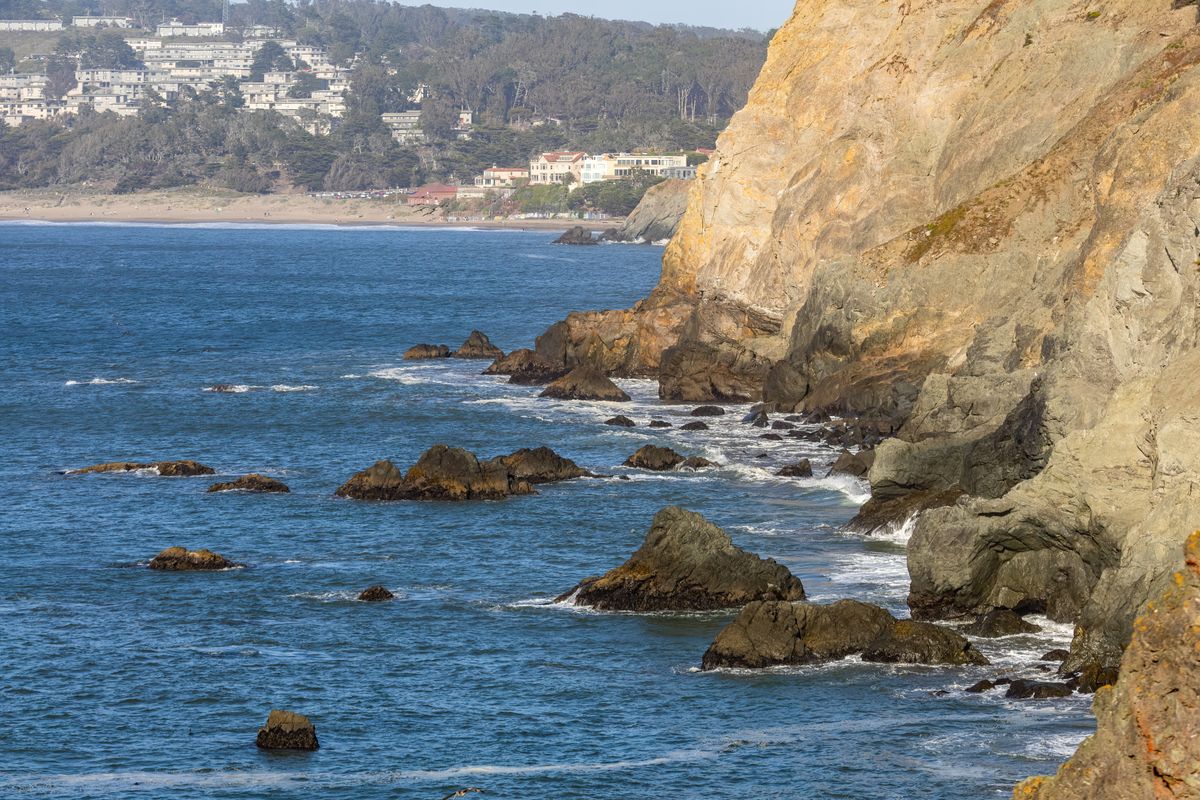
San Simeon — this is the coast these pages are about.
Quick answer: Mulching in San Simeon, CA — Mulch is the cheapest thing that happens to a tree: a flat layer over the root zone holds moisture through the dry season, keeps the soil temperature steady and feeds the soil life the tree depends on. Almost every mulch problem is a depth problem or a contact problem — too thick, or piled against the trunk where the bark has to stay dry.
- Typical depth: Two to four inches, flat, from the drip line inward — never a cone against the trunk.
- Typical timing: After planting or after a clean-up; refreshed in autumn so winter rain carries it down.
- What it involves: Keeping the root flare visible, keeping mulch off the bark, and choosing material that breaks down rather than mats.
- The standard: ISA and university extension guidance on arboricultural mulching and the root flare.
- Our own record: 503 pages and 291 stories published on this site. Counted from our own archive, not a stock table.
Field note. What we see most on this coast is not too little mulch but too much, in the wrong place: the volcano against the trunk that keeps the bark wet through the fog season and invites rot where the tree cannot show it until the canopy thins.
On the other hand, a thin ring of the wrong material is worse than none at all — matted, water-repellent mulch sheds the rain it was meant to store.
Wind is the reason mulch matters more here than it does twenty miles inland. On this coast the rain arrives in a few big events and then the surface dries between them, scoured by a northwesterly that pulls water out of bare sand within days.
A mulch layer does three jobs at once on that ground: it slows the wind at the surface, it keeps the root zone from swinging through a wet-dry cycle every week, and it adds organic material to a soil that is mostly sand and does not hold nutrients well.
Width, depth, and the local arithmetic
Out to the dripline is the target — for a mature cypress on a bluff lot that may be most of the garden, so the practical version is a wide ring around each tree rather than a full bed. Depth is five to ten centimetres. Less is a token against this wind; more and the absorbing roots end up above the wet layer and dry out whenever the surface does.
On sand the ring also needs an edge of some kind — a mown strip, a stone line, or a planting — otherwise the first strong blow scatters it into the yard.
The volcano, which on this coast is a rot risk with salt in it
Piling mulch against a trunk keeps the bark permanently damp, and on a coastal tree the bark is already wet half the year from fog and salt. Together they are how a cypress gets a base rot that nobody notices until the tree is leaning.
It also buries the root flare, which is the part of the tree that tells you whether the plate is moving — the single most useful thing to be able to see on a bluff-edge tree. Keep a hand's width clear at the trunk and shape the ring to feather out at its edge.
Which material, and what to avoid
Arborist chips — mixed branch wood, bark and leaves off the local chipper — are the right answer on this ground, and they are a by-product of work happening on the same street. Fresh chips are fine as a surface dressing; the temporary nitrogen draw-down only matters to seedlings.
What we avoid: chips from a tree removed for cypress canker or another disease that persists in wood, chips from salt-killed material in a thick layer, and a mulch bed that ends up as the only thing keeping the wind off a young tree's trunk while it is leaning on it.
Watering, briefly, because mulch is half the answer
On sandy coastal ground a young or stressed tree needs the water delivered slowly and rarely, in a way that reaches the root zone rather than the surface: a soak that fills the ring to its depth and drains, repeated every few weeks through the dry season, is worth more than a daily sprinkle that wets the top centimetre and evaporates. Mulch makes that watering effective by holding what arrives.
It will not fix a grade change, a cut root from a foundation or a trunk buried in fill — those are soil problems, and they want their own look rather than another bag of chips.
Field note — Sofia Underwood designs for decades, not seasons: on a windy coast the ring you build this spring is the reason the tree's roots will find water in a dry August ten years from now.
Questions, quotes, or just exploring — we’re here to help.