



Fire Clearance & Defensible Space in San Luis Obispo, CA
San Luis Obispo — this is the coast these pages are about.
Quick answer: Fire Clearance in San Luis Obispo, CA — Defensible space is the work that decides what a fire has to burn between the wildland and the house: dead material out, ladder fuels separated, and the tree you keep limbed up rather than removed. It is measured in zones from the structure, and the first few feet are the ones that matter most.
- Typical timing: Best done in the cool months so the debris is gone before the dry season; clearance rules apply year-round.
- What it involves: Removing dead and dying material, separating shrubs from low limbs, limbing trees near structures, and keeping the roof and gutters clear.
- The standard: Cal Fire's defensible-space guidance for the first 100 feet, applied to the trees a property actually has.
- Where we work: The wooded parts of Cambria, San Simeon, Harmony and the surrounding ranch country.
- Our own record: 503 pages and 291 stories published on this site. Counted from our own archive, not a stock table.
Field note. What we see on this coast that surprises people is how much of the fuel load is low: the limb at four feet and the brush beneath it carries fire into a canopy that would otherwise survive, so the work is often lifting rather than felling.
On the other hand, over-clearing has its own cost — bare ground erodes, and the wind that comes with the fog belt is harder on a thinned stand than the fire risk it removes.
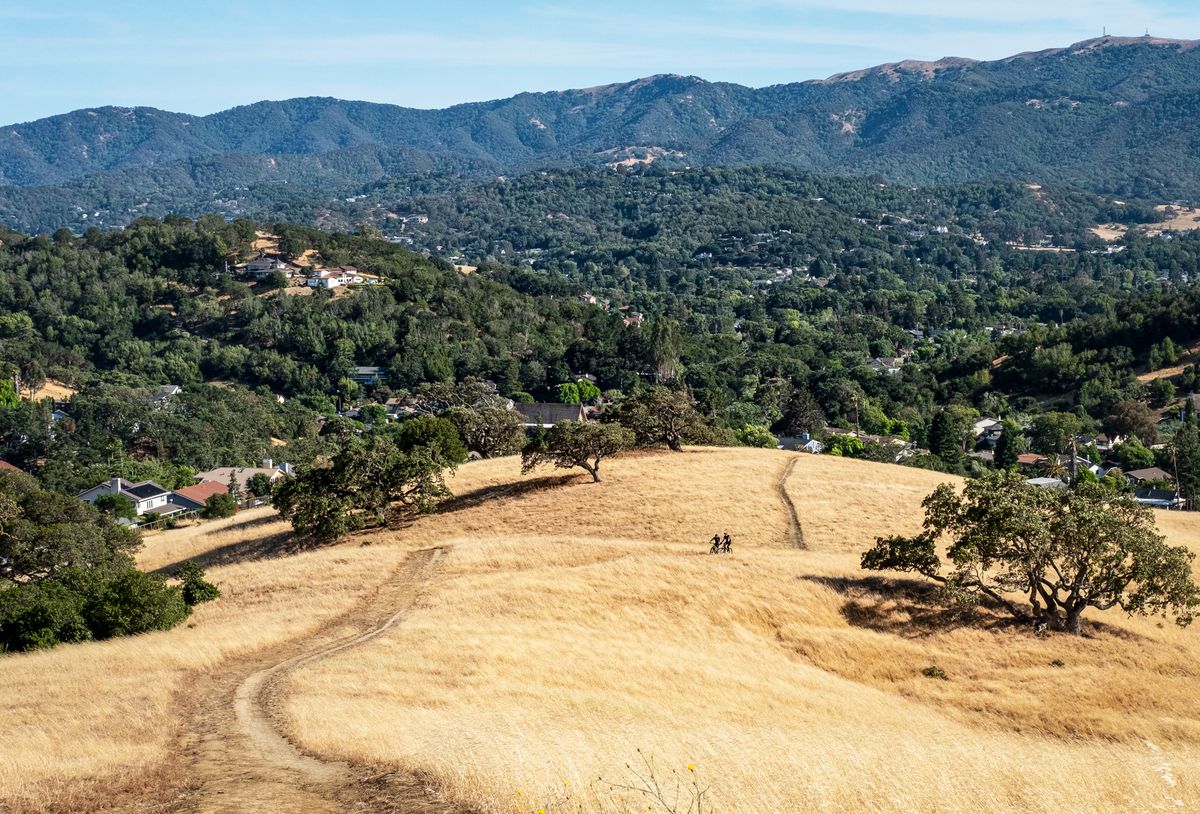
San Luis Obispo sits in a bowl of hills that burn. The city itself is not the wildland interface, but the neighbourhoods that climb toward Bishop Peak, Cerro San Luis, Islay Hill and the canyon edges are, and the difference between those streets and the flats is the reason fire clearance here is a hillside subject with a hard season attached.
Add a decade of drought-scarred trees, a grass crop that cures by May and a wind that arrives ahead of every autumn front, and the work becomes less about a rule and more about a standing arrangement with the landscape.
What defensible space means on a graded street
The principle is straightforward: reduce the fuel around the structure so a fire arriving on the property has less to consume and less reason to throw embers at the house.
In practice, on a hillside lot above the city, that means several specific jobs. Cured grass and weeds cut and kept short through the dry months, especially within the first band around the building. Ladder fuels interrupted: the low shrubs and the dead lower limbs that would carry a ground fire up into a tree canopy, where it becomes a crown fire and starts spotting embers downwind. Lower limbs lifted to a sensible height on retained trees so a ground fire cannot climb the ladder they provide. Space between plants managed so shrubs are islands rather than a continuous bed, and dead material — which is most of what actually burns — taken out of the shrubs, the gutters and the roof valleys, where a pine needle bed is the single most common way a structure here ignites.
The thing we will not do
We will not scrape a hillside to bare earth. It is a common shortcut, it looks like compliance in a photograph, and on these clay slopes it produces a different problem: soil that sheds water, loses structure and moves in the first real storm, which is how clearance work turns into an erosion call in February.
Managed ground cover, mulch, deep-rooted green material and a maintained arrangement of fuel is what defensible space actually is — and it is why the slope work belongs to the same programme rather than to a separate contractor.
The assessment, the docs and the timing
Where does it happen: brush and ladder fuels reduced from the structure out, cut material hauled off the parcel rather than stacked against a fence (a green-waste pile at the property line is fuel staged where an ember can reach it), and the whole parcel assessed on foot rather than from the street. When: the window is late spring into early summer for the bulk of the work, with a check before the autumn wind events.
Cutting in the heat means sparks, so the season matters — this is the constraint that most often decides a schedule.
On the paperwork side, we photograph before and after, note what was cut and removed, and put the work in writing for an insurer, a management company or a clearance notice. And the pattern is always the same: properties that keep the arrangement current pay a modest amount every year forever, while properties that did it once pay a large amount to start again and get a letter in the meantime. Vegetation regrowth is not subtle on this ground.
Field note — Olivia Whitmore quotes the rule and then says what it means on a particular lot: habitat, view, shade and clearance are real trade-offs, not slogans, and the honest plan names which one you are choosing.
Questions, quotes, or just exploring — we’re here to help.