

Tree Risk Assessment in Los Osos, CA
Los Osos — this is the coast these pages are about.
Quick answer: Tree Risk Assessment in Los Osos, CA — Trees on this coast live with fog, salt, wind and thin soil, and the work that keeps them healthy is decided by those conditions rather than by a calendar written inland. Structure, clearance and the root zone are what a tree here needs looked at, and small work done early is what keeps a tree out of the emergency list.
- What it involves: Structural pruning, clearance from structures and wires, deadwood removal, root-zone care and hazard assessment.
- Typical timing: Structural work in the dormant months; deadwood, clearance and hazard work whenever the tree needs it.
- The standard: The ISA standards for pruning and tree risk assessment, applied by ISA-certified arborists.
- Where we work: Cambria, San Simeon, Harmony, Cayucos, Morro Bay, Los Osos and the Cambria pine belt.
- Our own record: 503 pages and 291 stories published on this site. Counted from our own archive, not a stock table.
Field note. What we see on this coast is that the trees people worry about are usually not the ones in trouble: the pine with a clean crown and a lean that predates the house is often sounder than the tidy tree that has been quietly drowning in its own root zone.
On the other hand, there is no schedule that suits every tree — the same species on two sides of one street can need opposite care, which is why we look before we recommend.
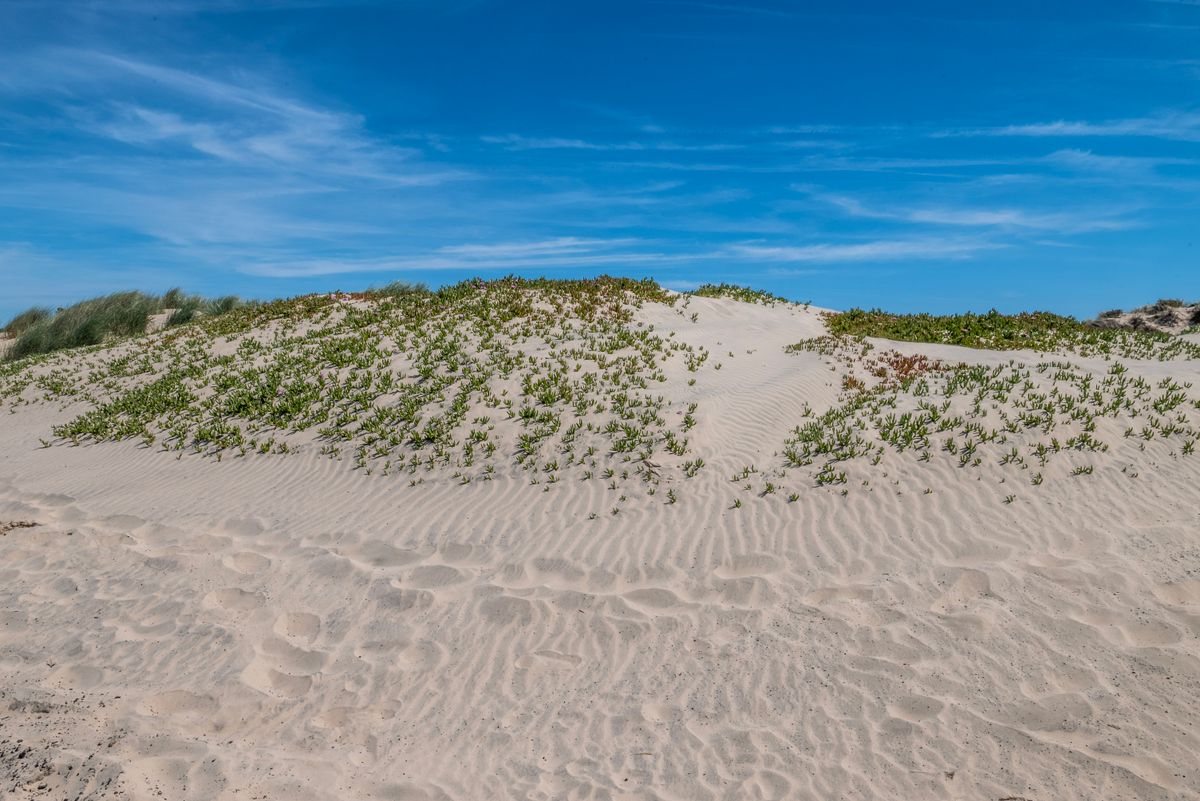
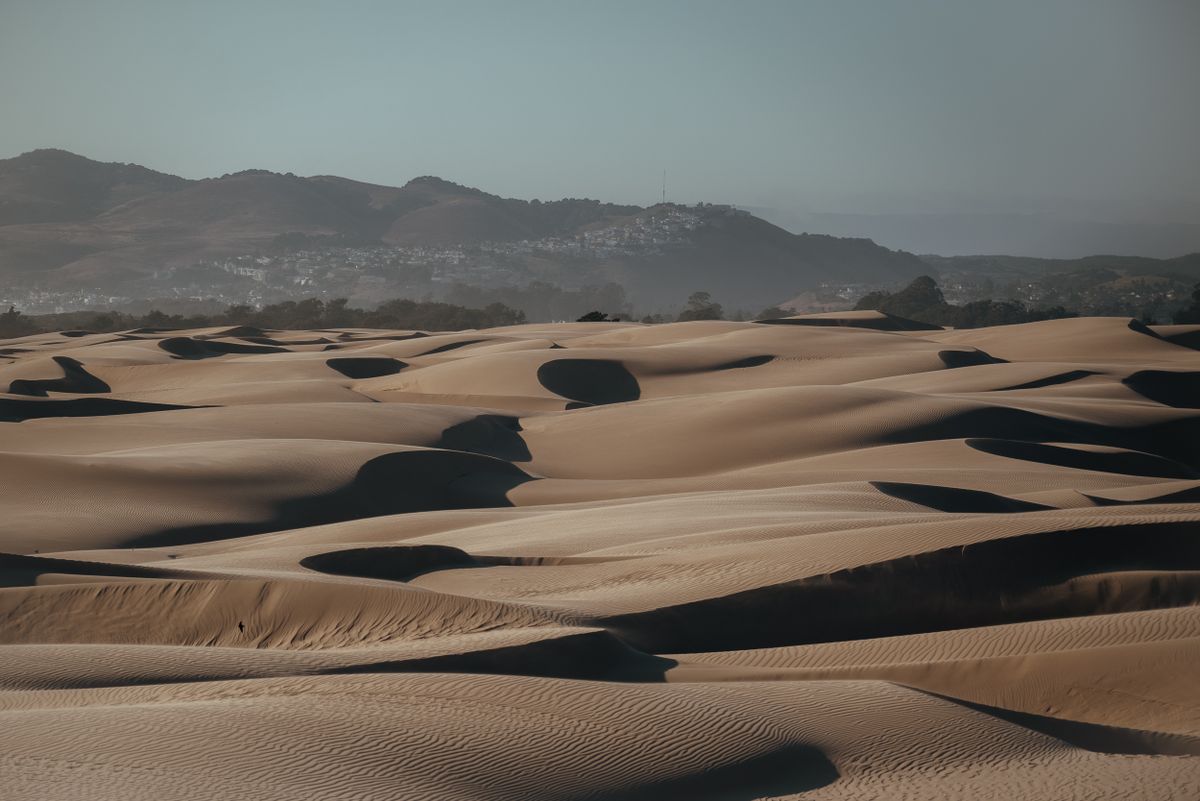
Los Osos was built on a dune field, and that single fact explains most of what goes wrong with its trees. Sand drains fast and grips poorly. A Monterey pine that germinated in that sand fifty years ago — on a lot that was empty when it started — has been standing on a root plate that is broad, shallow and mostly held in place by friction plus the weight of the tree itself.
Give it a wet winter and a northwesterly, and the failure you get is not the snapped limb people picture. It is the whole tree rotating at the base, like a coin standing on a table.
Risk is three things, and the target comes first
An assessment has to name the target — the bedroom, the parked car, the walkway the kids use to get to school, the power drop, the neighbour's fence. It has to put a likelihood of failure against a stated timeframe, because "pines fall" is not a finding.
And it has to weigh the consequence, which is where a lot of these conversations actually turn: the same tree over open ground and over a bedroom window are two different problems with the same defect. A report that jumps from "defect" to "remove" has skipped the two parts that decide the answer.
Reading a pine on dune sand
The soil is the first instrument. We walk the uphill side and look for lifting, a fresh ring of cracking in the leaf litter, moss or duff that has moved, and any fence post or paver that has begun to lean independently.
Pines that grew in open wind are typically thick at the base with a crown that has been shaped by the exposure; a sudden thinning of the inner crown on a tree like that is the beetle pattern, not the weather, and it means the tree is losing the ability to push resin at the same time its wood is being hollowed.
We check the stem for old topping wounds — this town has decades of them — because the decay behind a 1980s cut is invisible from the ground and rises with every new leader.
Where the answer turns on the inside of the wood, we bore a sample or run a tomograph and say in the report which question the tool answered. Most trees do not need either. They need someone to look at the ground, the base, the stem and the crown in that order, on foot, and write down what is there.
The report and its honest limits
Ours names the tree, the target, the defects found, likelihood and consequence ratings, and one recommended action with a date attached — reduce the low lead before the next wet season, remove, brace with an annual inspection, or monitor and re-walk in twelve months. That is a document an insurer can read, a management company can file, and a second arborist can disagree with line by line, which is the only kind of opinion worth paying for.
Two limits belong on the page rather than in the fine print. An assessment is a snapshot of a living thing: nobody can warranty a pine through a saturated January.
And the conservative answer on dune ground is not always removal — take out a mature pine on the bay side and you have removed a windbreak and a root mass from ground that was being held by both, so the follow-on work belongs in the same conversation as the cut.
Field note — Clara Young writes risk as a budget: what each option costs today, what it costs every year after, and the year the cheapest option stops being the cheapest.
Questions, quotes, or just exploring — we’re here to help.