



Tree Removal in Los Osos, CA
Los Osos — this is the coast these pages are about.
Quick answer: Tree Removal in Los Osos, CA — Removing a tree is planning before it is cutting: where the wood lands, what is under it, whether a rope or a crane takes the weight, and what is left when the crew drives away. A removal is finished when the drop zone is clear and the stump is dealt with, not when the trunk hits the ground.
- Typical timing: When the tree is a hazard, the schedule is immediate — storm damage, split leaders and leaners do not wait for good weather.
- What it involves: A written plan for the drop zone, rigging or crane work over structures, protecting driveways and roofs, and deciding the stump’s fate in advance.
- The standard: The ANSI Z133 safety standard for arboricultural operations, and ISA best practice for removals near structures.
- Where we work: Small town lots, coastal acreage and the narrow properties of the Cambria pine belt.
- Our own record: 503 pages and 291 stories published on this site. Counted from our own archive, not a stock table.
Field note. What we see here is that access decides the price more than height does: a pine over a fence on a slope with no driveway costs more to take down safely than a taller tree with a clear drop, and the plan is where that shows up.
On the other hand, removal is not the only safe answer — a tree with one failing limb, or a lean that can be corrected by reduction, is often better kept and managed than gone.
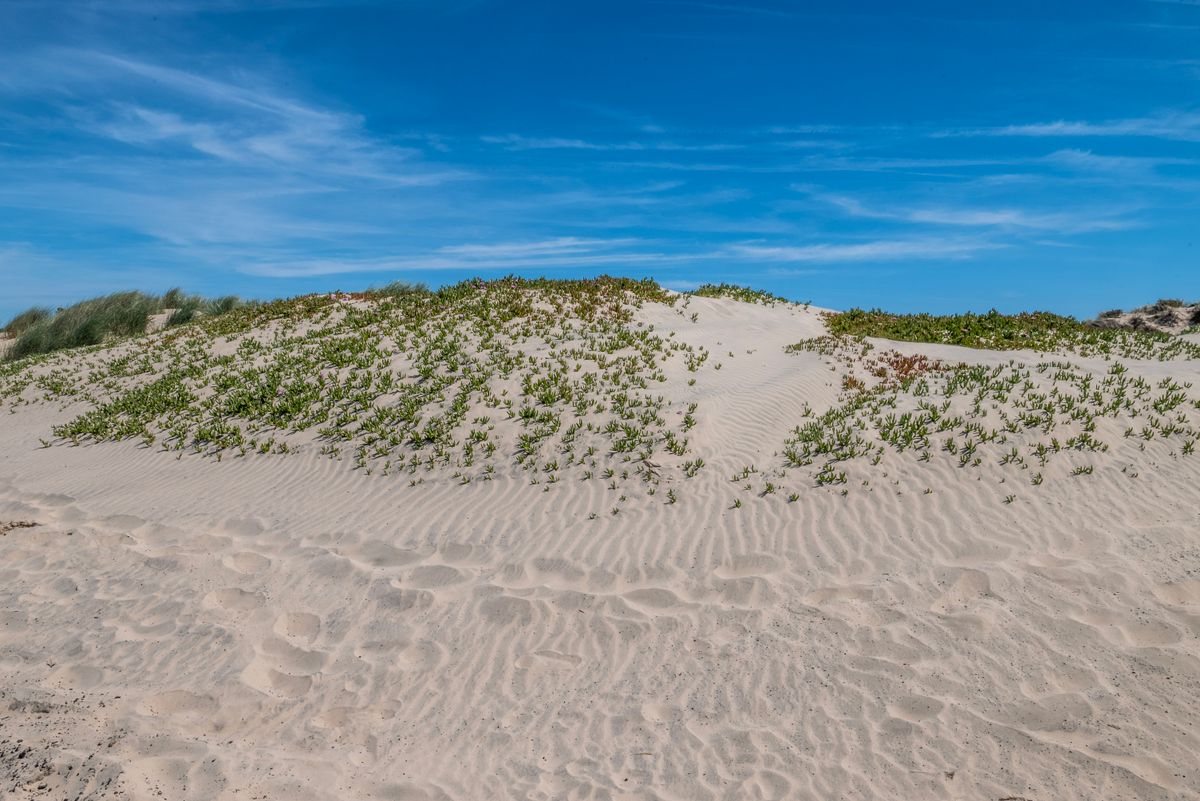
Los Osos trees come out of the ground differently than trees anywhere else on this coast. Between the bay and the hills the town is built on old dunes, and a Monterey pine that has stood for fifty years in that sand holds on with a root plate that is broad but shallow. That is the first thing a removal plan has to respect.
A pine leaning over a Baywood Park bungalow is not the same job as the same pine in clay, because here the ground gives before the wood does.
Rigging first, cutting second
Most Los Osos lots leave no drop zone. Fences run tight to the property line, the neighbor's roof sits inside the canopy spread, and on the bay side the only clear direction is over water nobody wants sawdust in. So the work starts as a rigging plan: which limbs come off first, where each piece lands, and which anchor takes the weight while the climber is out on the wood.
Where street access lets a crane set up, we use one and the job is faster. Where the street is too narrow or the sand too soft to hold a truck, the tree comes down in smaller pieces on ropes, and the job takes longer instead of taking chances.
The ground under the tree
Coastal sand drains fast, which is good for the tree and awkward for removing it. After winter rain that soil can be nearly liquid two feet down, and a root plate that was marginal in August is worse in February. When a removal lands after storms we watch the forecast the way other crews watch the wind, because the loading on the tree changes overnight.
On the hill streets climbing above the bay, the slope adds gravity to every piece, and the plan has to account for where a rolling section would stop.
Permits and protected trees
Los Osos is unincorporated San Luis Obispo County, and parcels inside the coastal zone carry conditions beyond the county's base tree rules. Coast live oaks above the county's protected size, and trees singled out in a coastal development permit, need approval before removal. We read what you have before anyone commits, help identify what the county will ask about, and work with the permit rather than around it.
If a tree is shared with a neighbor, that conversation belongs at the start — the cost of a survey and a polite conversation is small against the cost of a dispute.
Finished means clean
Removal ends when the site is usable again: wood cut and stacked where you want it or hauled away, sawdust raked, access routes left as we found them. The stump is its own decision. Grinding it below grade frees the spot for turf or a new planting; leaving it costs nothing and can make sense on a dune or creek edge where the roots still hold ground.
If the tree stands on a slope above the creek or the bay, ask about that before the stump comes out — bare sand moves, and a bare cut bank is the next problem in line. Our stump grinding work and the erosion questions that follow it are usually one conversation.
What the estimate covers
The price for a Los Osos removal is the plan, not a guess: crew size, the rigging, the hauling, the stump decision if you want it in the same visit, and the protection of whatever sits underneath — paving, gutters, a planting bed by the entry.
On tight streets we also count the time of day, because a driveway blocked at nine in the morning is a complaint and the same driveway blocked at ten is a courtesy we arranged the day before. Ask what is included before the work starts; on this coast, the surprises that arrive after a tree is on the ground are the expensive kind.
If a Los Osos tree is leaning over something you cannot move, get it looked at before the winter storms make the argument for you. We will tell you whether it is a removal, a pruning that buys decades, or a tree that can be left alone — and we will not sell the removal if it is not needed.
Questions, quotes, or just exploring — we’re here to help.