


Tree Cabling & Bracing in Morro Bay, CA
Tree Cabling & Bracing in Morro Bay, CA
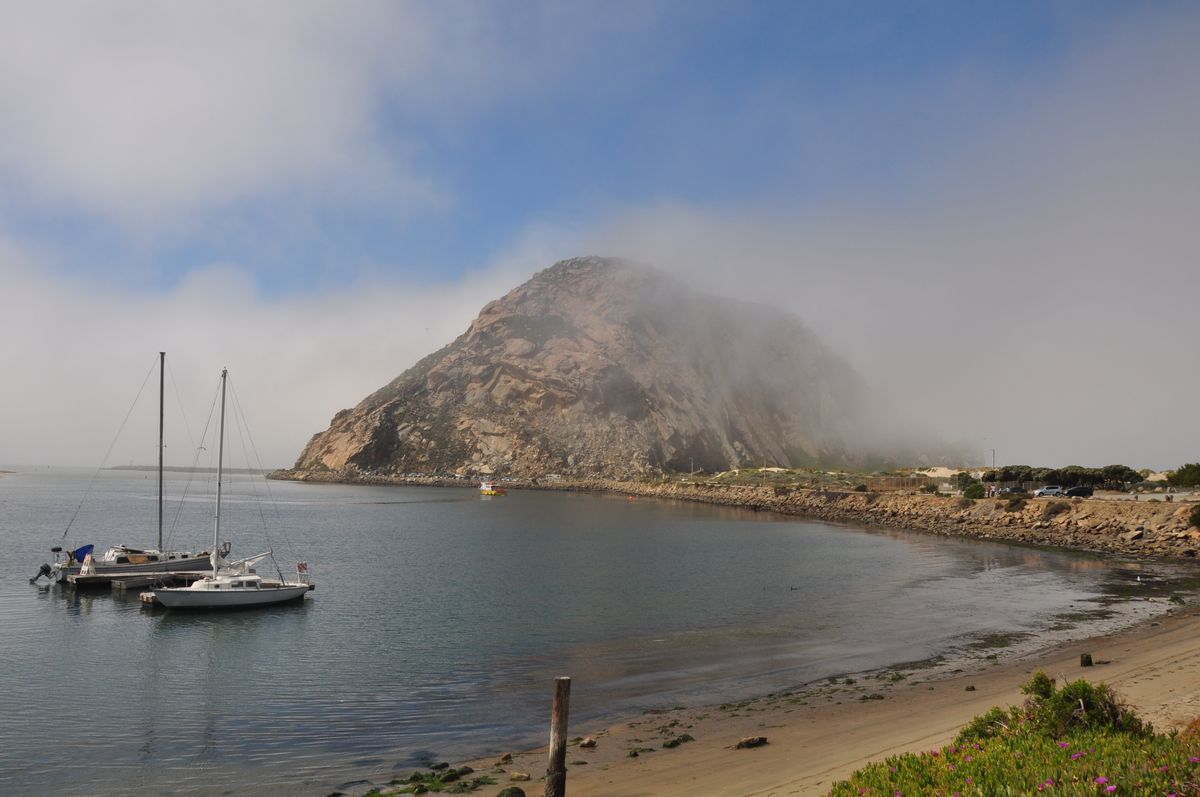
Morro Bay — this is the coast these pages are about.
Quick answer: Tree Cabling & Bracing in Morro Bay, CA — Trees on this coast live with fog, salt, wind and thin soil, and the work that keeps them healthy is decided by those conditions rather than by a calendar written inland. Structure, clearance and the root zone are what a tree here needs looked at, and small work done early is what keeps a tree out of the emergency list.
- What it involves: Structural pruning, clearance from structures and wires, deadwood removal, root-zone care and hazard assessment.
- Typical timing: Structural work in the dormant months; deadwood, clearance and hazard work whenever the tree needs it.
- The standard: The ISA standards for pruning and tree risk assessment, applied by ISA-certified arborists.
- Where we work: Cambria, San Simeon, Harmony, Cayucos, Morro Bay, Los Osos and the Cambria pine belt.
- Our own record: 503 pages and 291 stories published on this site. Counted from our own archive, not a stock table.
Field note. What we see on this coast is that the trees people worry about are usually not the ones in trouble: the pine with a clean crown and a lean that predates the house is often sounder than the tidy tree that has been quietly drowning in its own root zone.
On the other hand, there is no schedule that suits every tree — the same species on two sides of one street can need opposite care, which is why we look before we recommend.
Cabling is the one tree treatment that is genuinely hard to walk back. A tree that has been supported grows wood that assumes the support is there, so when the hardware is installed the obligation to inspect it annually starts on the same day. That is why we talk about it as a commitment rather than a repair — and why, on this coast, it is worth doing properly or not at all.
A sling of rusty wire that nobody has looked at in six years is a worse position than an unsupported tree, because everyone, including an insurer, is now treating it as safe.
When support is the right answer
Three situations earn hardware. A codominant stem with included bark — two leaders growing from one point with a seam of bark between them — is the classic case, particularly in cypress and eucalyptus, and a cable high in the crown limits how far the two can split apart.
A split or partially failed union that can be brought back together and braced is a candidate if the wood around the failure is sound and the tree below it is healthy. And a heavy lateral lead over a structure, where the load cannot be reduced enough by pruning alone, can be supported while the crown is reduced over several seasons. All three share a requirement: the defect has to be at an attachment, not in the stem itself.
A cable cannot hold a trunk with decay in it, and installation is not a way to delay a removal. How it is installed, briefly We work to the ANSI A300 Part 3 standard, which is the industry's own answer to "what does correct look like". Steel cables rated for the load, through-bolts where a brace is needed rather than pins threaded through bark, an anchor point high enough to actually limit movement, and hardware that will survive salt air — galvanised or stainless, not hardware-store fittings. Nothing is drilled unless the design calls for it, and the tree is pruned first where pruning will take load off the union. A cable installed without reducing the load it is supposed to hold is a way of postponing a failure, and it says so on the report. The annual visit, and the honest end point Every supported tree goes on a schedule: the installation is inspected each year, tension checked, hardware looked at for corrosion, and the tree re-read for new decay, new cracks and any sign the union has begun to open anyway. Hardware is replaced on manufacturer's intervals rather than on its appearance. And there is an end point — when the wood around the defect has declined, or the crown has grown past what the support can sensibly hold, the honest recommendation is removal. A cable buys time; it does not buy a guarantee, and the arborist who says otherwise has not read the standard.
When the tree is worth supporting — a heritage oak, a cypress that shades a whole yard, a tree with a history on the lot — the arithmetic often works. When it is not, we will tell you that too, and you will have the report in writing either way.
Field note — Elena Quinn reads a tree as a structure and a rigging plan as a load path: support is an engineering decision, and the failure point is one component, never a matter of opinion.
Questions, quotes, or just exploring — we’re here to help.