



Mulching in Morro Bay, CA
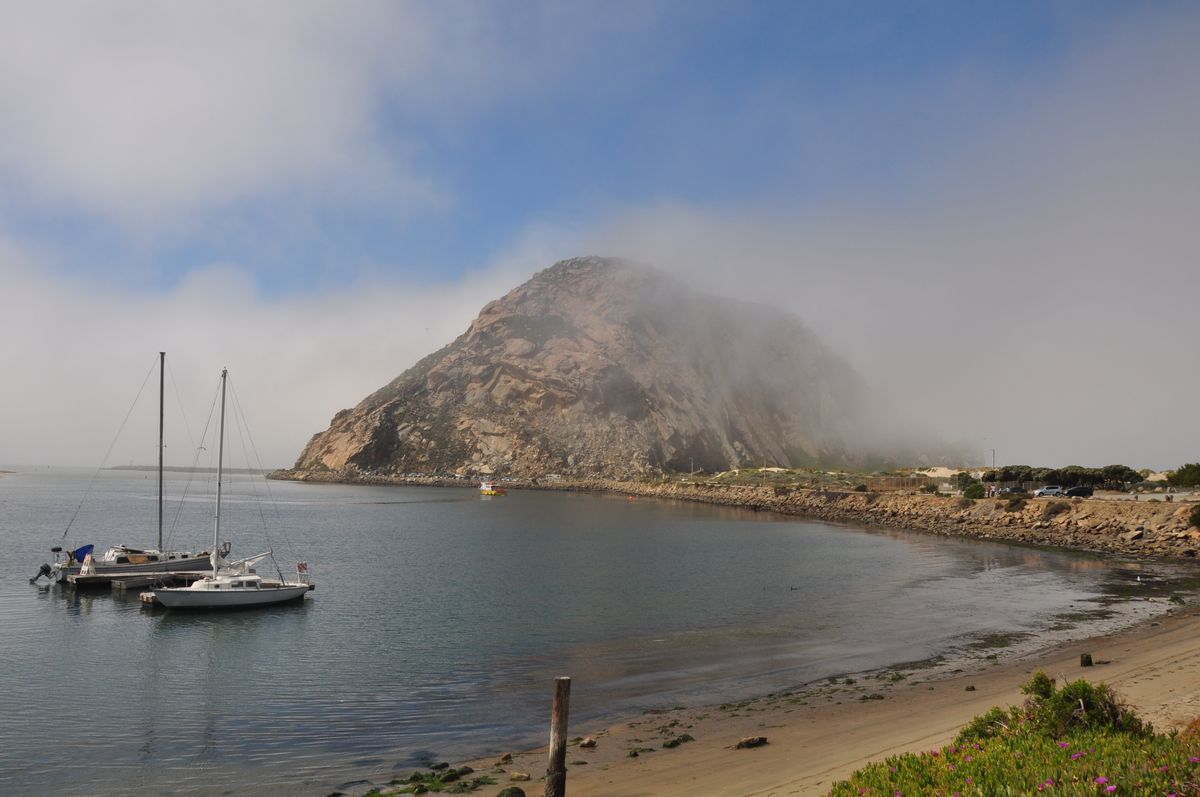
Morro Bay — this is the coast these pages are about.
Quick answer: Mulching in Morro Bay, CA — Mulch is the cheapest thing that happens to a tree: a flat layer over the root zone holds moisture through the dry season, keeps the soil temperature steady and feeds the soil life the tree depends on. Almost every mulch problem is a depth problem or a contact problem — too thick, or piled against the trunk where the bark has to stay dry.
- Typical depth: Two to four inches, flat, from the drip line inward — never a cone against the trunk.
- Typical timing: After planting or after a clean-up; refreshed in autumn so winter rain carries it down.
- What it involves: Keeping the root flare visible, keeping mulch off the bark, and choosing material that breaks down rather than mats.
- The standard: ISA and university extension guidance on arboricultural mulching and the root flare.
- Our own record: 503 pages and 291 stories published on this site. Counted from our own archive, not a stock table.
Field note. What we see most on this coast is not too little mulch but too much, in the wrong place: the volcano against the trunk that keeps the bark wet through the fog season and invites rot where the tree cannot show it until the canopy thins.
On the other hand, a thin ring of the wrong material is worse than none at all — matted, water-repellent mulch sheds the rain it was meant to store.
Mulch works differently here than it does inland, and the reason is the wind. A ring of chips in a hot valley is mostly about holding water; on this coast the wind dries the top centimetre of soil every afternoon and the fog dampens it again by morning, so the surface is in a near-constant cycle.
A mulch layer interrupts that cycle by keeping the surface where it is — cooler, more evenly damp, and structurally the same soil the roots colonised. Get the depth and the width right and you have done more for a Morro Bay tree than any fertiliser on the shelf.
The ring, and the arithmetic of it
A tree's absorbing roots live well outside its trunk, generally beneath and beyond the dripline, and that is the area worth covering. A ring a metre across around a mature pine is a token; three or four metres — out to the edge of the canopy, or as far as the site allows — is an actual improvement. Width matters more than depth.
Deeper than about ten centimetres is where mulch starts working against the tree, because the fine roots that need oxygen end up above the layer that holds water and dry out whenever the surface dries.
The volcano, which is the one thing to refuse
Piling mulch against the trunk keeps the bark tissue permanently wet, and on a coastal property that is an invitation to rot at the exact place a tree cannot afford it. It also buries the root flare, which hides the part of the tree that tells you whether the root plate is moving — so a volcano does not just damage the tree, it removes your best diagnostic.
The correct shape is a shallow donut: a ring that starts a hand's width out from the trunk, deepens slightly toward its outer edge, and feathers to nothing at the perimeter.
Which chips, and which to avoid
Arborist chips — the mixed material from a pruning job, bark and branch and leaf — are the best mulch available on this coast and the cheapest, because they are a by-product of work happening on your own street.
Fresh chips will temporarily borrow nitrogen from the very surface layer as they break down, which matters for a seedling and barely matters for an established tree; a top dressing of a couple of centimetres over an existing ring is a safe way to use fresh material.
Two things to avoid: chips from a tree that was removed because of a disease that persists in wood, and a mulch layer that closes over the flare because someone wanted the bed to look tidy.
What mulch does not fix
It will not correct a grade change, replace a missing soil horizon where fill was scraped off, or rescue a tree whose roots were cut for a foundation or a sewer run. Those are drainage and root-zone problems, and on a hillside lot they usually arrive in the same conversation as the ground itself.
Mulch is the cheapest, most effective thing a tree owner can do annually — and it is also the one most often done wrong, in the same way, by the same bag of chips, on thousands of lots.
Field note — Sofia Underwood designs in decades: the ring you build this spring is what the tree's roots will be living in when the canopy closes over the street.
Questions, quotes, or just exploring — we’re here to help.