


Tree Risk Assessment in Cayucos, CA
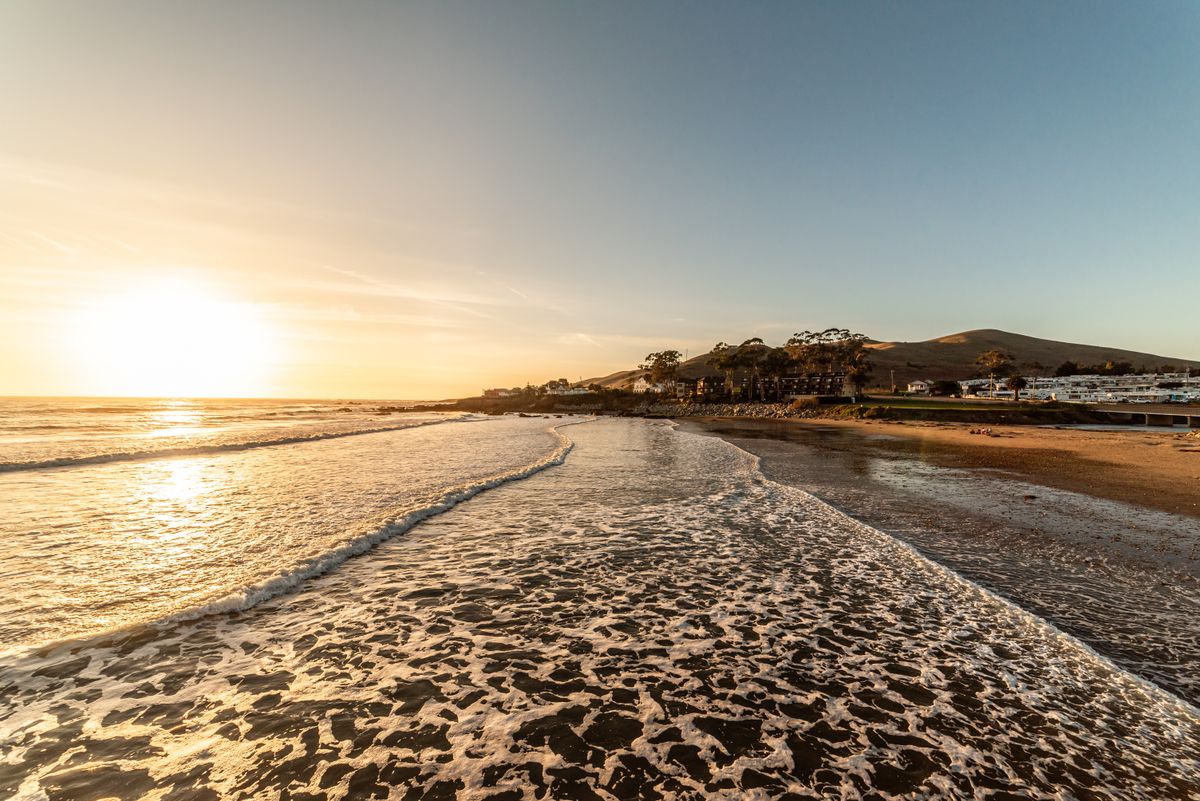
Cayucos — this is the coast these pages are about.
Quick answer: Tree Risk Assessment in Cayucos, CA — Trees on this coast live with fog, salt, wind and thin soil, and the work that keeps them healthy is decided by those conditions rather than by a calendar written inland. Structure, clearance and the root zone are what a tree here needs looked at, and small work done early is what keeps a tree out of the emergency list.
- What it involves: Structural pruning, clearance from structures and wires, deadwood removal, root-zone care and hazard assessment.
- Typical timing: Structural work in the dormant months; deadwood, clearance and hazard work whenever the tree needs it.
- The standard: The ISA standards for pruning and tree risk assessment, applied by ISA-certified arborists.
- Where we work: Cambria, San Simeon, Harmony, Cayucos, Morro Bay, Los Osos and the Cambria pine belt.
- Our own record: 503 pages and 291 stories published on this site. Counted from our own archive, not a stock table.
Field note. What we see on this coast is that the trees people worry about are usually not the ones in trouble: the pine with a clean crown and a lean that predates the house is often sounder than the tidy tree that has been quietly drowning in its own root zone.
On the other hand, there is no schedule that suits every tree — the same species on two sides of one street can need opposite care, which is why we look before we recommend.
A risk assessment in Cayucos usually starts with the same sentence: "it has always leaned that way." It has — but the ground under it is not the ground it grew in.
The hillside streets above the pier are slipping a few centimetres a decade, the beach blocks were built on dune sand that drains beautifully and grips poorly, and a row of eucalyptus planted as a windbreak in the 1950s now overhangs a rental's parking pad by thirty feet. None of that makes a tree dangerous. It makes it a question with an address.
The three parts of the word "risk"
Risk needs a target — the thing that gets hit, and how often a person is there. It needs a likelihood of failure over a stated time, which is why a report says "over the next two storm seasons" instead of "could fall." And it needs the consequence: a limb into the roof of a vacation rental in July is a different event from the same limb landing in the green belt behind it.
A tree with an identical defect can be urgent in one lot and a maintenance note in the next, and an assessment that does not name the target is not describing the risk, it is describing the tree.
What we look at on a Cayucos slope
The root plate comes first on this coast. We walk uphill of the tree and look for the telltales of a plate that has begun to move — fresh soil at the base, a ring of cracking in the duff, moss displaced on the upslope side, and any change in a fence line or a retaining wall that reads like the tree moved and the wall did not.
Then the stem: resin, wounds, old topping cuts, and whether the lean is a curve that grew or a hinge that opened. Then the crown, where a eucalyptus dieback or a sudden thinning of the inner foliage says something about the root system rather than the leaves.
Where the decision turns on what is inside the wood, we use an increment borer or a tomograph and say so in the report — the tools are not the assessment, they answer one question the assessment posed.
The report, and who reads it
Ours names the tree, the target, the defects, the likelihood and consequence ratings, and one recommended action with a timeframe. That is the format an insurance adjuster reads, a county planner accepts with a coastal permit file, and a disclosure package can carry. It is also written so a second arborist could disagree with one line rather than the whole document, which is the only kind of professional opinion worth paying for.
Two things stay honest on this coast. A removal on a bluff is not always the conservative option — take the tree off a slipping slope and the slope loses the roots that were holding it, which is our problem, not the tree's. And an assessment is a snapshot: nobody can warranty a living tree through a wet January, and any arborist who offers to is selling certainty they do not have.
Field note — Clara Young prices the options the way a property owner has to: keep, prune, brace or remove, each with its annual cost and the number of years it buys. Written down, the break-even is usually obvious.
Questions, quotes, or just exploring — we’re here to help.