



Tree Trimming & Pruning in Cayucos, CA
Tree Trimming & Pruning in Cayucos, CA
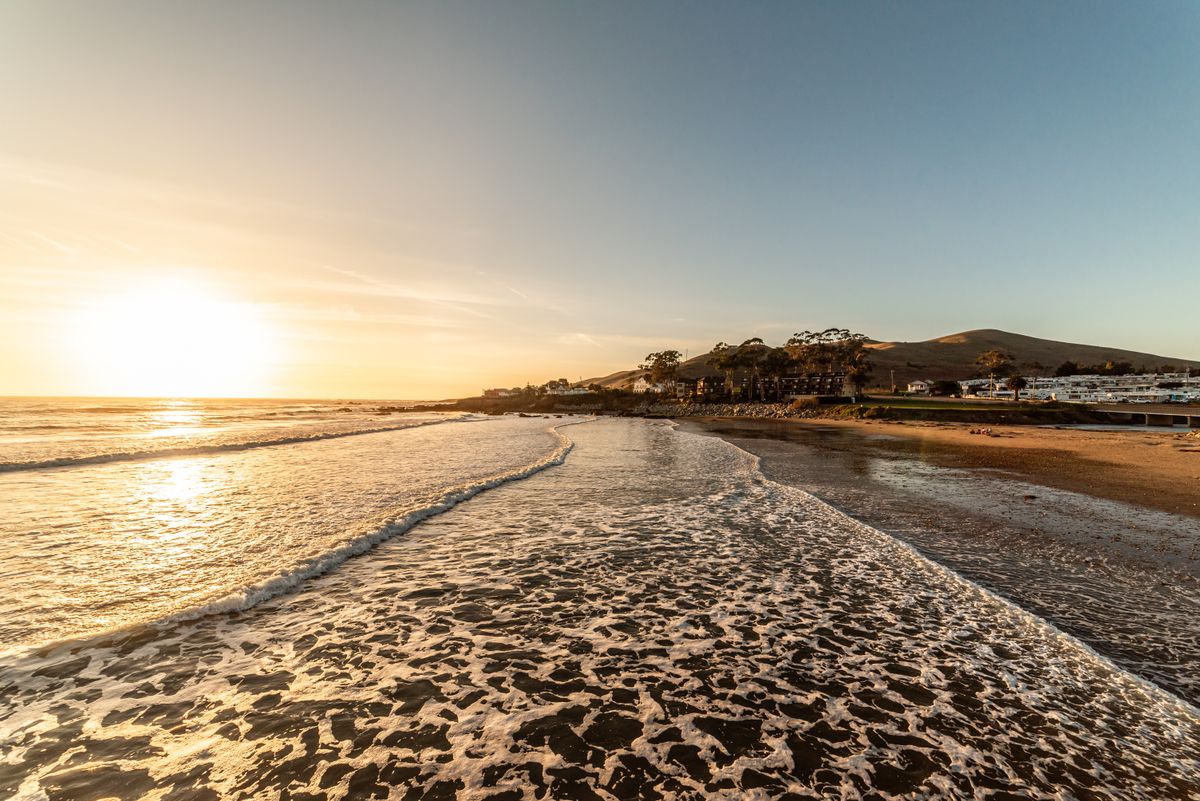
Cayucos — this is the coast these pages are about.
Quick answer: Tree Trimming & Pruning in Cayucos, CA — Pruning is a plan before it is a cut: deadwood and broken limbs first, then clearance from roofs, wires and paths, then the structure the tree will carry for the next decade. The right cut heals and the wrong one invites decay, which is why the order matters more than the number of cuts.
- Typical timing: Structural work in the dormant months, light clearance and deadwood any time the tree is not under stress.
- What it involves: Removing dead and crossing limbs, thinning to let light through, lifting low limbs for clearance, and never topping a tree.
- The standard: The ANSI A300 pruning standard as applied by ISA-certified arborists — including the three-cut method on every limb worth saving.
- Where we work: Cambria, San Simeon, Cayucos, Morro Bay, Los Osos and the towns between.
- Our own record: 503 pages and 291 stories published on this site. Counted from our own archive, not a stock table.
Field note. What we see on this coast is a pruning calendar that does not match the inland one: salt air, fog and wind mean a cut that would be minor in the valley can be the one that opens a crown to decay here, so we look at the species and the exposure before the season.
On the other hand, not every tree wants to be pruned: leaving a healthy canopy alone is a decision that pays, and a tree with plenty of space is often better served by doing nothing.
Every tree in Cayucos has one trainer: the wind. The afternoon northwesterly off Estero Bay prunes trees from the ocean side whether anyone else does or not, which is why so many crowns in town are lopsided in the same direction and why heavy limbs grow where the wind left them. Working with that shape — rather than against it — is most of the craft of pruning here.
Cutting for wind, not against it
A wind-shaped tree is not a broken tree. Its asymmetry is how it survived decades on an exposed site, and the worst thing a pruning crew can do is even it out for looks. What the tree actually needs is reduction of the weight that catches wind: shorten the longest limbs over the house or the street, thin the dense outer shell enough for air to pass through, and leave the interior structure alone.
That work lowers the load on the wood without removing the tree's ability to feed the crown it has spent years building.
What each species wants
Monterey cypress, which forms the old hedgerows and windbreaks through town, will not regrow from old wood. Cut a cypress back past its green needles and the branch stays bare permanently, which is how a neat hedge becomes a wall of dead stubs. Every cut on cypress goes into living green — a light hand, more often, and never sheared to a straight line across the face of the hedge.
Eucalyptus is the opposite temperament. Cut it hard and it answers with a burst of epicormic shoots from the trunk and any branch that still has bark, which is why topping a blue gum produces a messy, top-heavy tree within two years. Structured reduction of the leaders, done while the tree is young enough to respond well, builds a gum that survives its own growth rate.
On pines, pruning is best kept to dead and broken wood and the occasional clearance cut — and it belongs in the cool months, when pitch canker and bark beetles are less active and the wound has the best chance of sealing cleanly.
For coast live oaks, the county's rules and the tree's own biology point the same direction: prune in the dormant season, keep cuts small, sterilize tools between trees, and avoid working when the wood is wet. Sudden oak death moved through this coast once already; there is no reason to help it move again.
Clearance and the view
A good share of the pruning calls we take in Cayucos are about clearance: limbs brushing a roof, branches in the path of the walk to the beach, growth against a fence line or a power service drop. Clearance pruning is real work and worth doing well — a cut that respects the branch collar closes, and a stub that does not becomes a rot pocket.
Where the request is a view, we will tell you honestly what pruning can restore and what it cannot; a window opened in a crown grows back in a few seasons, and a view kept open permanently is a commitment to repeat pruning, not a one-time purchase. For utilities, we never work energized lines directly; where a limb and a conductor are in the same conversation, the utility company is part of the plan.
Pruning on this coast also has a seasonal logic that inland yards do not share. Late fall and winter are the honest window for structure work on most species here: the tree is dormant, the beetles and canker spores are quiet, and the wood is not carrying the full crown's worth of water. Summer pruning is for clearance that cannot wait, and it is done with a lighter hand.
What we do not do in Cayucos: topping, lion-tailing, or flush cuts — the three cuts that turn a pruning bill into a removal bill a few years later. If the work at your place is one of those three, it will not come from this crew.
Questions, quotes, or just exploring — we’re here to help.